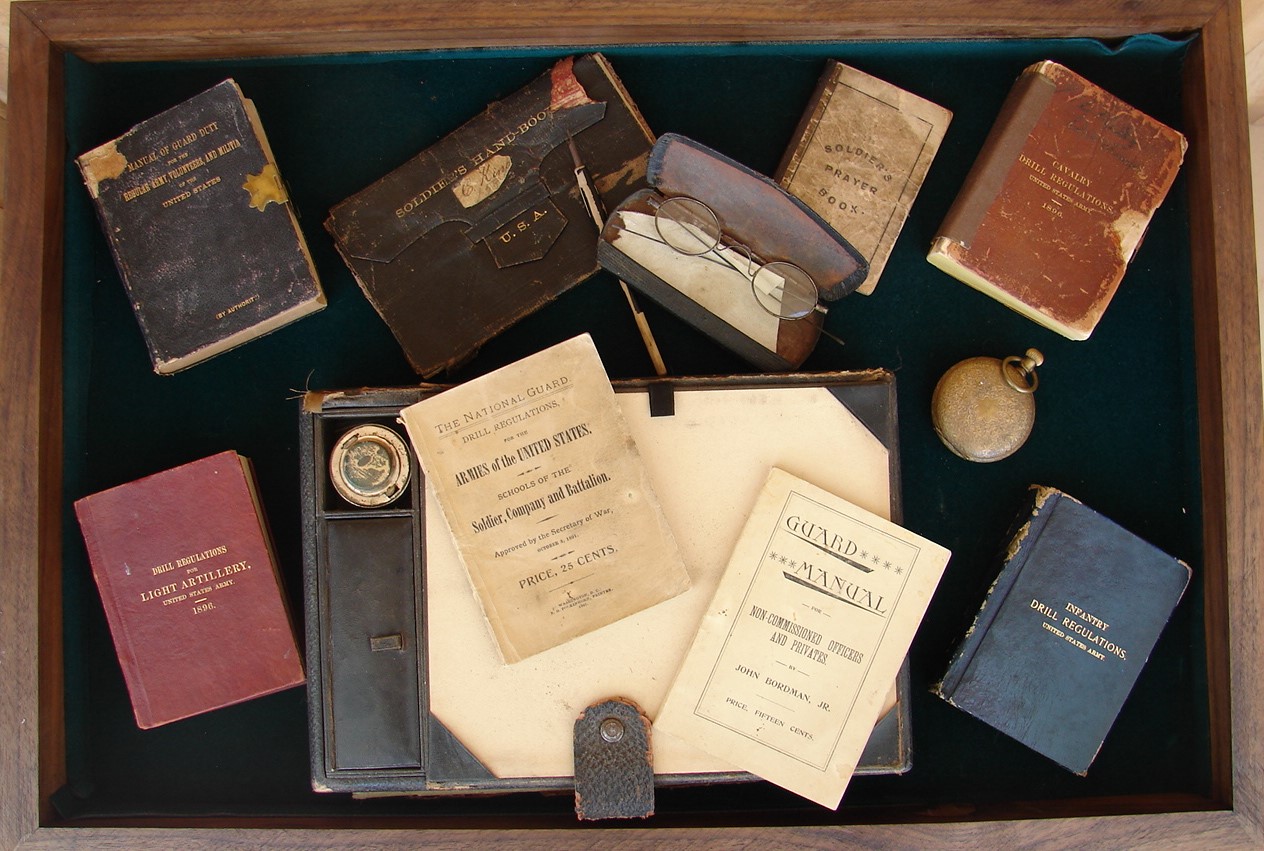
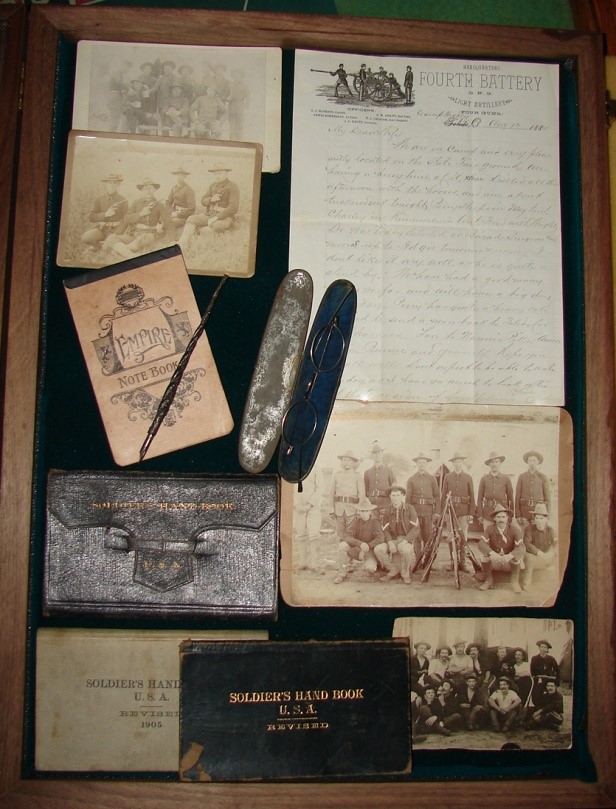
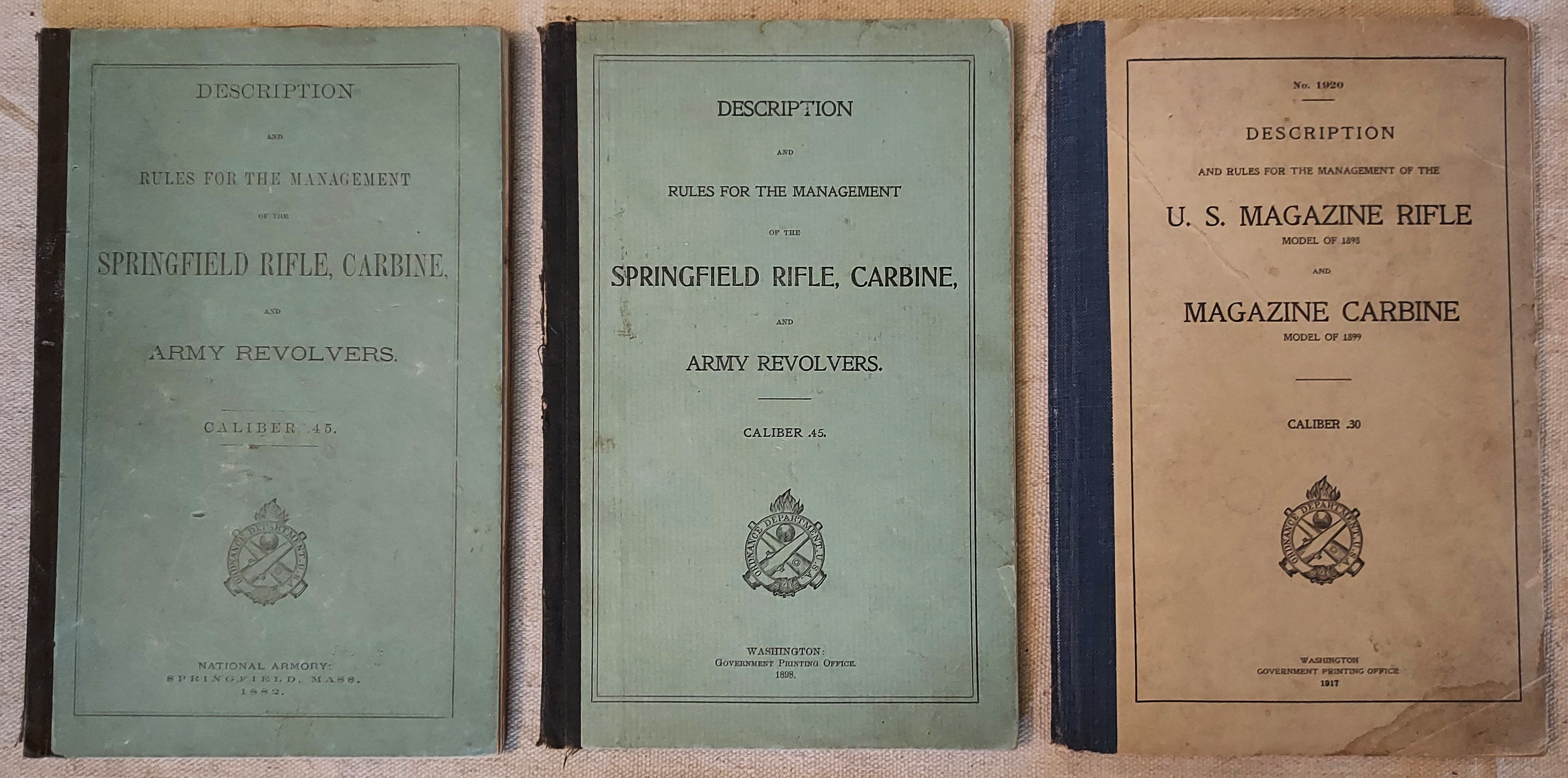
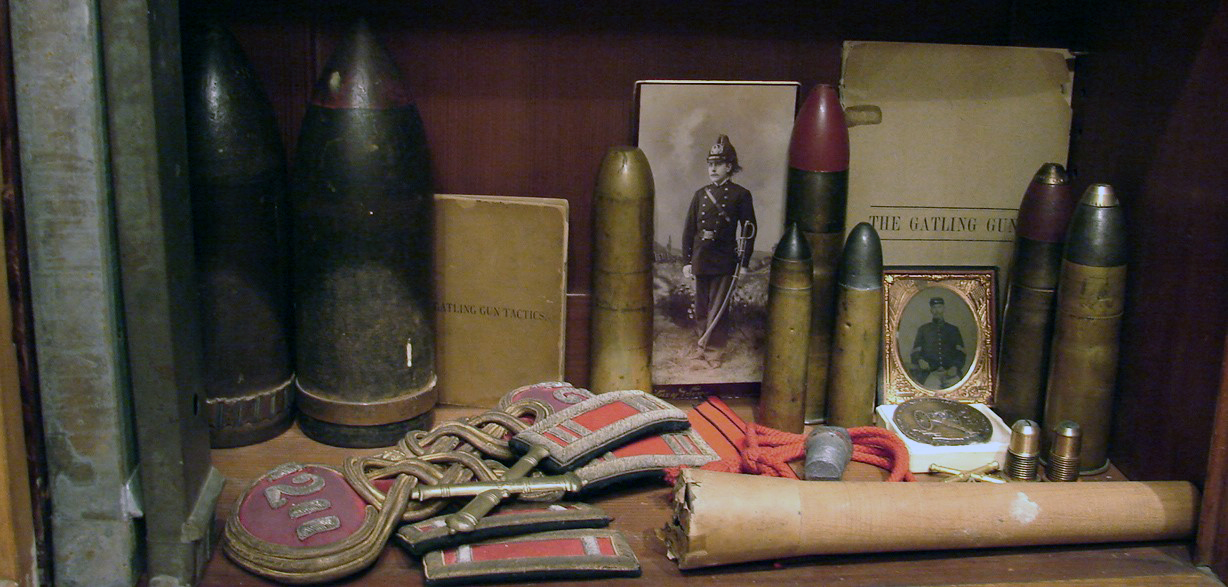
One of the most interesting ways to learn and understand how people lived and dealt with life during their time period is to study the artifacts that were left behind. The artifacts and accoutrements from the U.S. Military give us a great understanding of the life of the soldier during this era and how he endured through this time period. A sampling of some of these artifacts that the museum has to offer is shown below.
Artillery Rounds & Ordnance
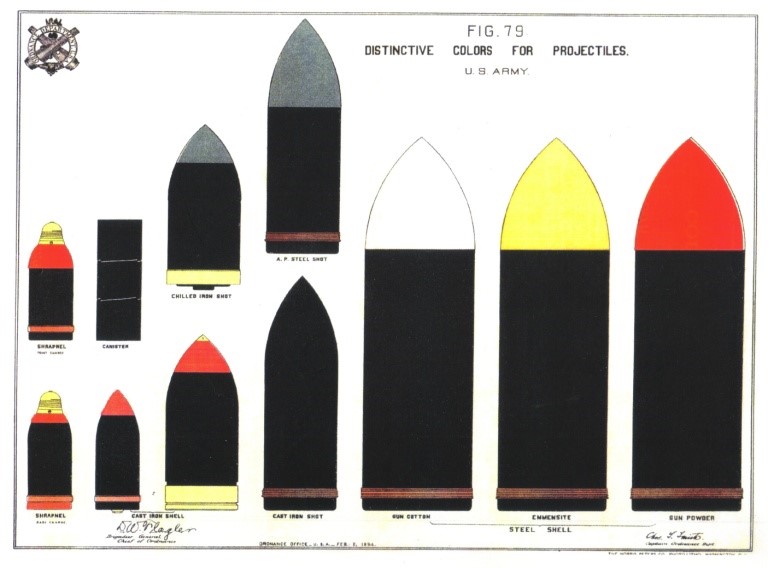
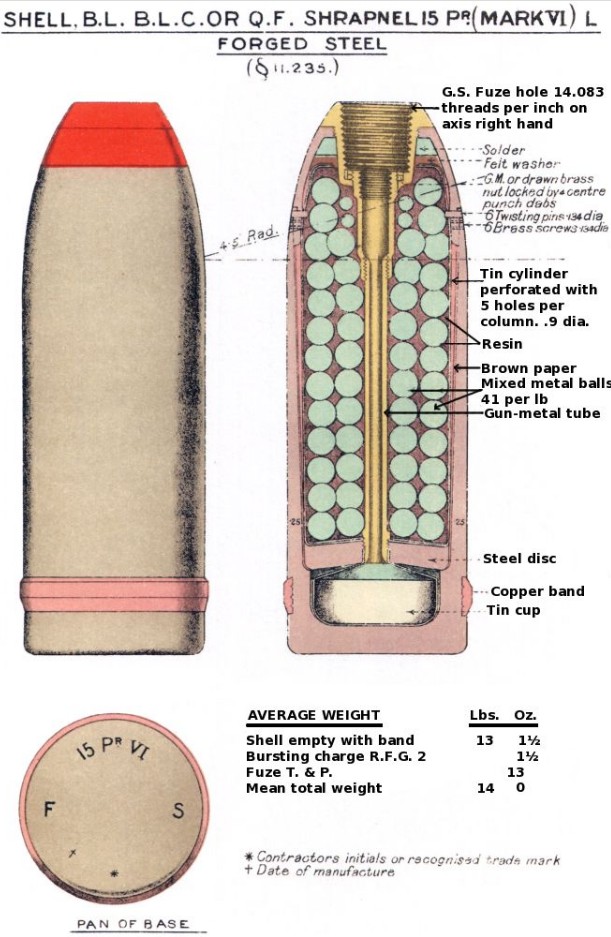
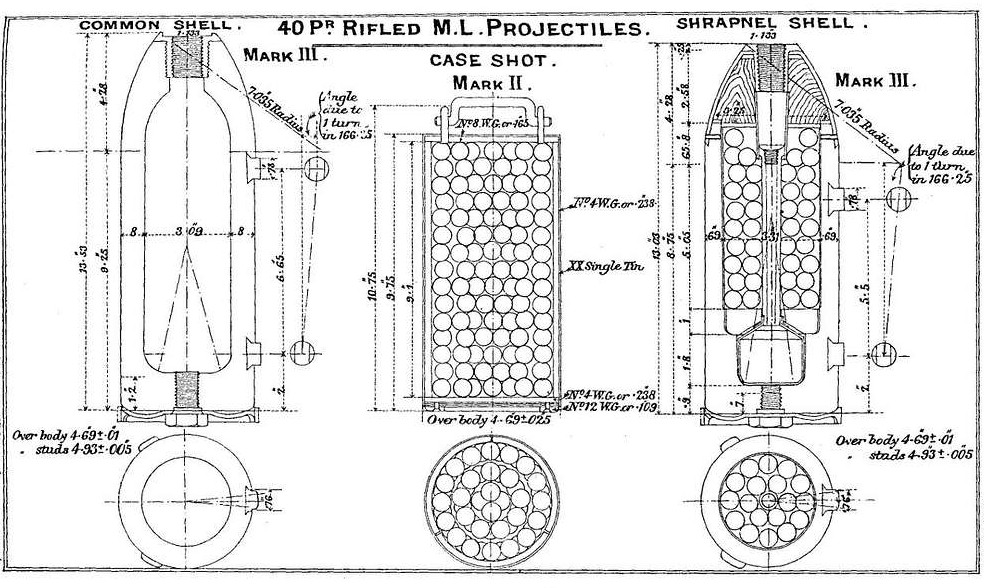
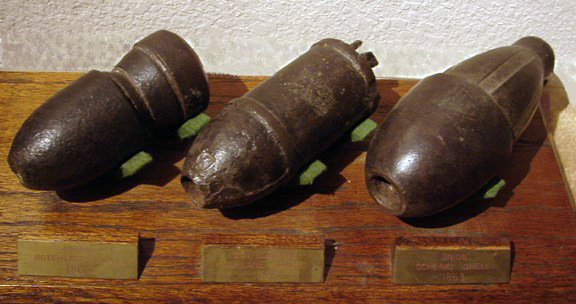
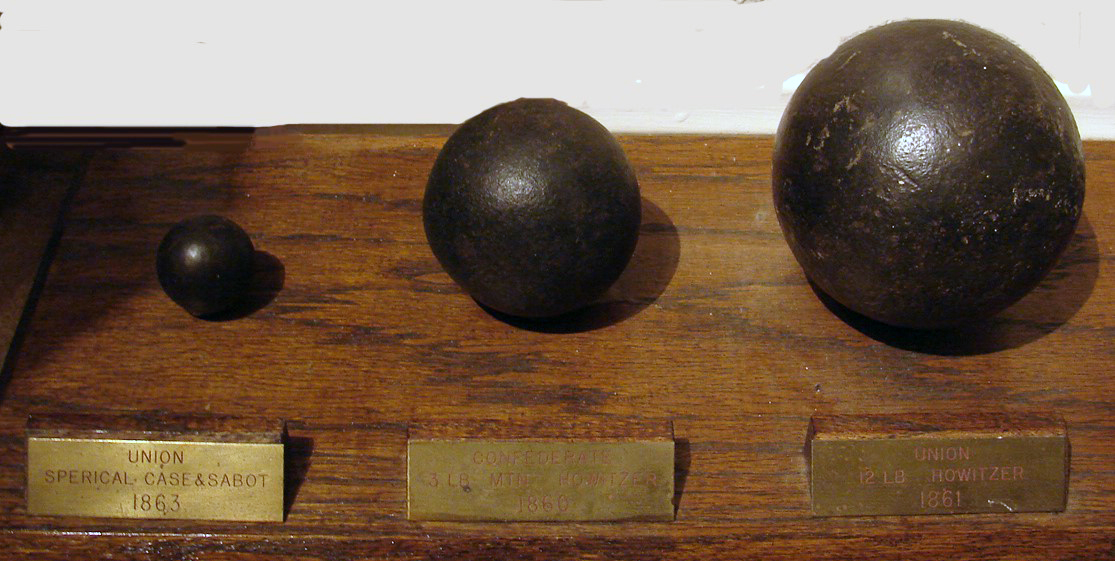
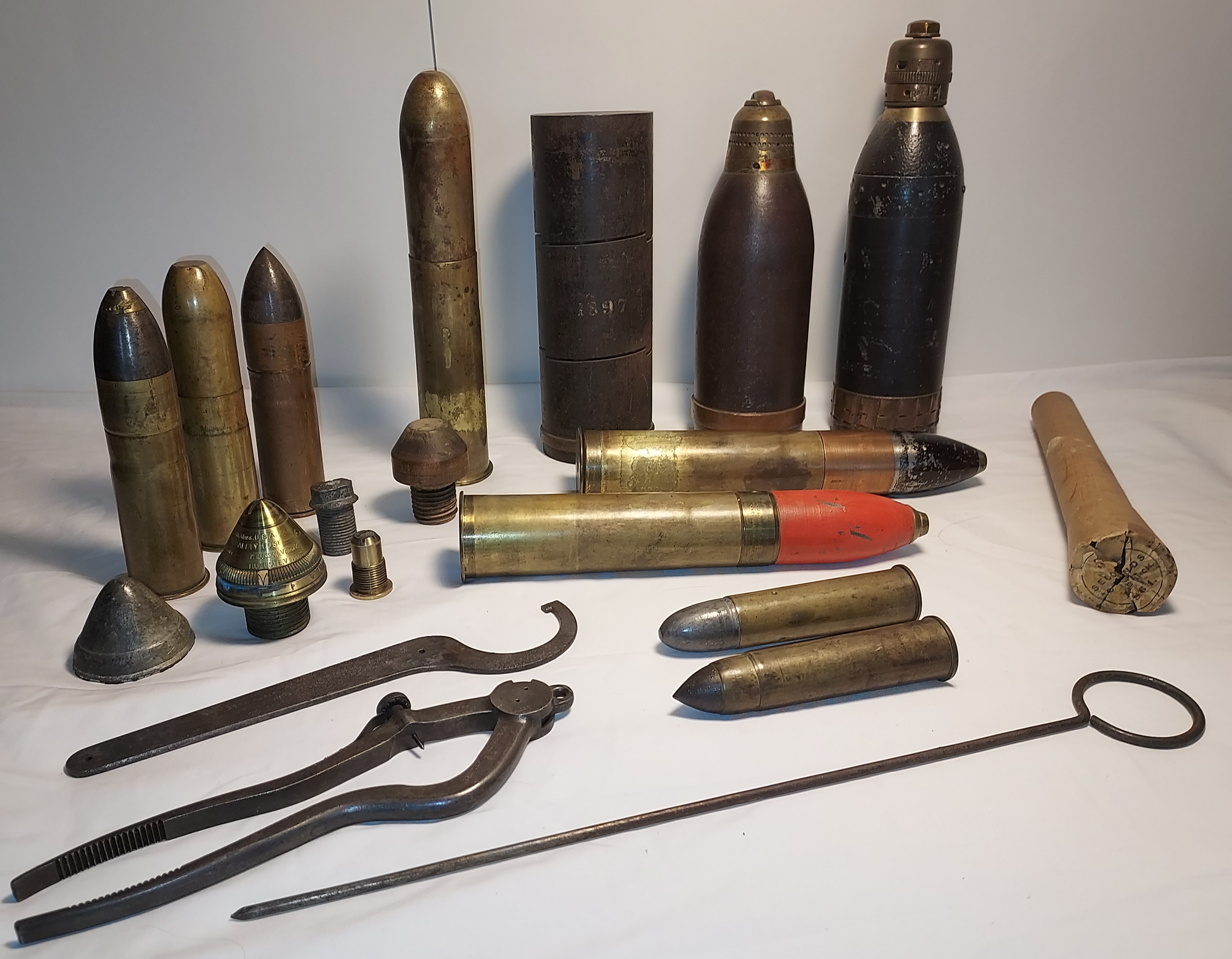
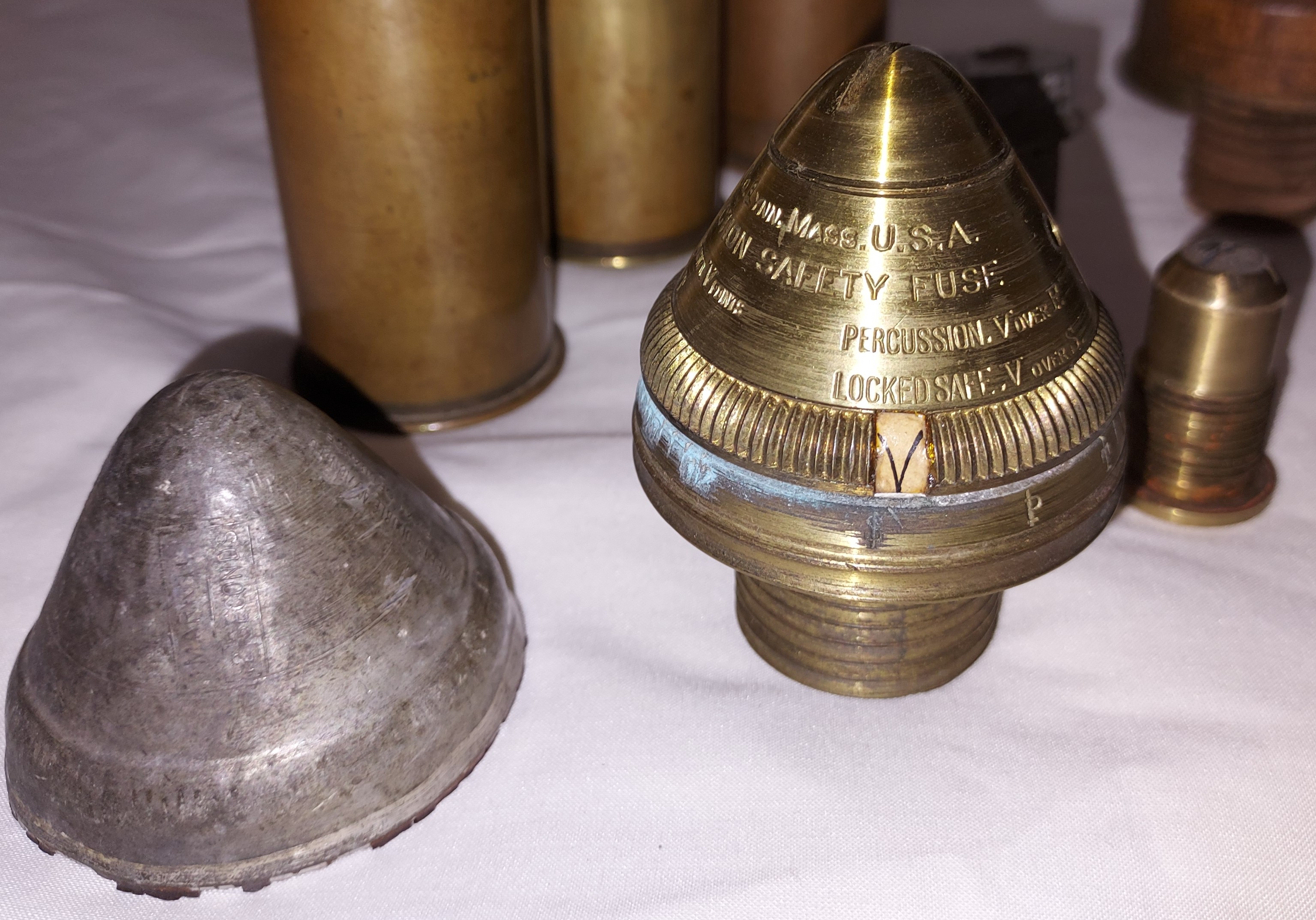
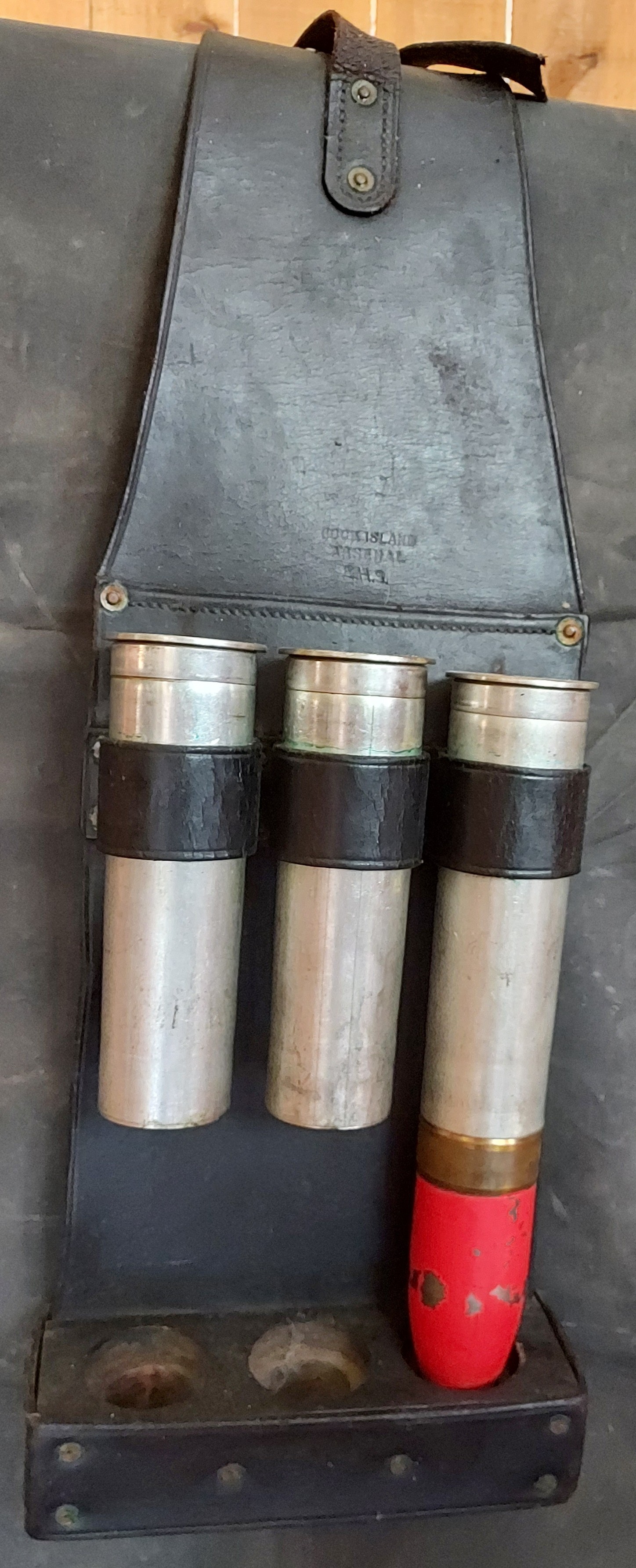
Ammunition saw some of the most startling developments of any phase of artillery during the years from 1836 to 1865. The old smoothbore types continued relatively unchanged, but it was really projectile innovations that permitted the effective rifling of the Civil War. For the field artillery there were supplied solid shot, case, and shell with time-fuses and with percussion-fuses. Solid shot were designed mainly for destroying the heavy walls of fortifications. The other forms were used against troops. Case was of two kinds—canister, which separated at the muzzle, and shrapnel, which separated at a distance. The shell was a hollowed projectile, containing a bursting charge, intended for destructive effect at a distance. All projectiles used in the U.S. land service, except canister, have practically the same form—a cylindrical body with a pointed head. Rotation is given by a compressible band of copper, slightly larger than the bore, near the base of the projectile.
Military Insignia
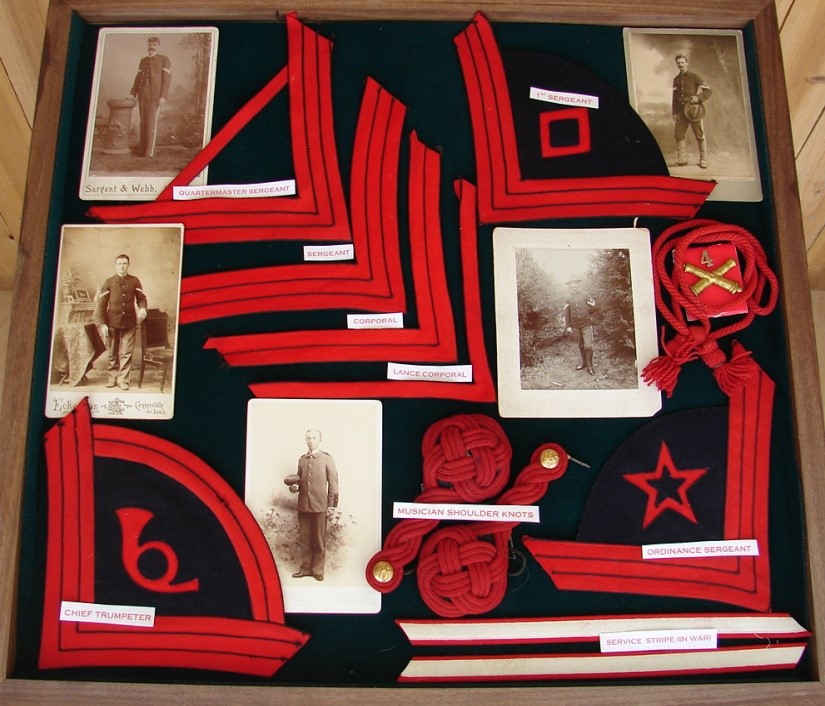
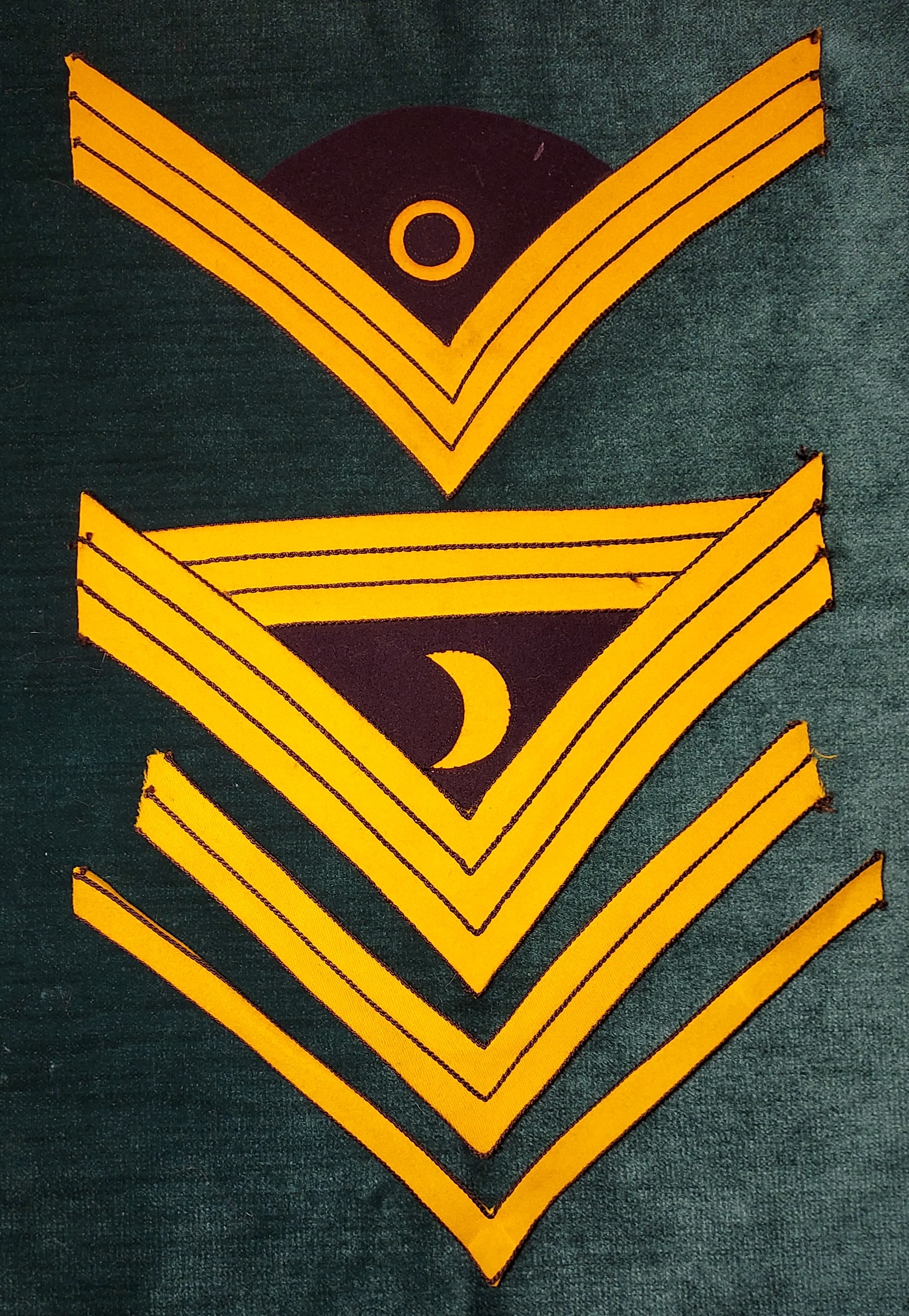
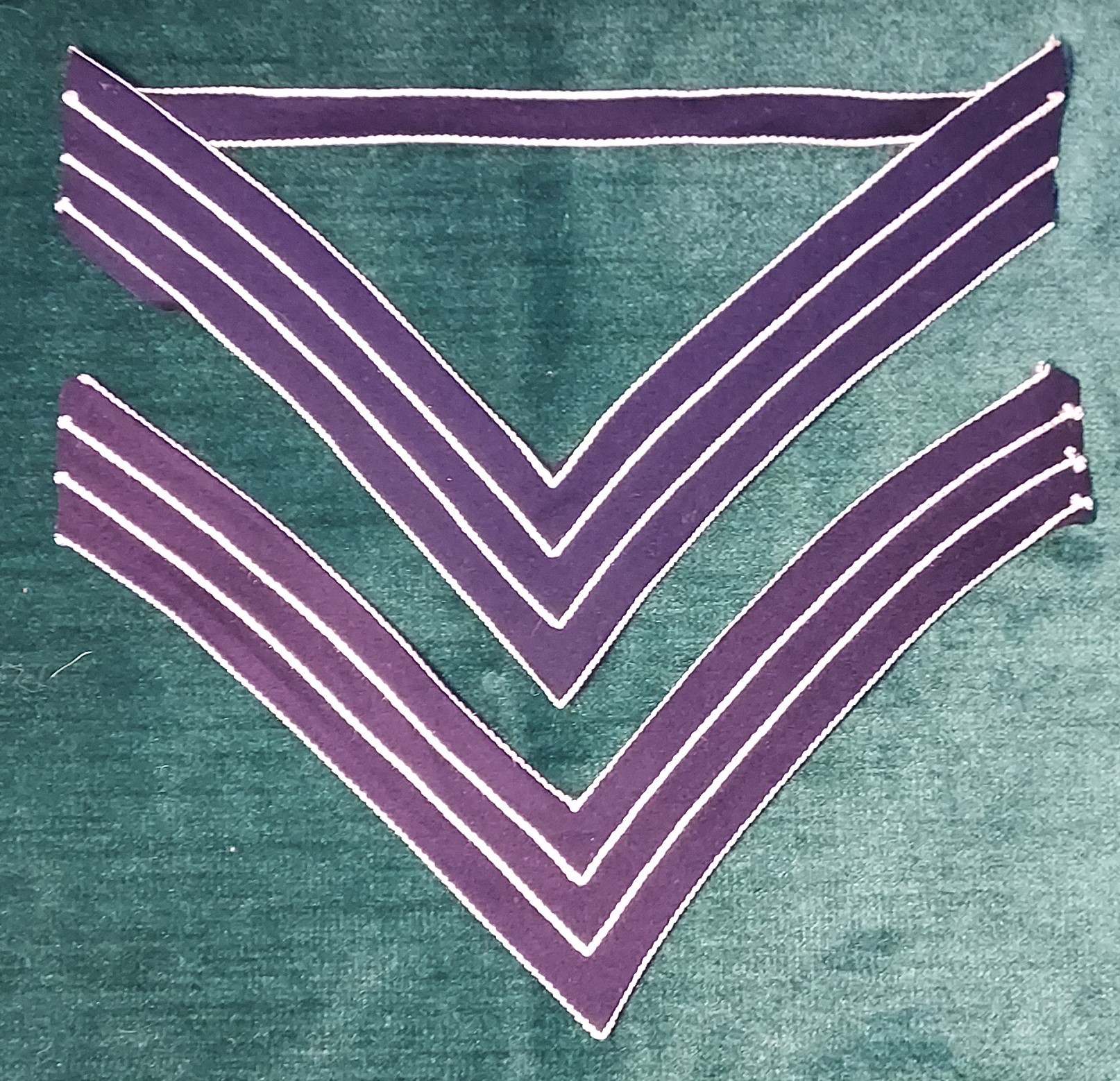
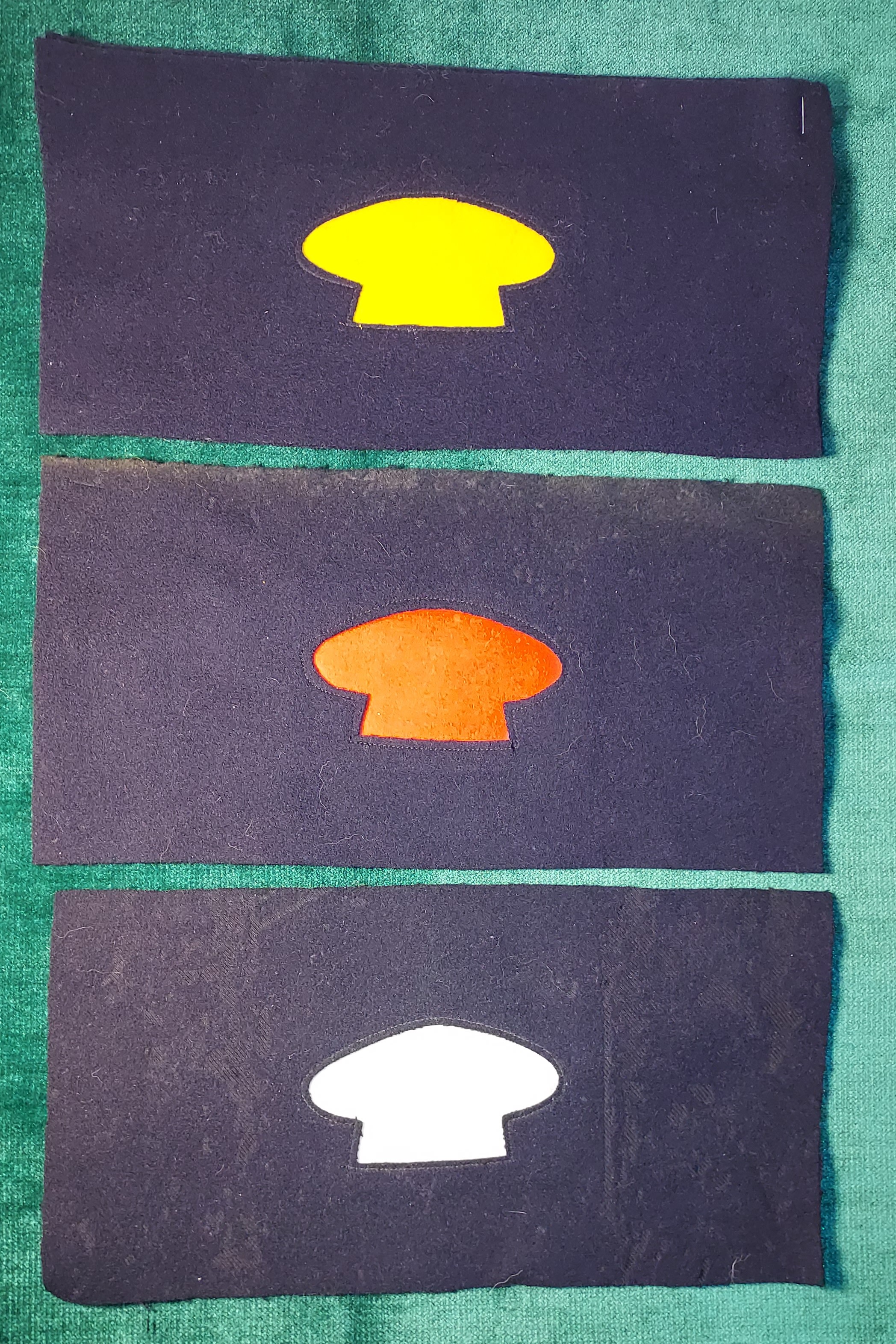
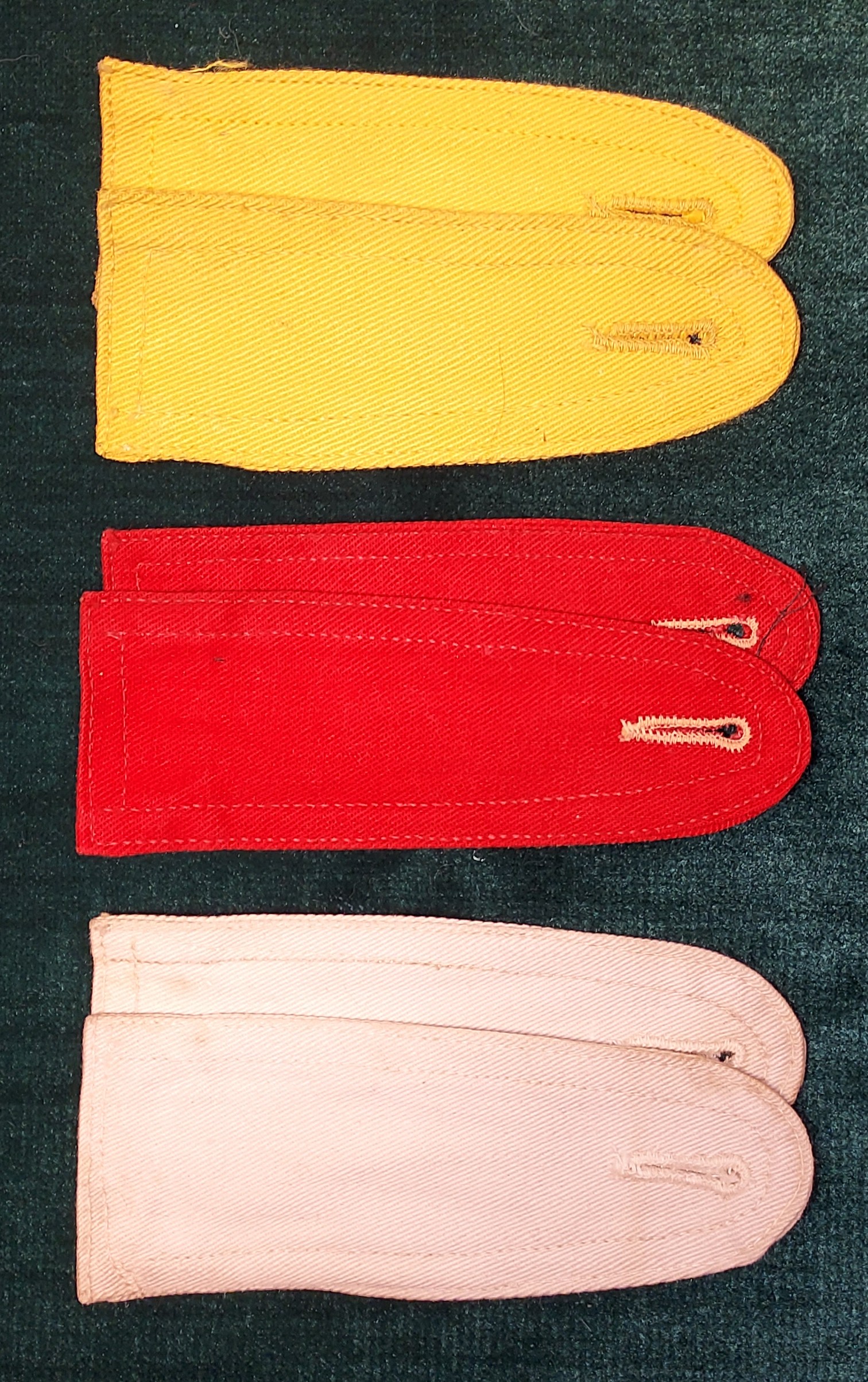
The history of military insignia dates back to the Continental Army and General George Washington. The Continental Army could not afford to purchase uniforms. As a result, distinguishing between the various ranks within the army became difficult and General Washington requested that badges be designed to alleviate the confusion. Development of the insignias continued into the Revolutionary War with the distinction of a two-star General (major general) and a one-star (brigadier). At that time, these stars would be worn on the shoulder boards or epaulettes.
Saddles & Horse Equipment
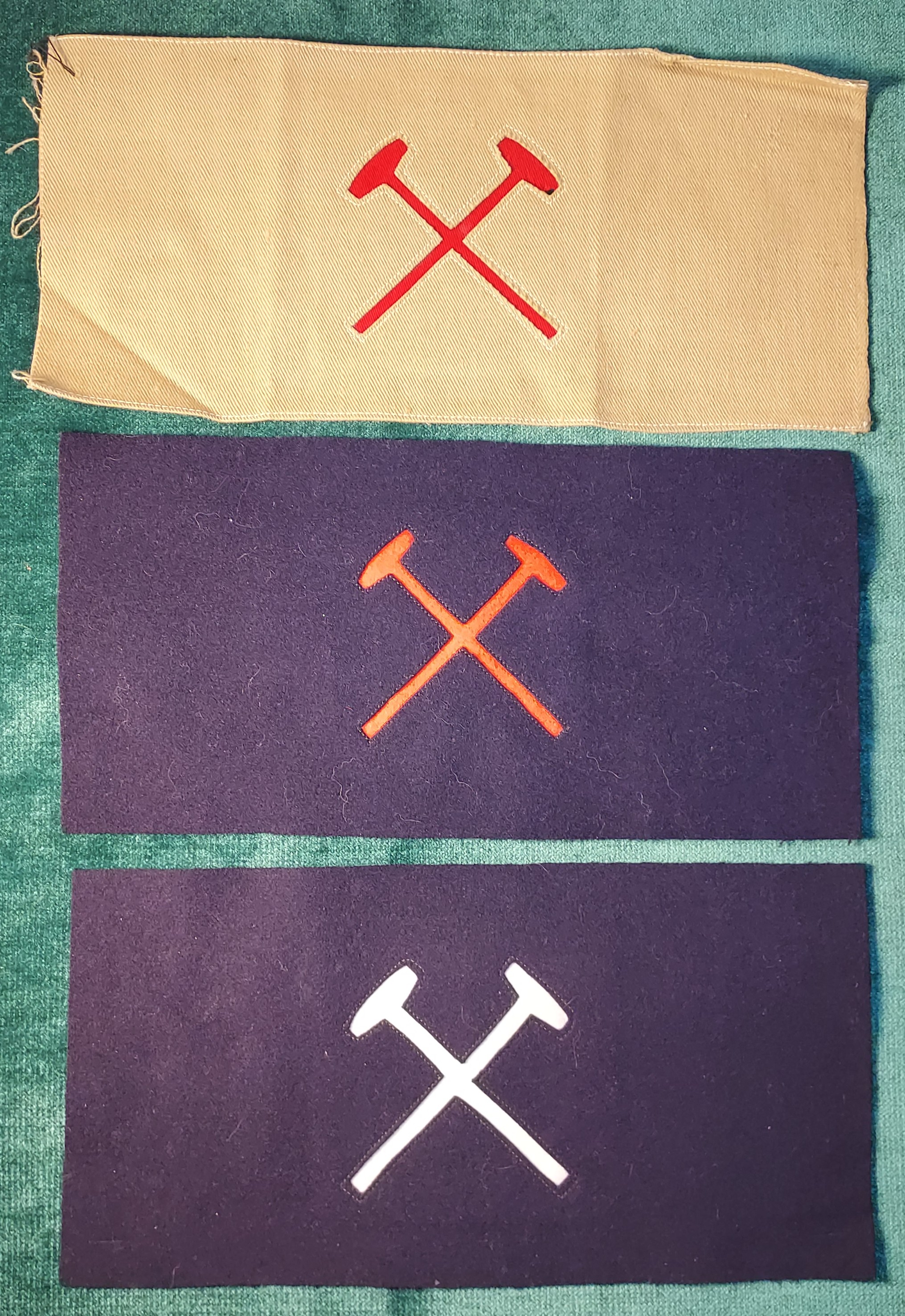
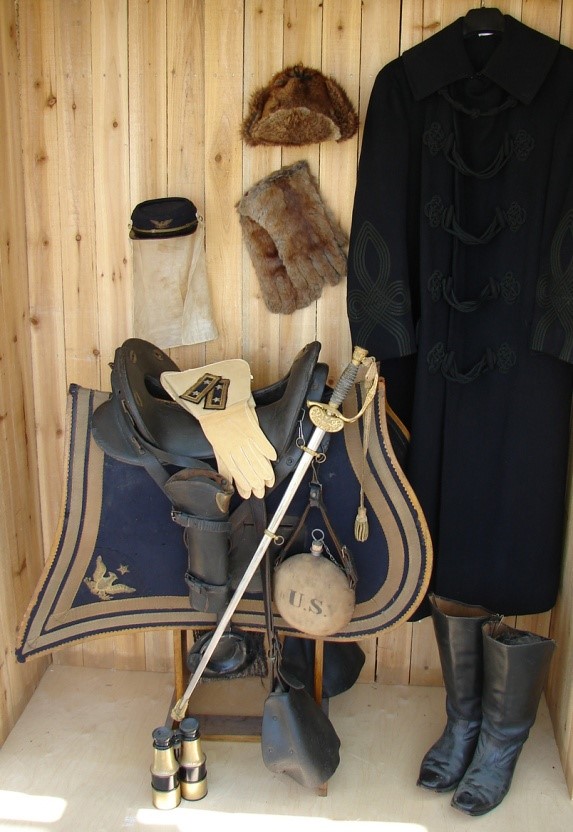
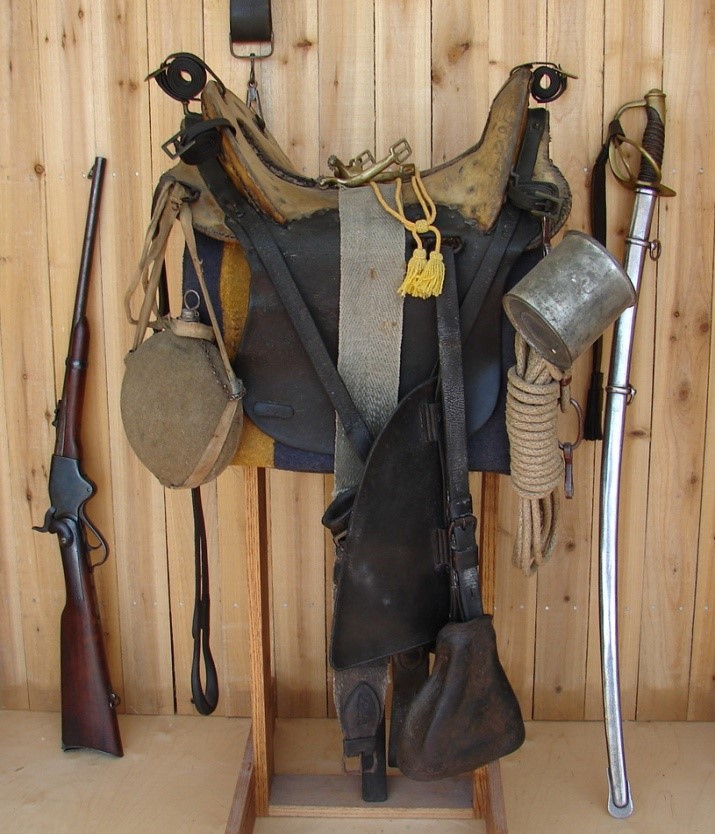
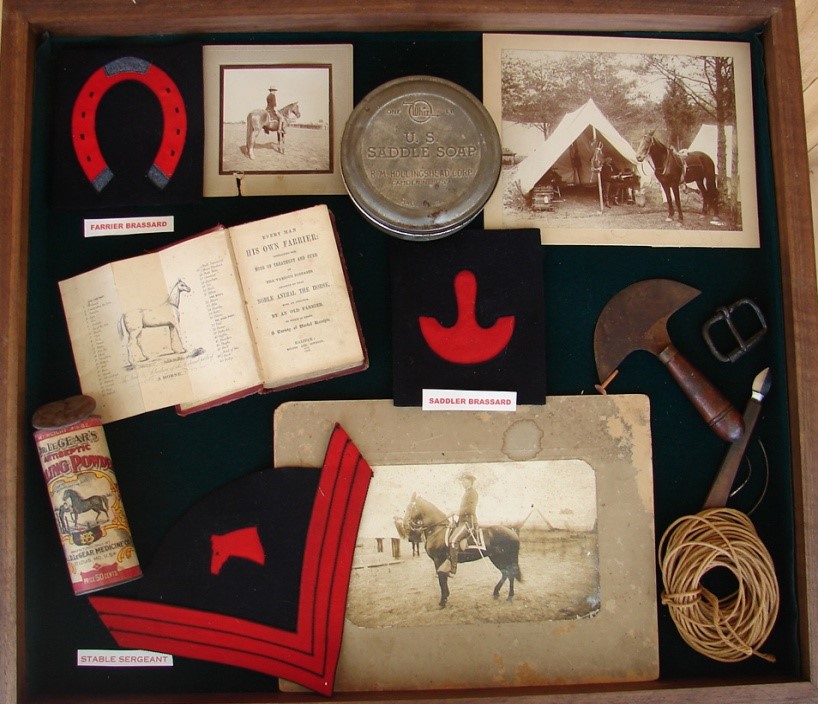
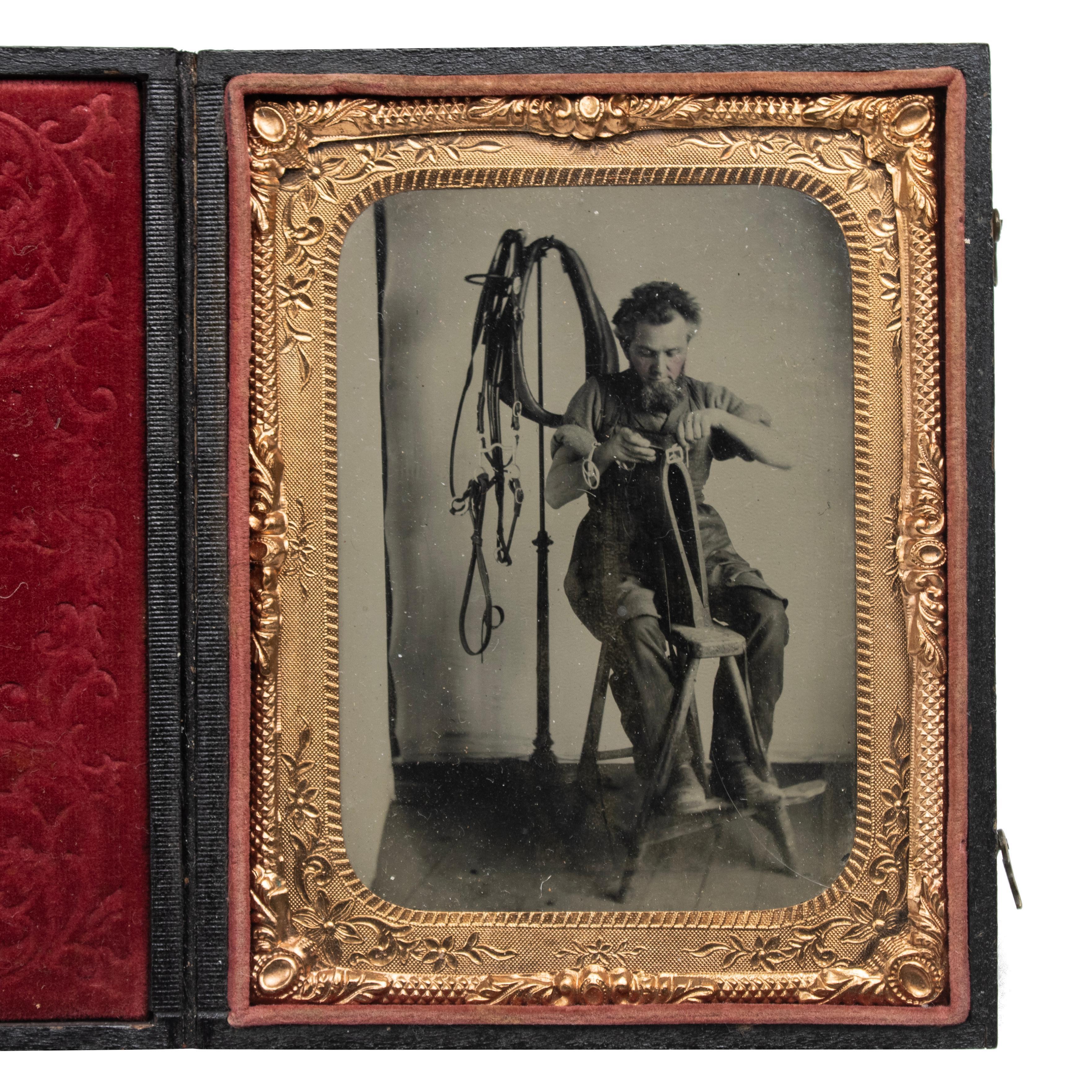
The successful maintenance and operation of any military horse unit required the services of a competent Ferrier and Saddler. A Ferrier was a blacksmith that specialized in shoeing horses and was assigned to each company. The Saddler was a leather-smith that repaired the tack—saddles, bridles, halters, and various types of harness which became damaged through normal use.
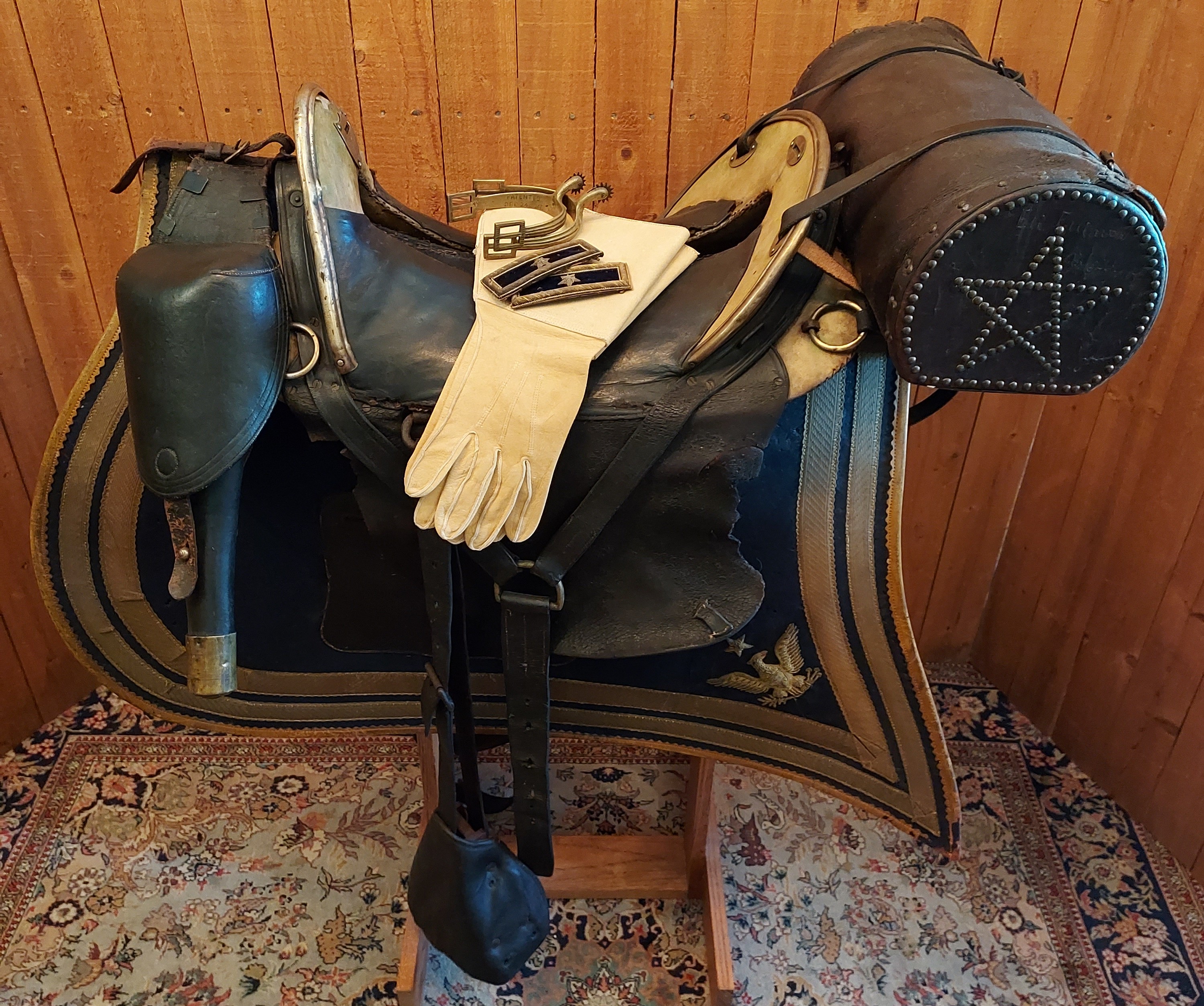
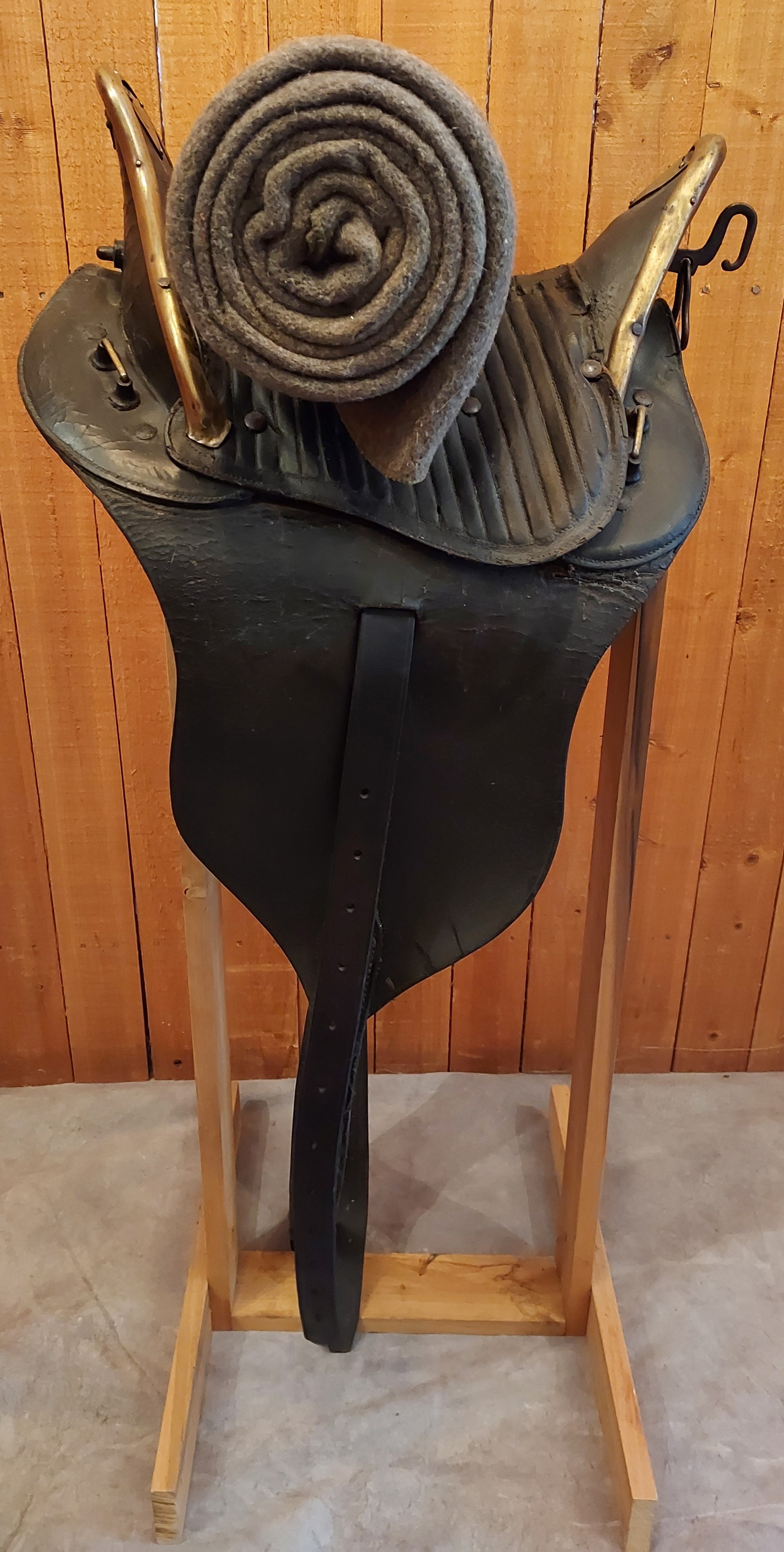
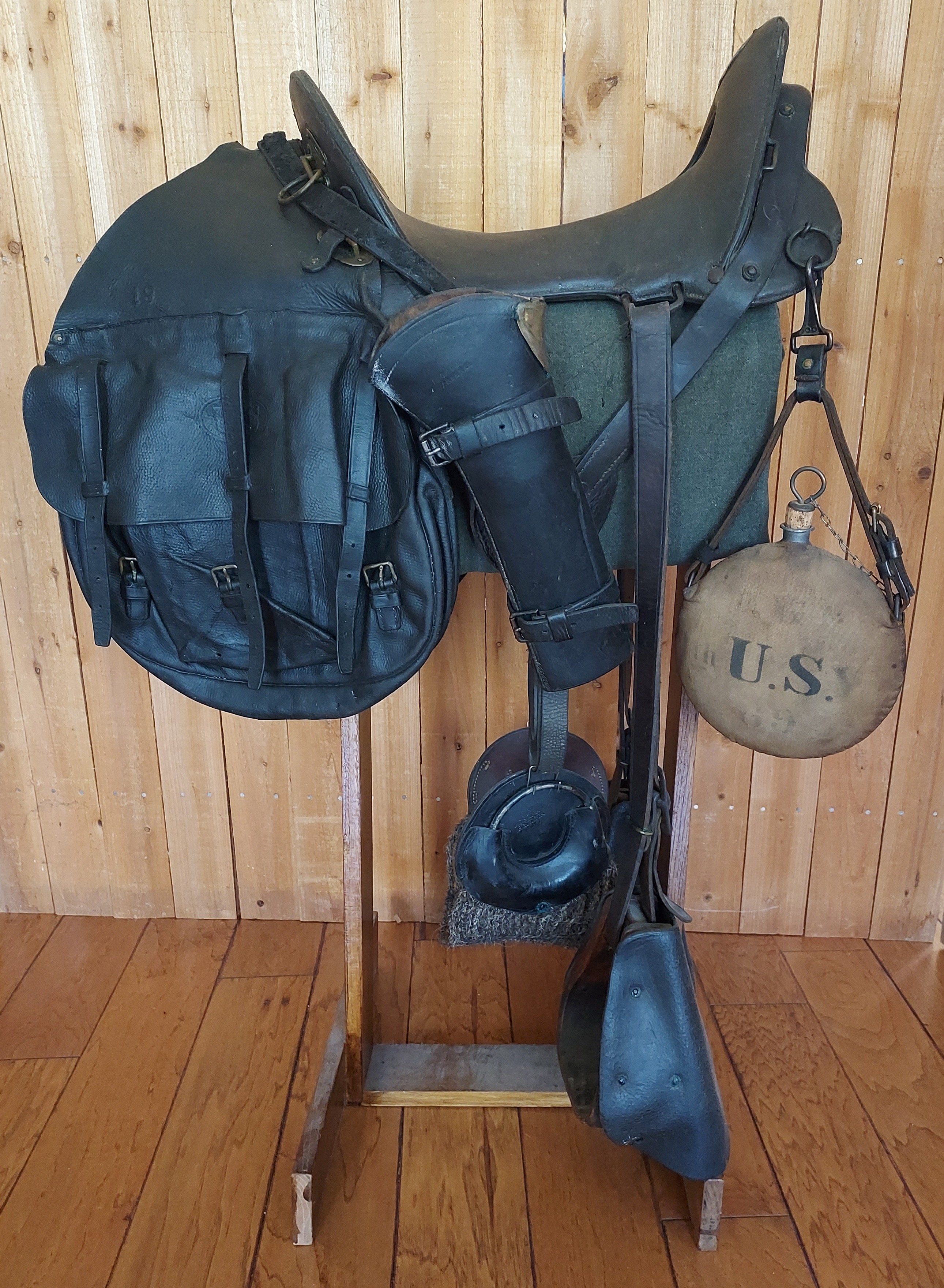
Saddler & Farrier
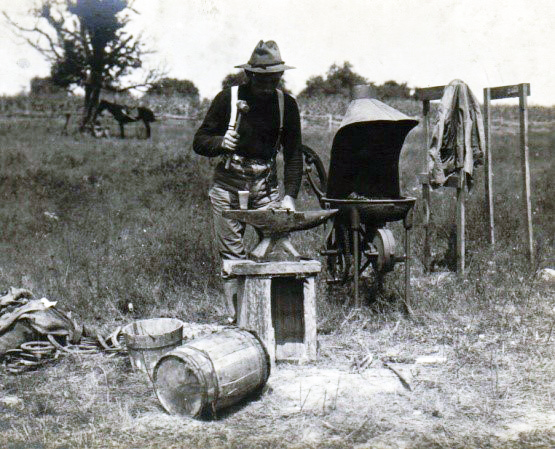
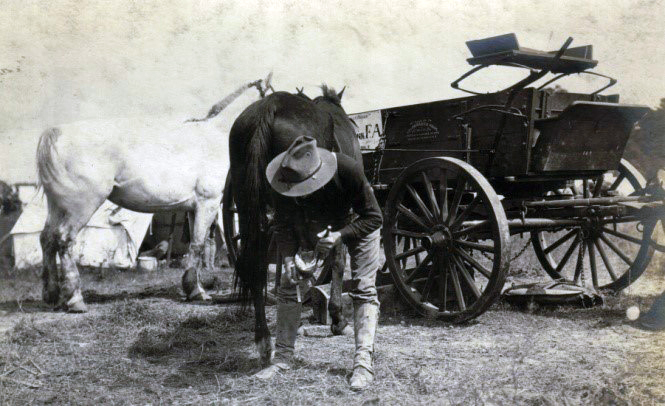
The proper shoeing of the horses was essential in keeping the animals healthy and available for whatever duty was required. The Ferrier made or prepared an individual set of four horseshoes for each animal. Different sizes of mass produced horseshoes were purchased by the Quartermaster Department. Contrary to popular belief, the Ferrier did not completely produce every horseshoe. The Ferrier selected the most compatible size and prepared the shoes to fit the horse’s hoofs. If commercially produced horseshoes were not available or corrective shoeing was necessary, an experienced Ferrier could make the entire shoe from a single piece of iron. Each horse was different and the growth of its hoof determined how often the horseshoes had to be removed and reset—normally once every five to six weeks. When the horseshoes were worn out they were often made into hook picks, hooks, or other useful items. If a horse was improperly shod, it became lame or permanently crippled.
Military First Aid System
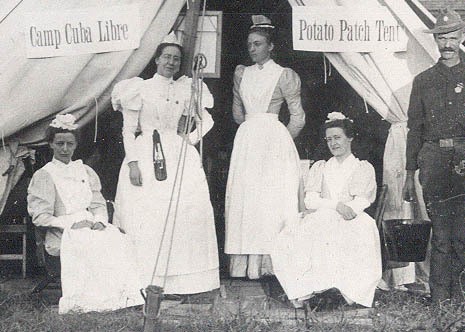
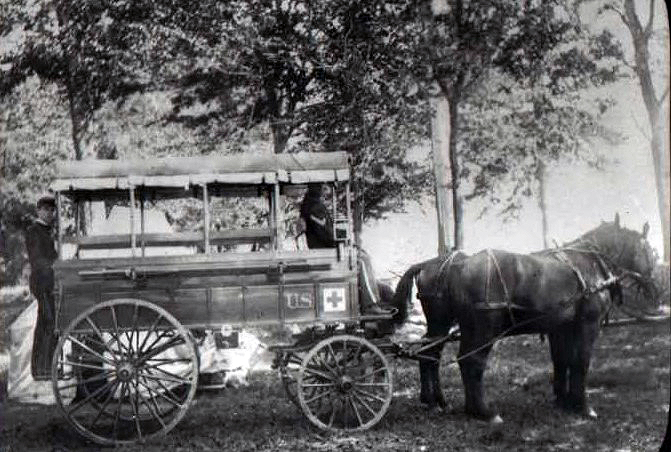
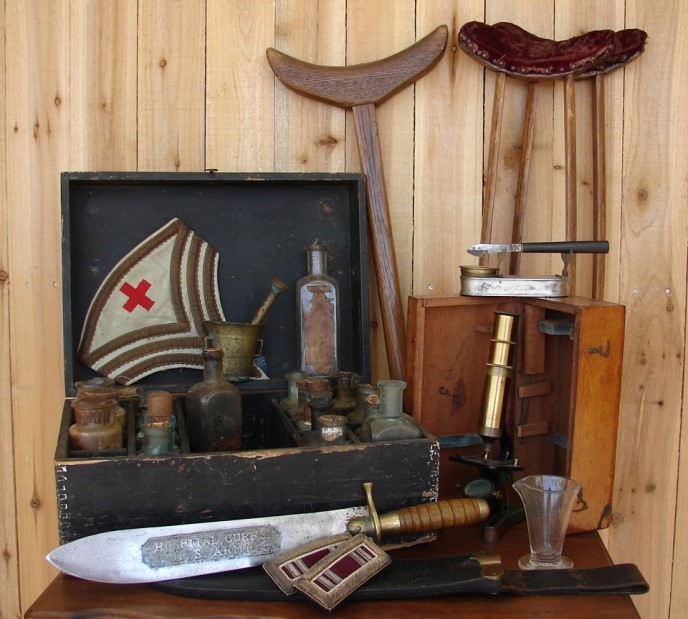
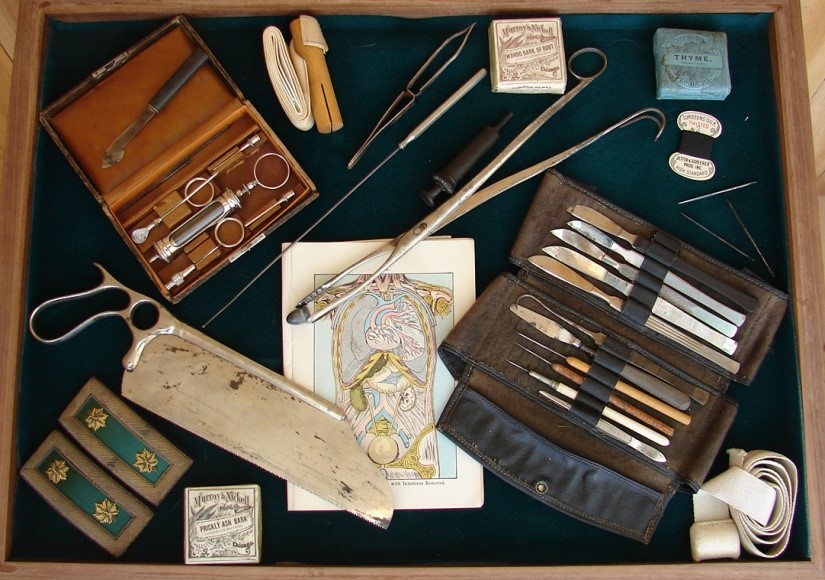
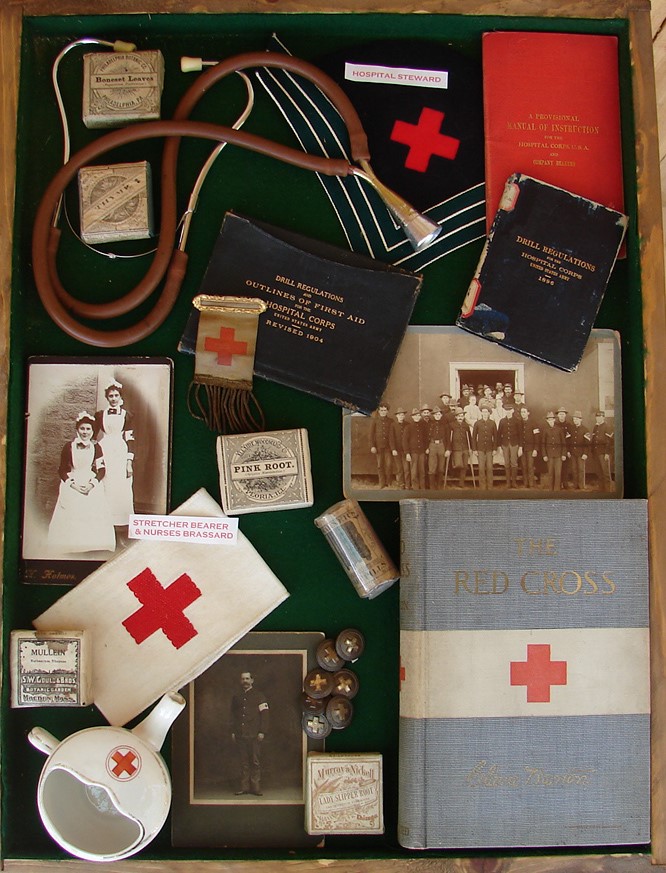
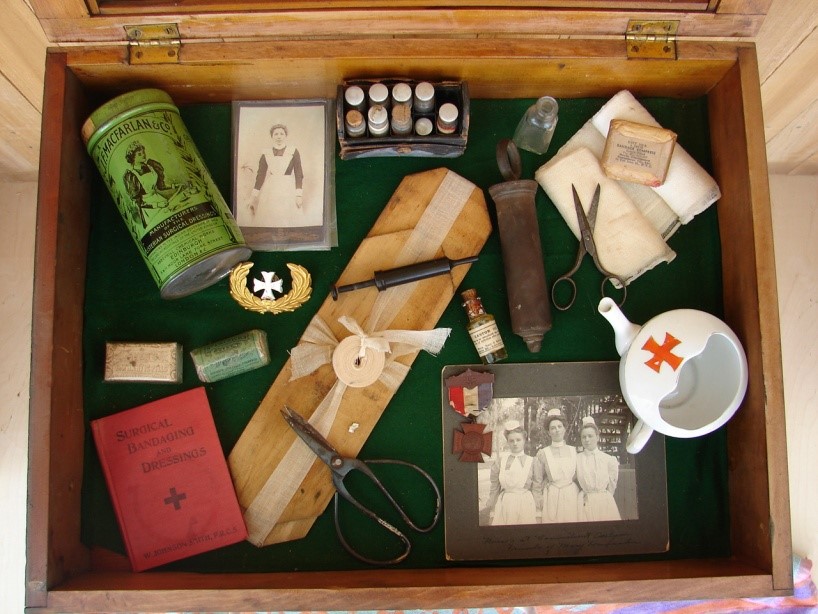
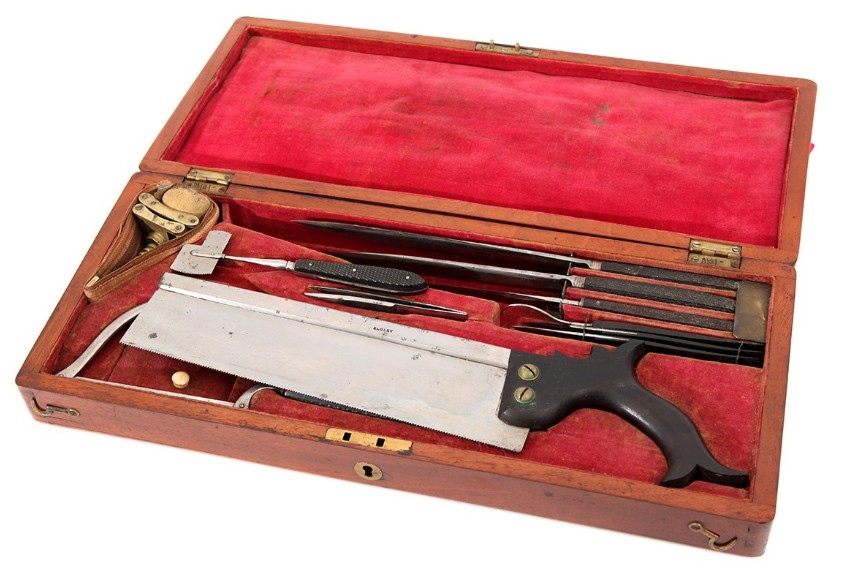
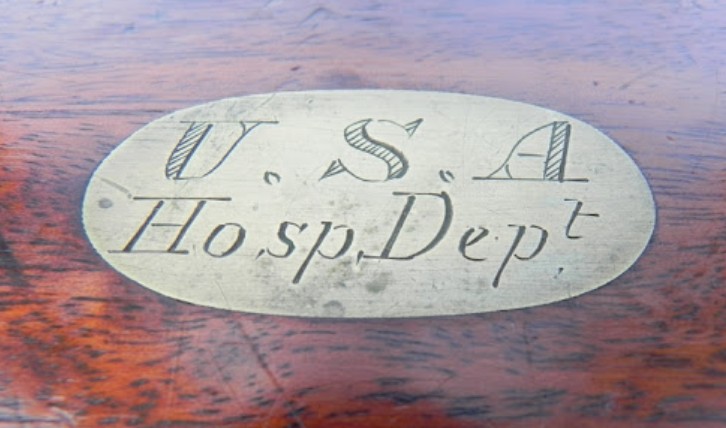
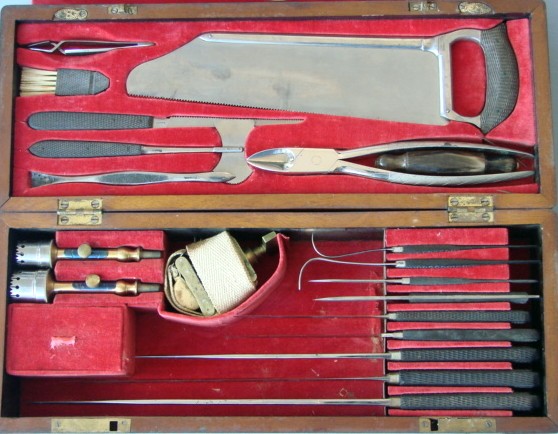
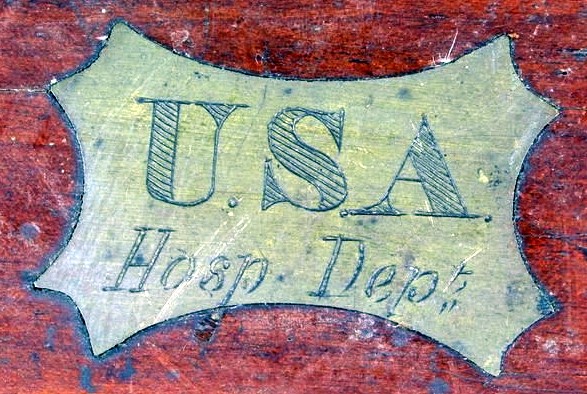
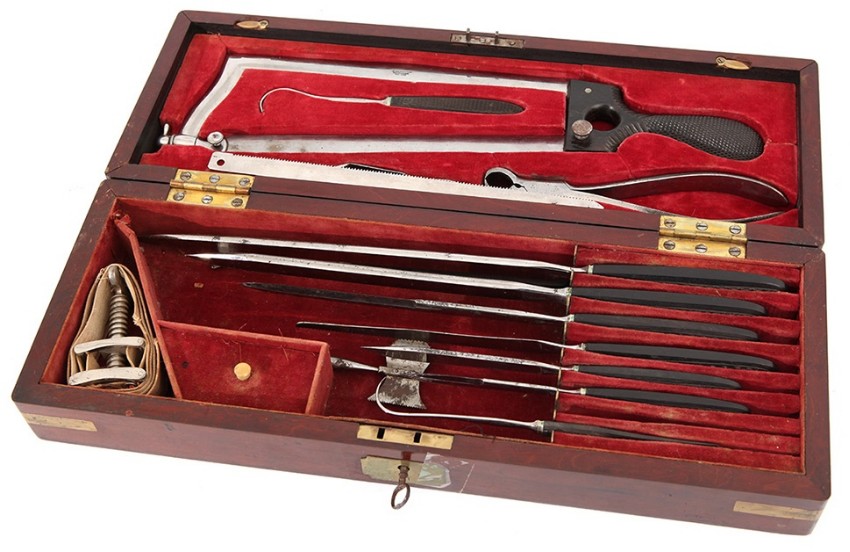
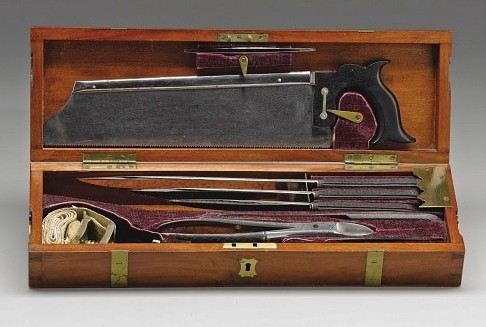
The carnage caused by weapons introduced during the American Civil War forced doctors to make advances in medicine that might have taken another 25 years to develop had the conflict not been fought. In many ways, the battlefield was the birthplace of modern emergency medicine. Letterman, a surgeon in the Union army, invented a system to rapidly remove wounded soldiers from the battlefield—first to an aid station about 75 yards from the fighting, staffed by surgeons who stabilized patients, then by horse-drawn ambulance to a field hospital, and finally to a hospital away from the fighting. Doctors found cures for infections even without understanding germs: experiments with bromine and iodine to treat gangrene led from an abysmal cure rate before the war to a 96 percent cure rate by 1865. From 1865 to 1898, America was at peace, which kept advances in battlefield medicine relatively minor. There were, however, several significant events during this time that helped contribute to the Army’s first aid system. When war with Spain broke out in 1898, many of Letterman’s Civil War reforms were forgotten, and the military was again unprepared to care for its wounded. To help supplement medical personnel, George M. Sternberg, the Army’s Surgeon General, contracted trained nurses from the Daughters of the American Revolution. As a result, more than 1,500 female nurses served in the field in the U.S., Cuba and the Philippines.
Tintypes & Cartes de Visite
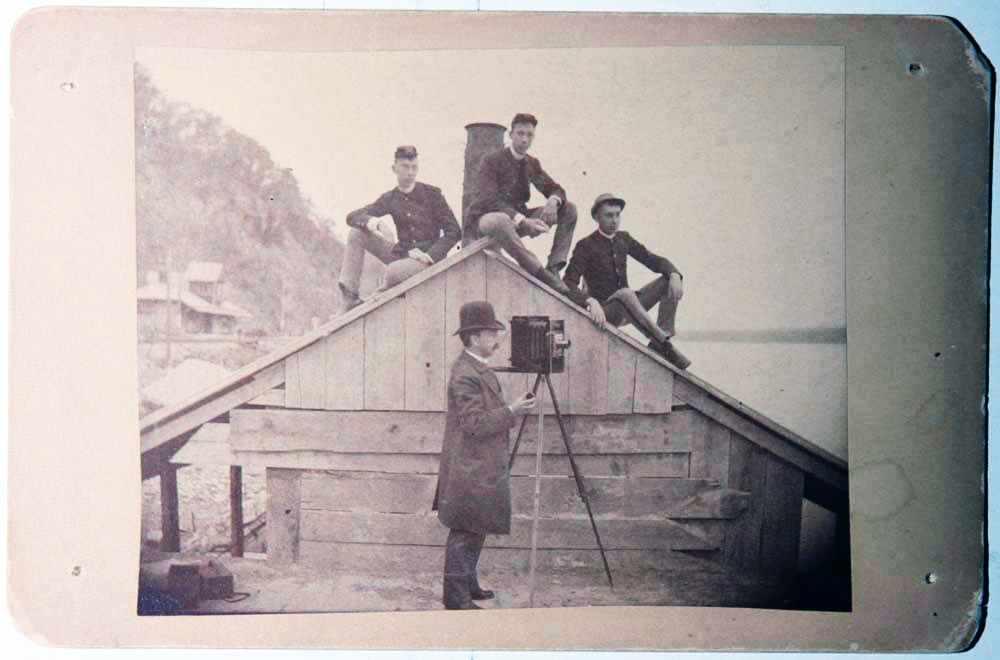
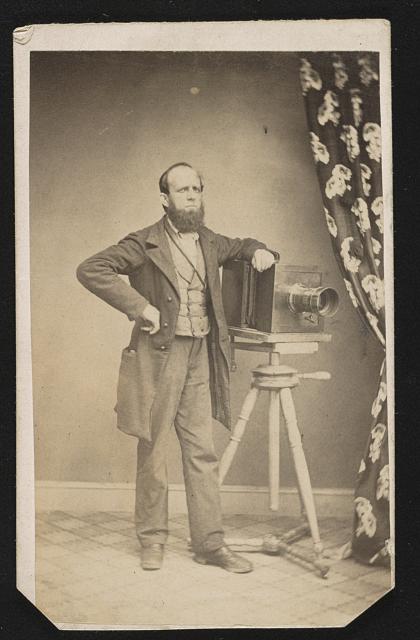
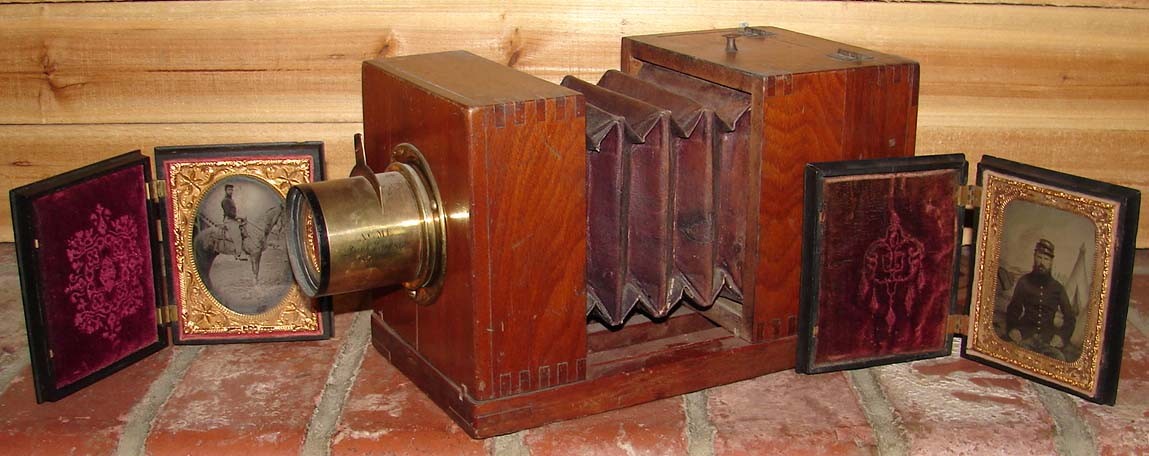
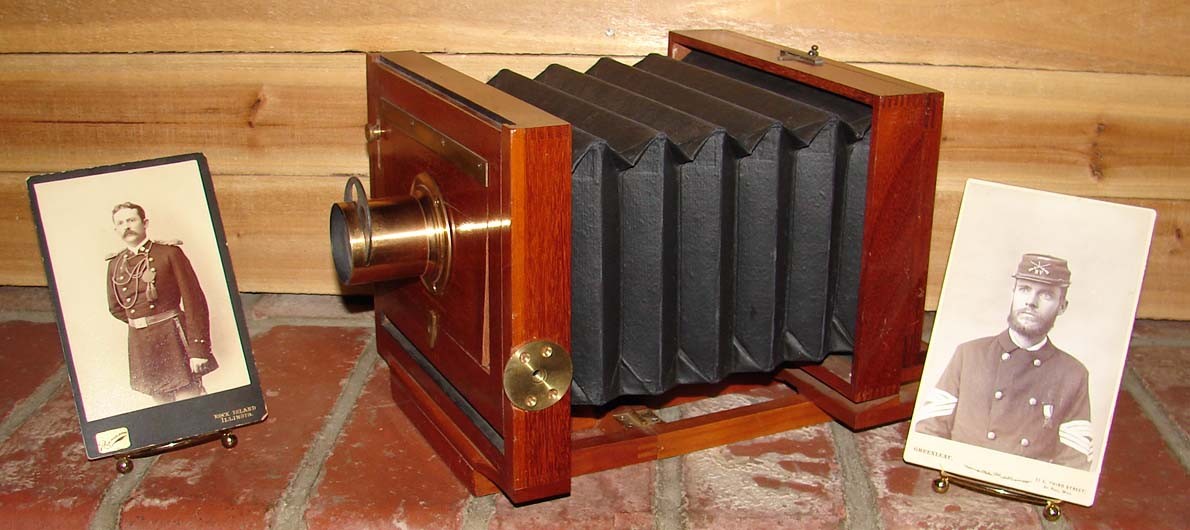
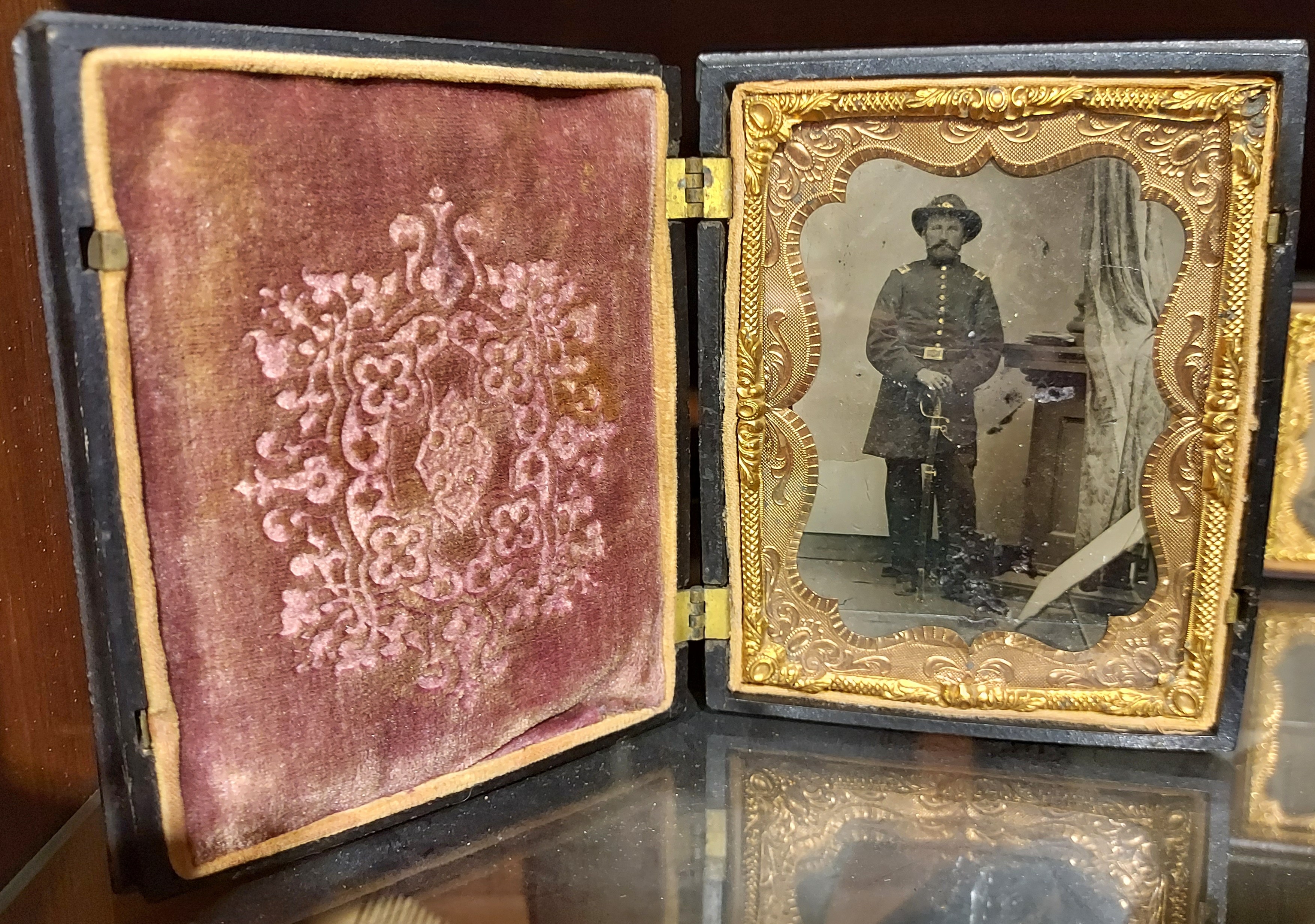
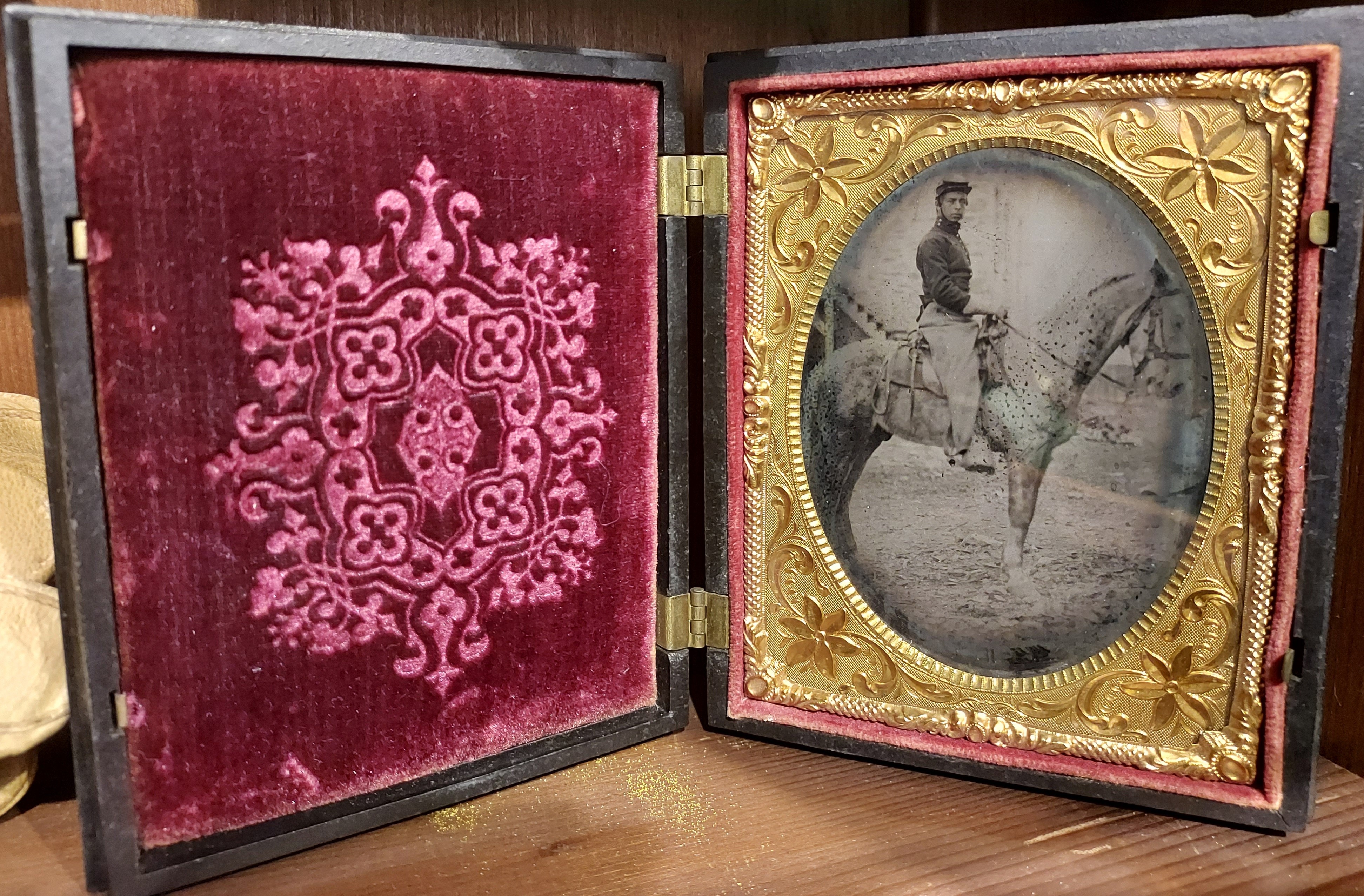
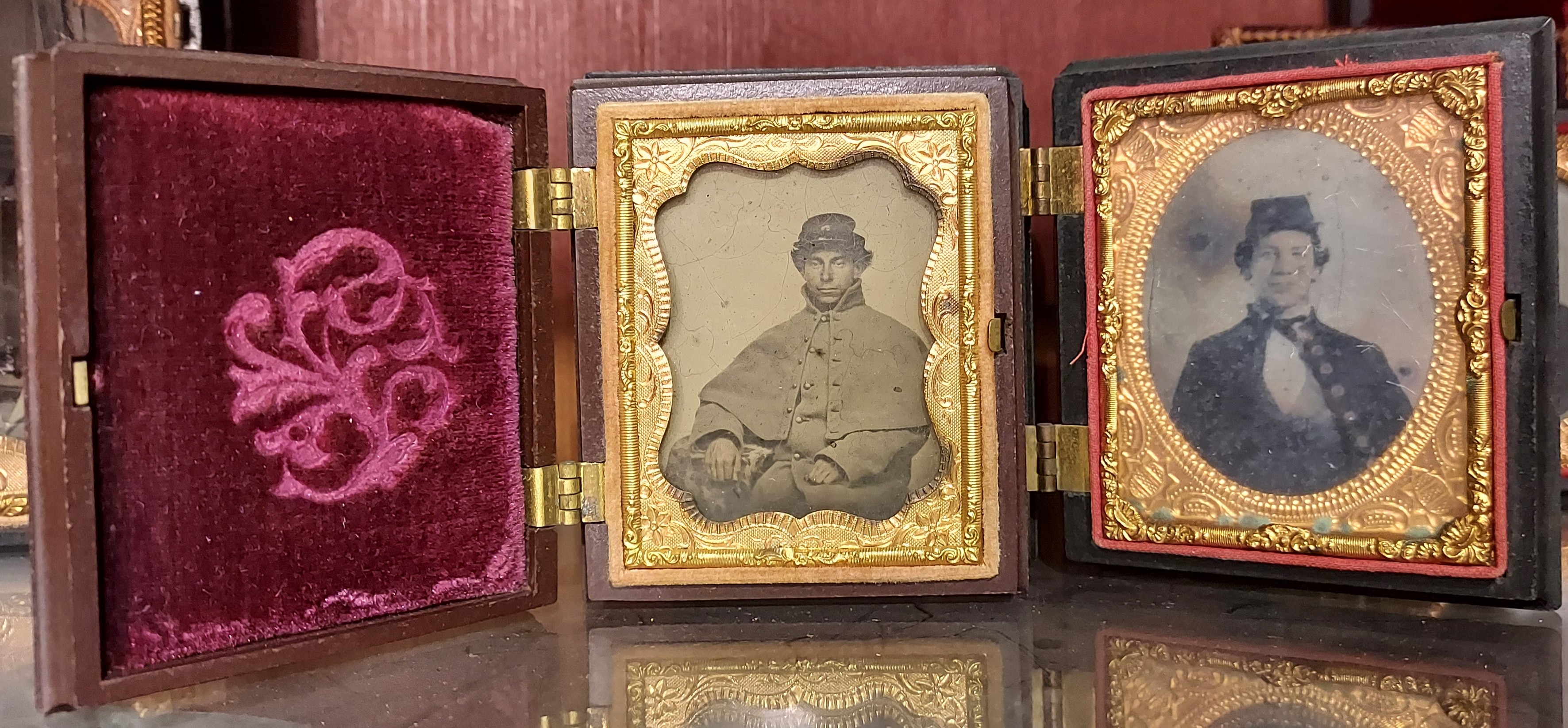
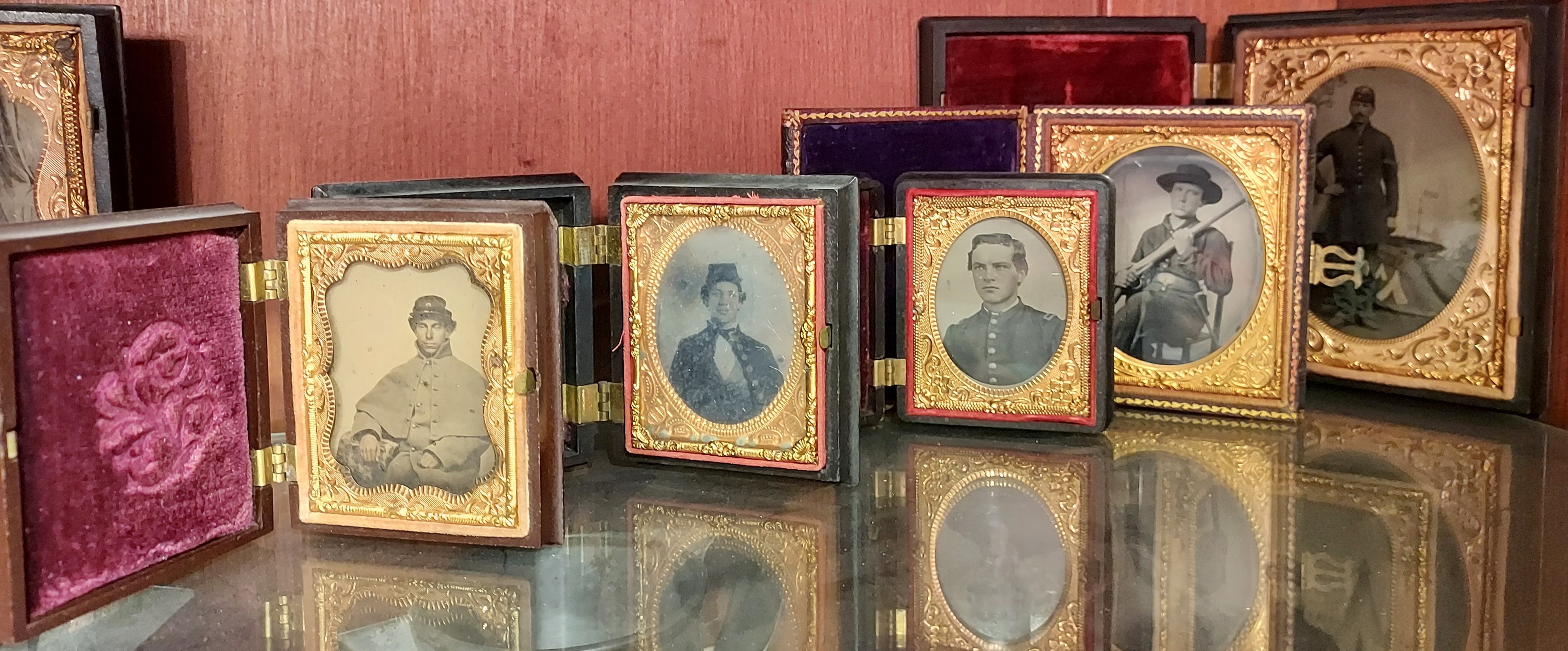
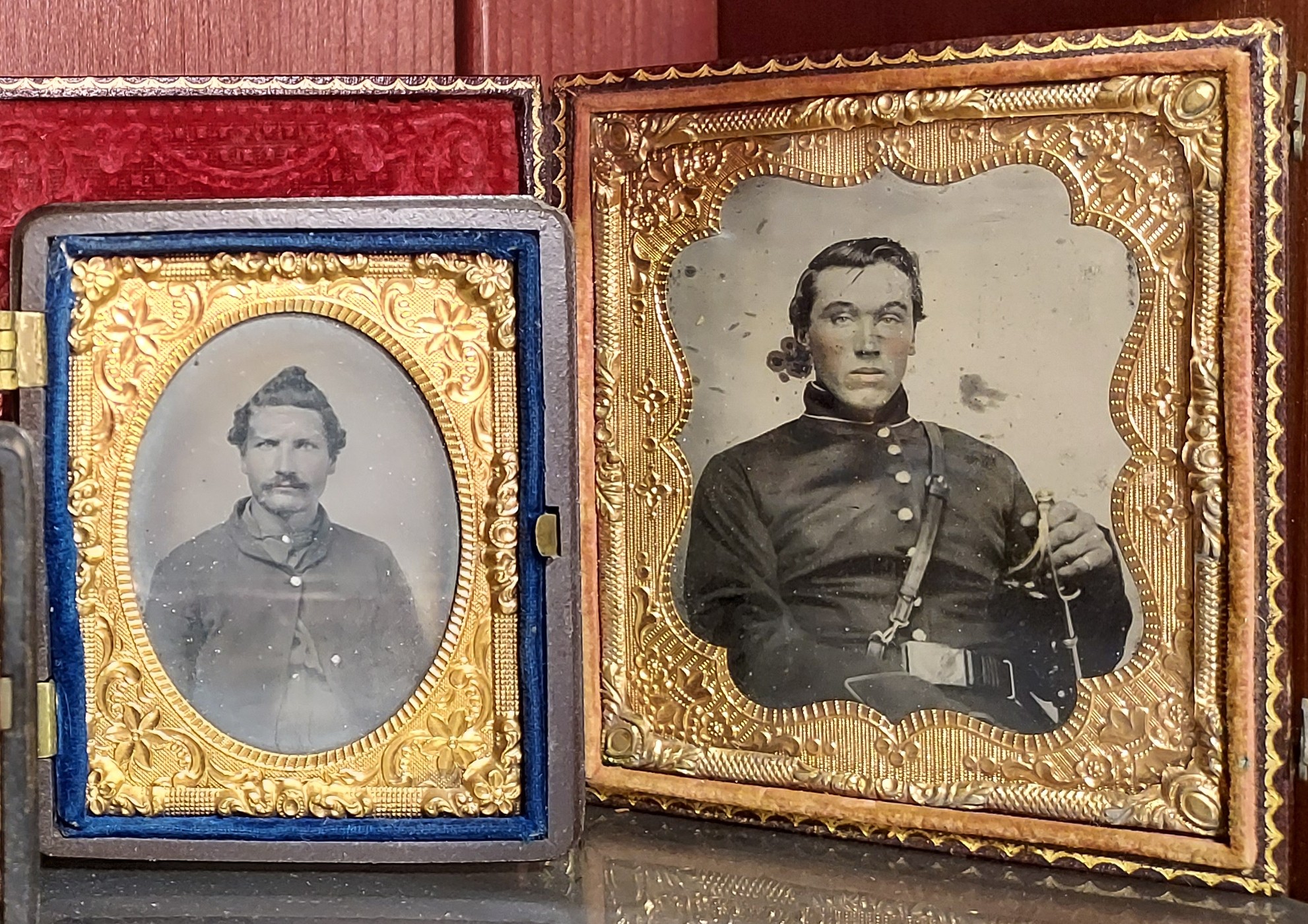
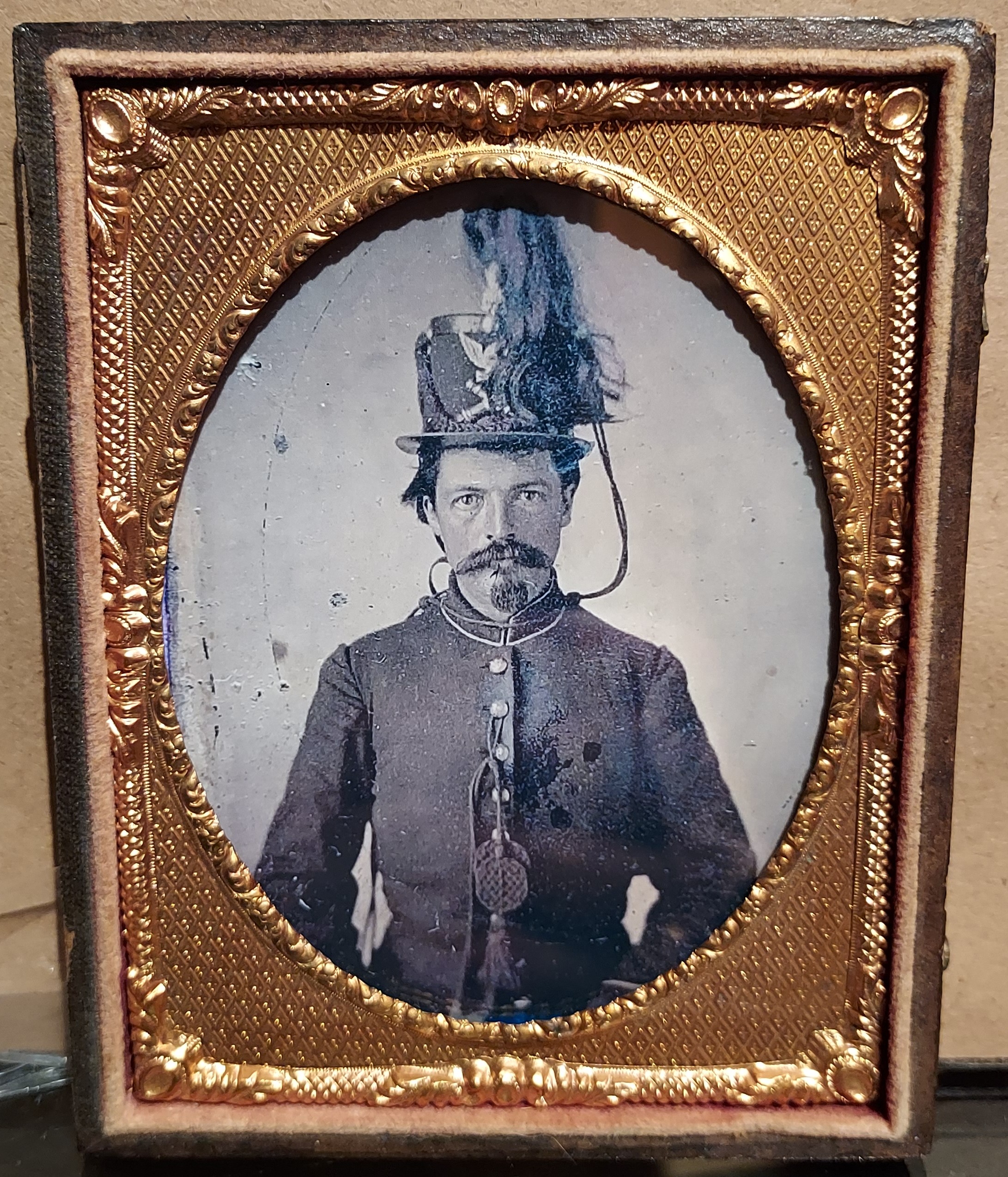
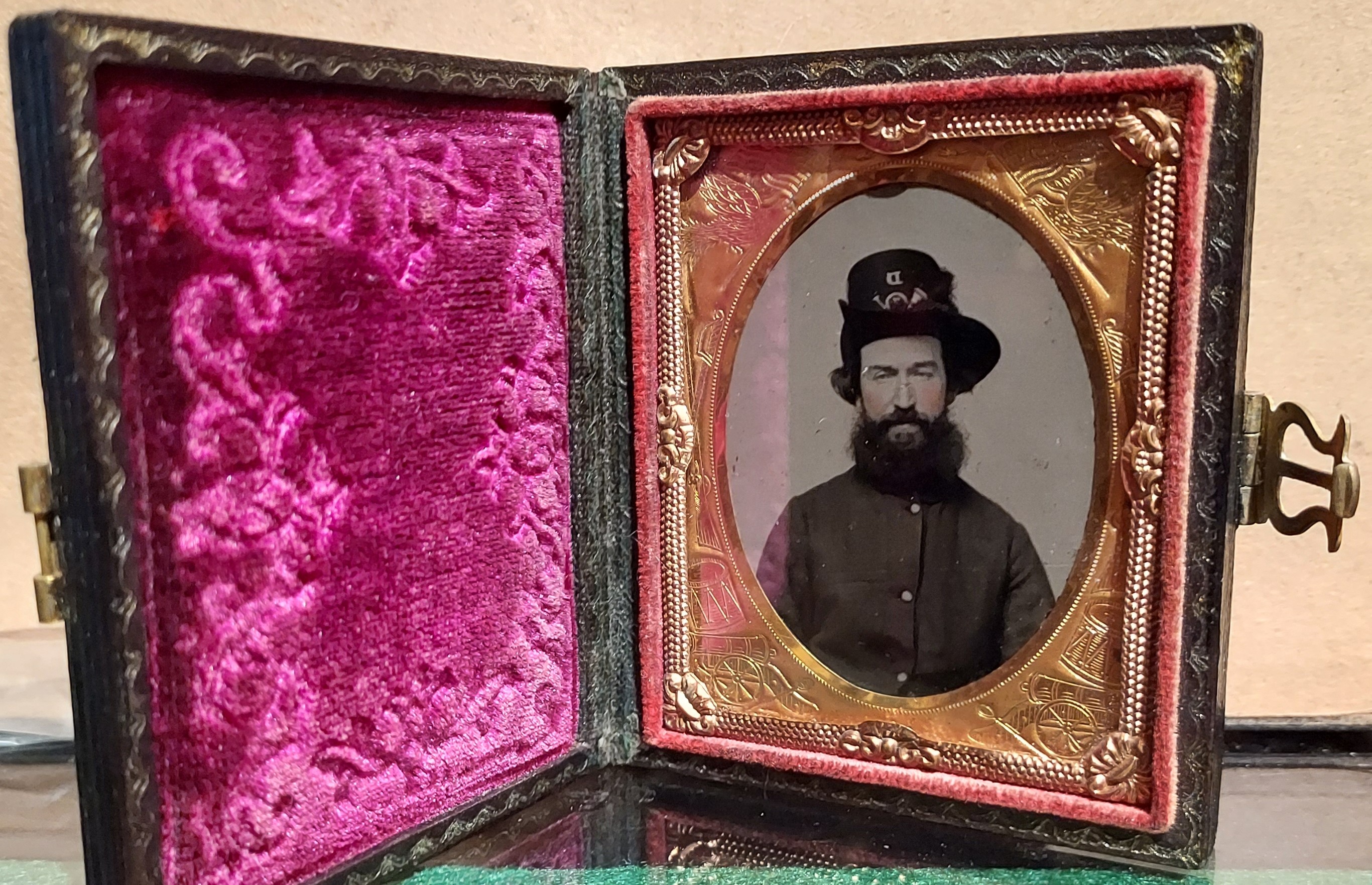
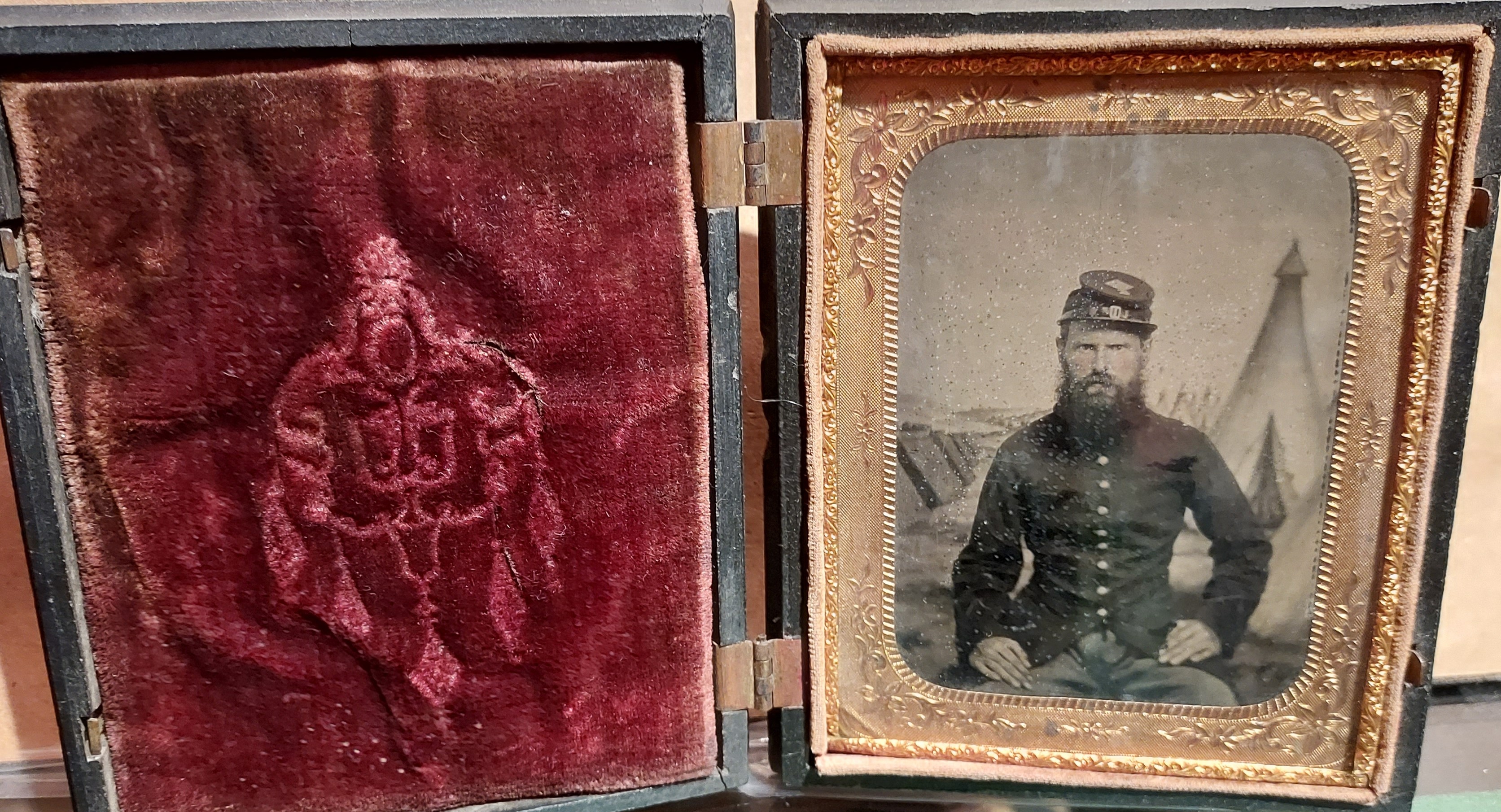
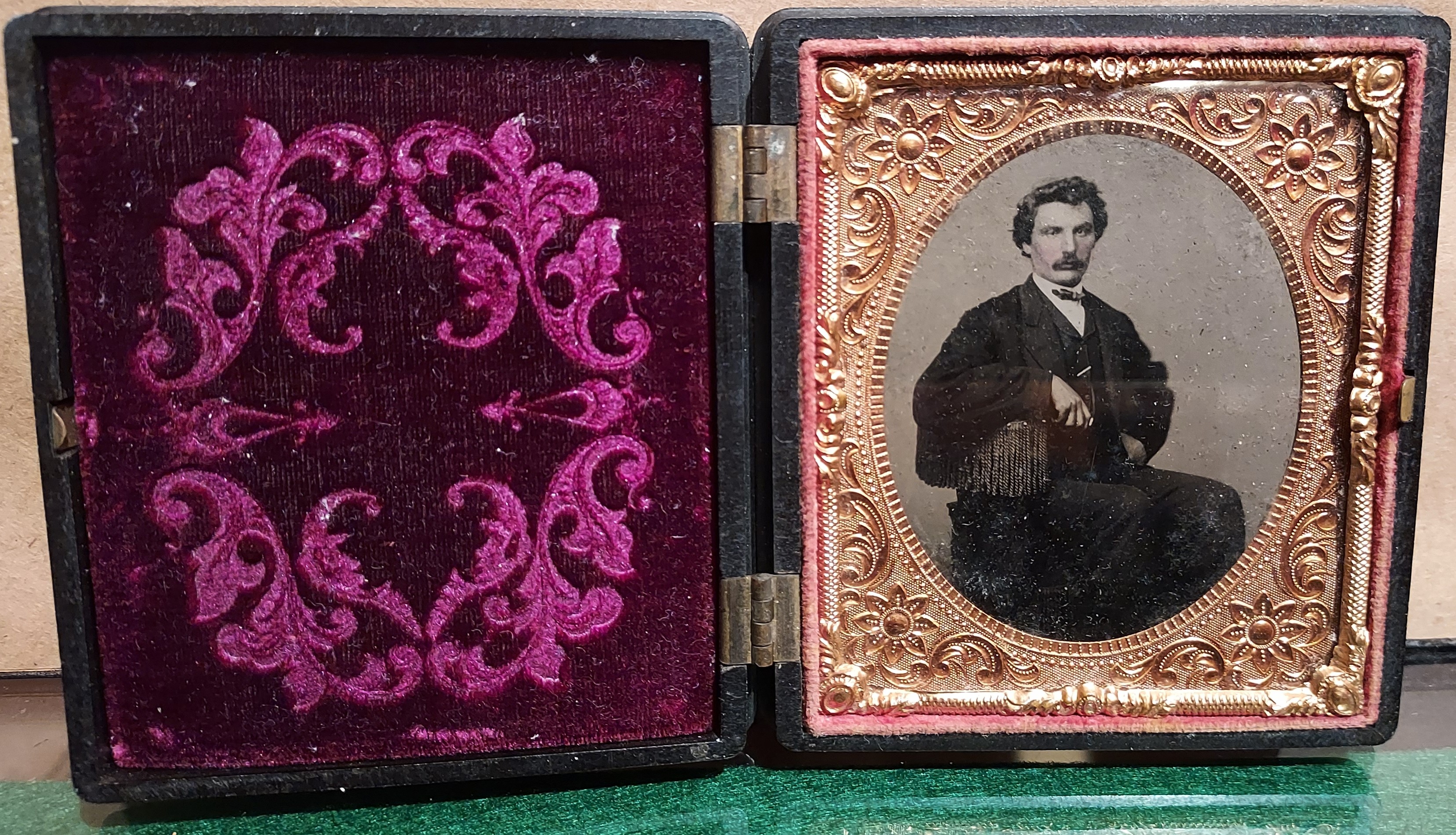
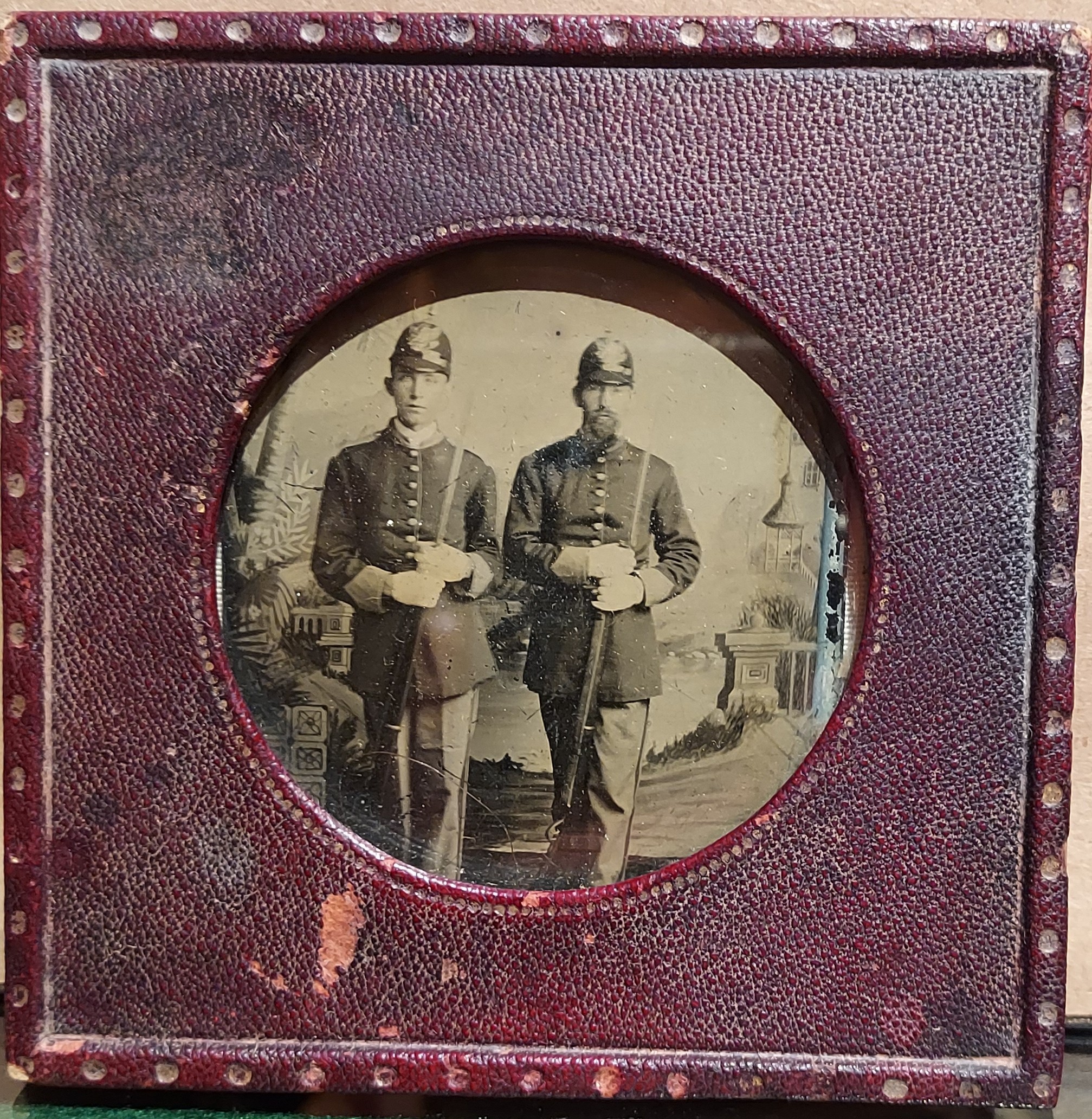
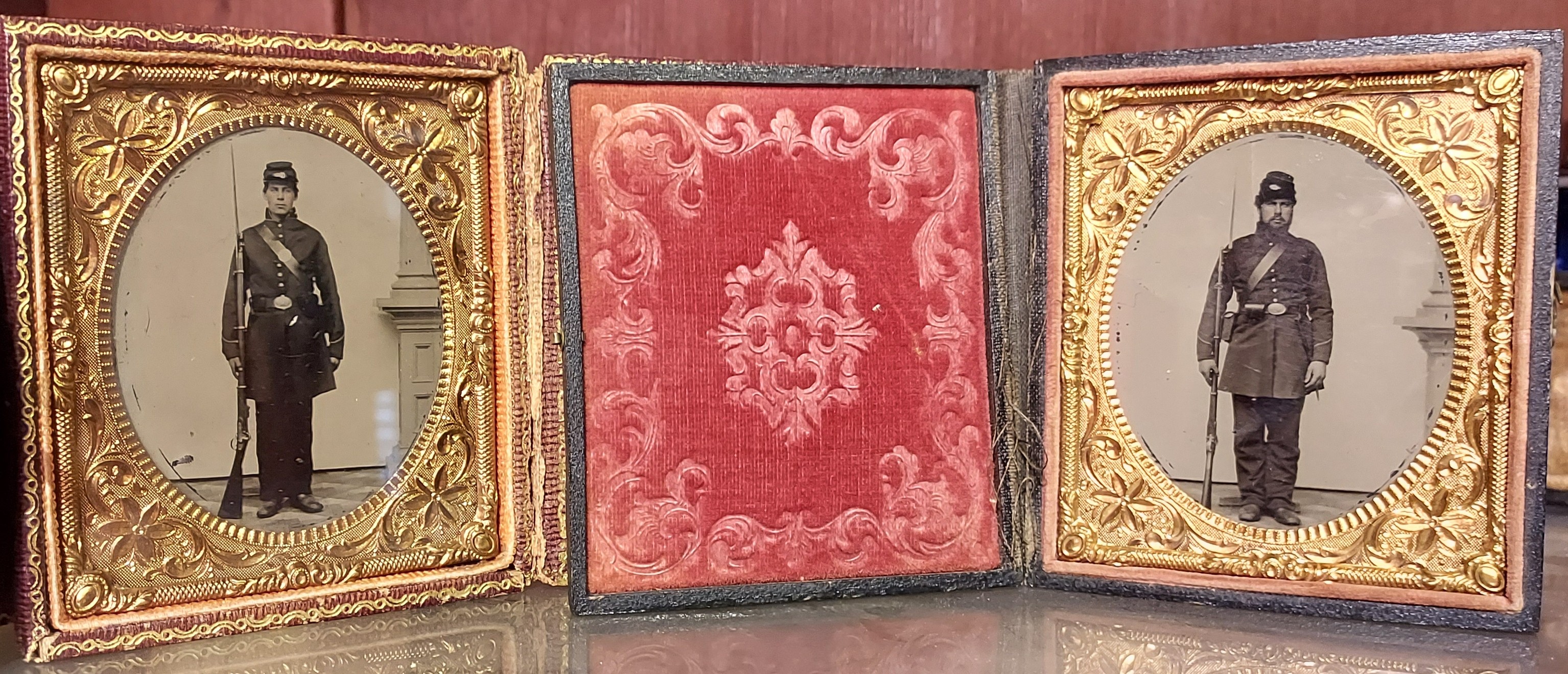
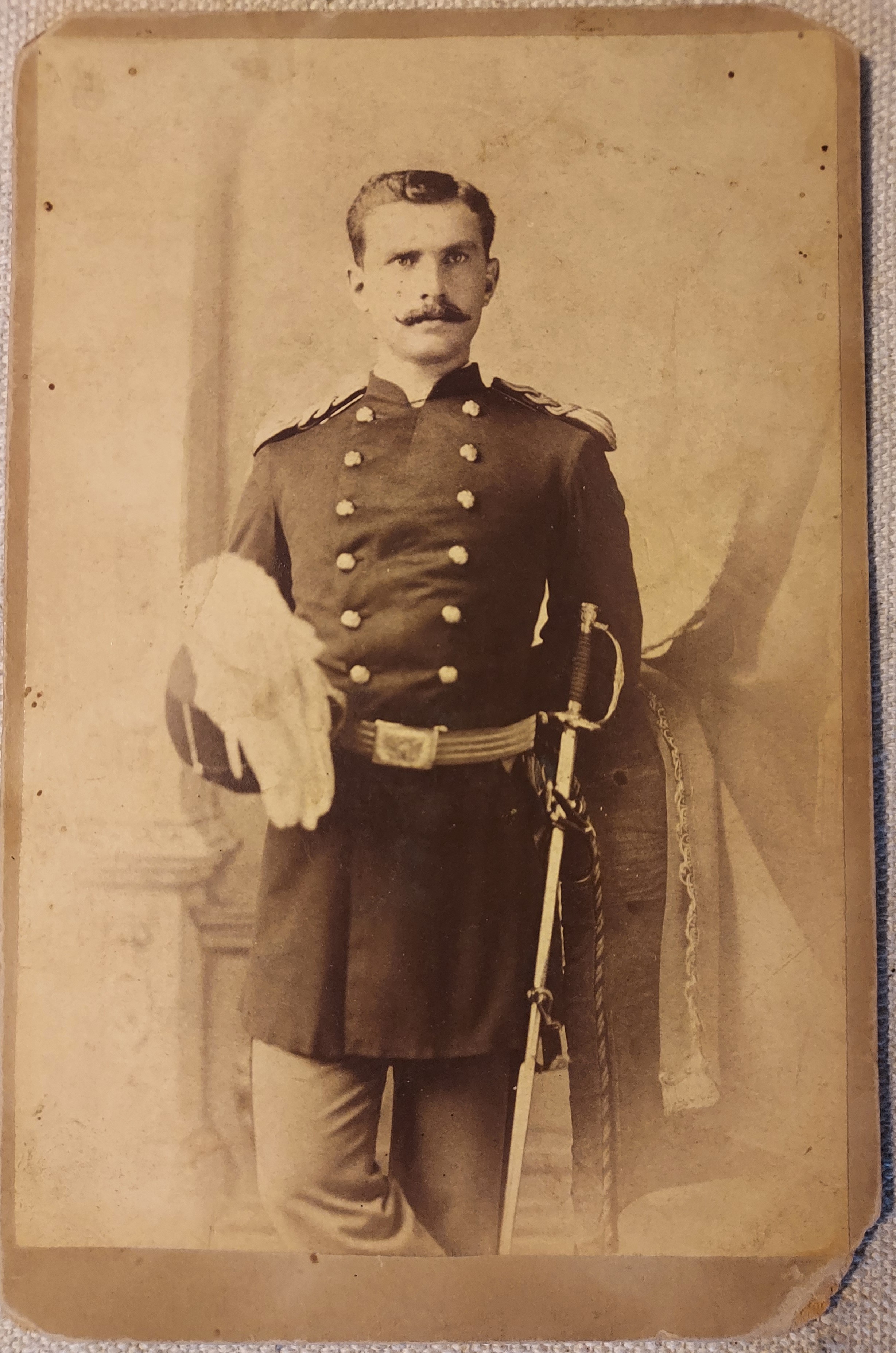
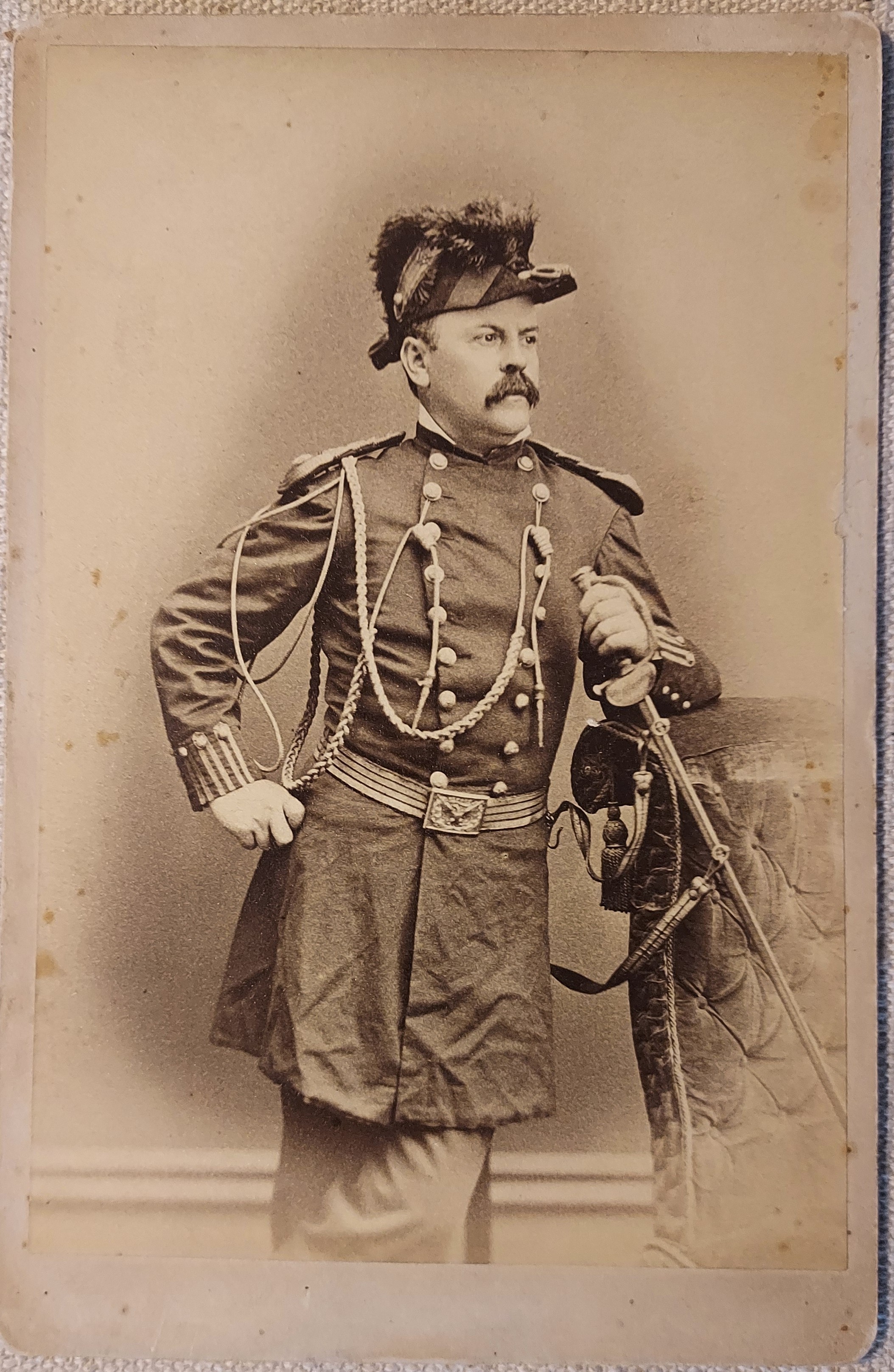
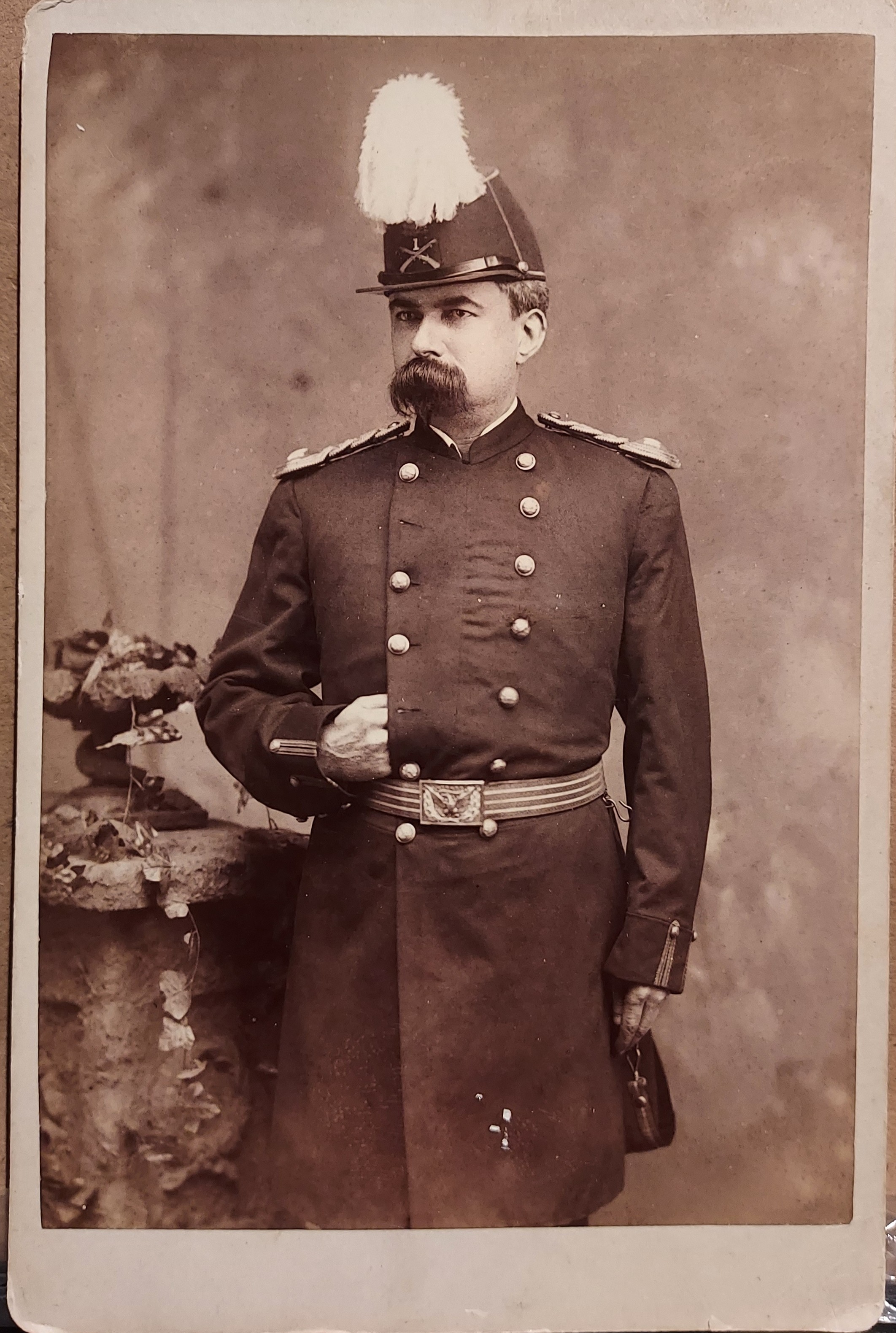
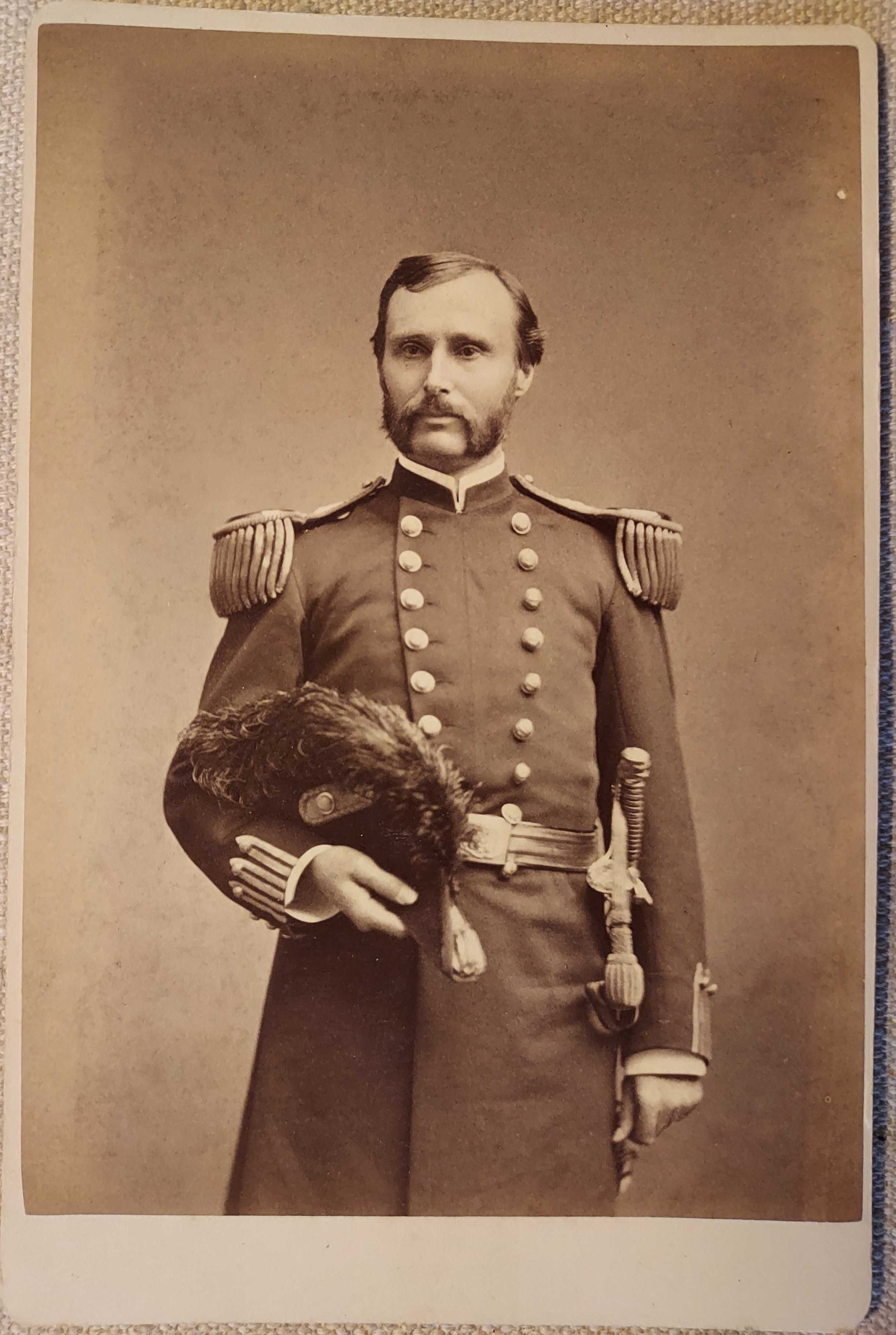
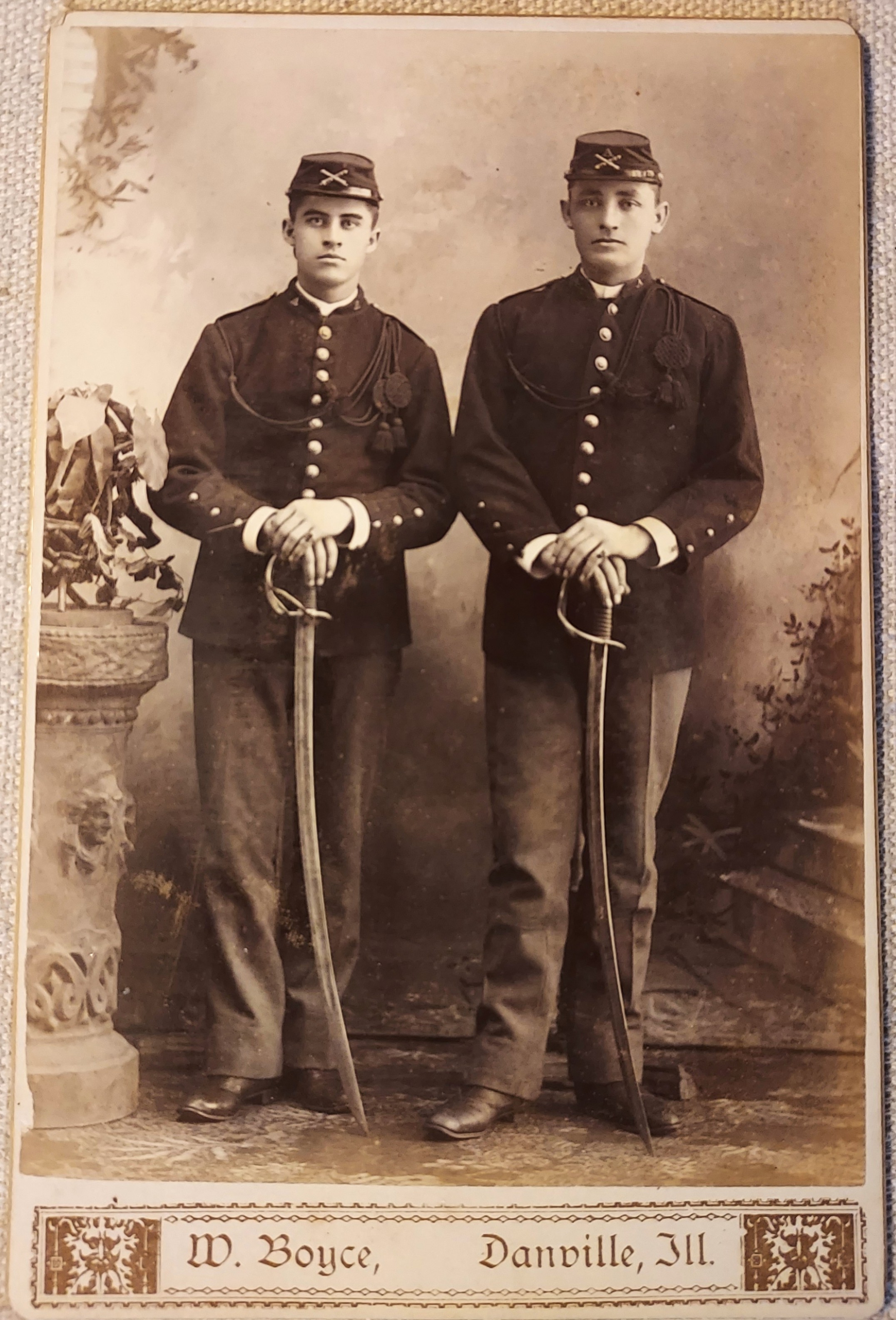
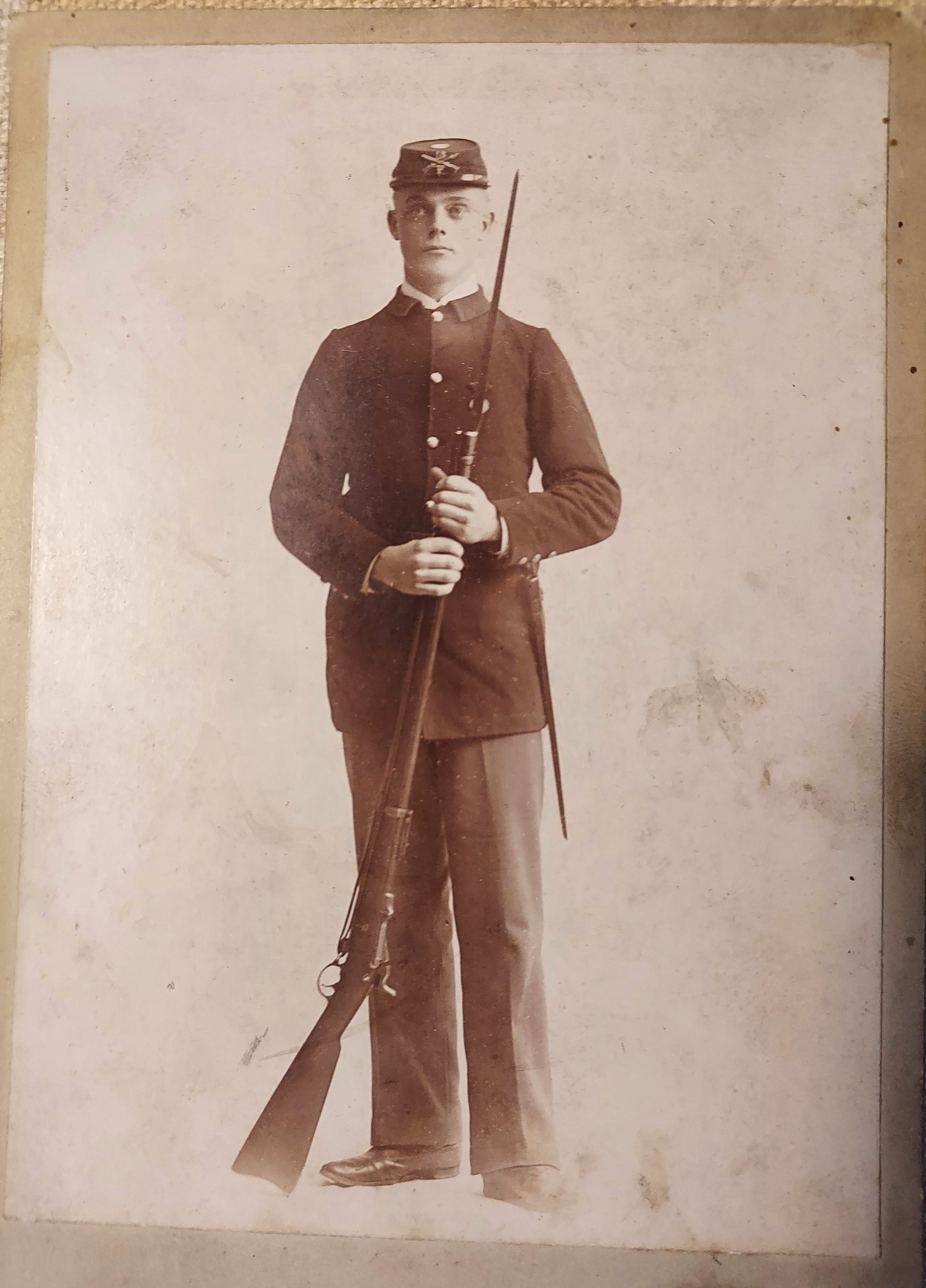
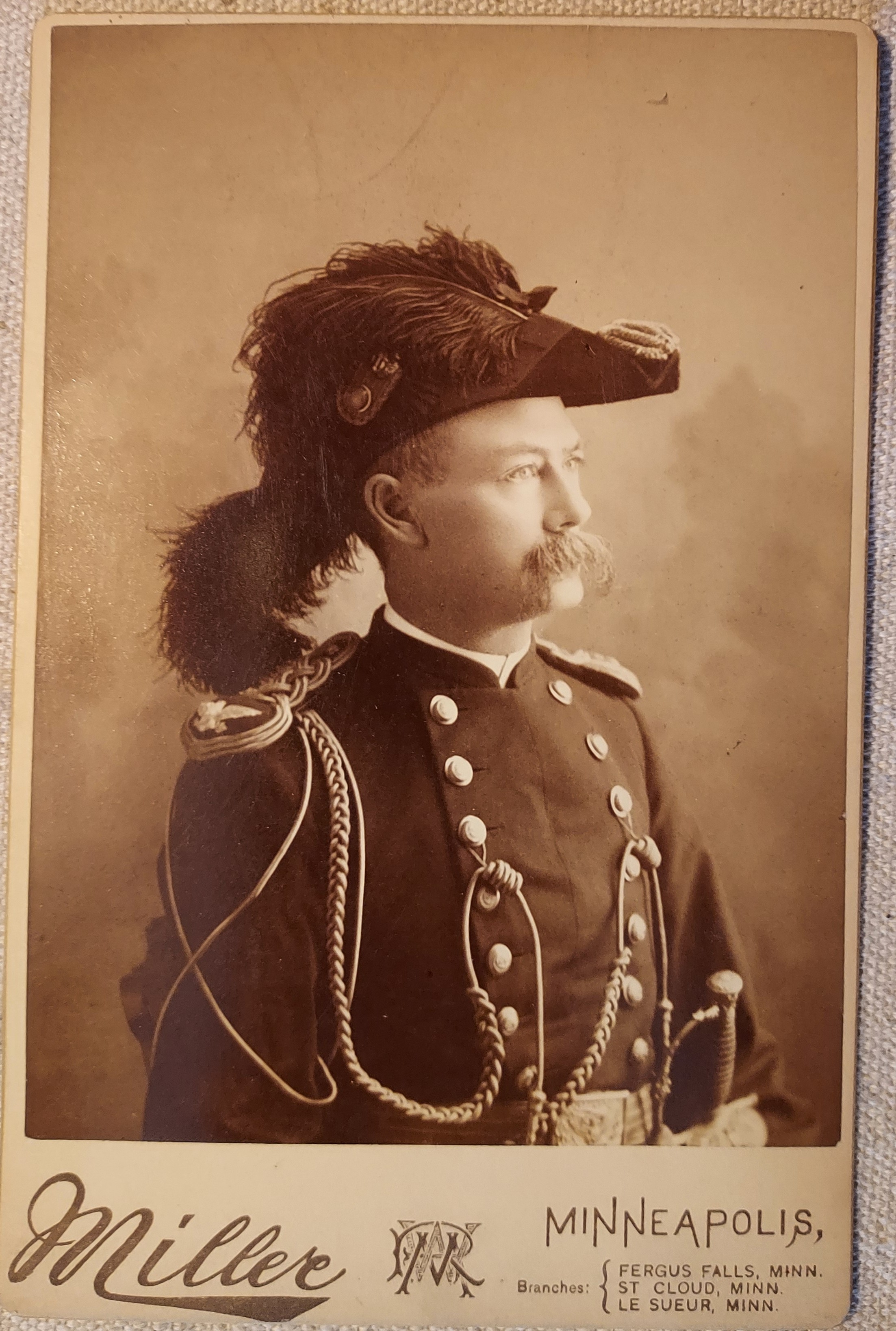
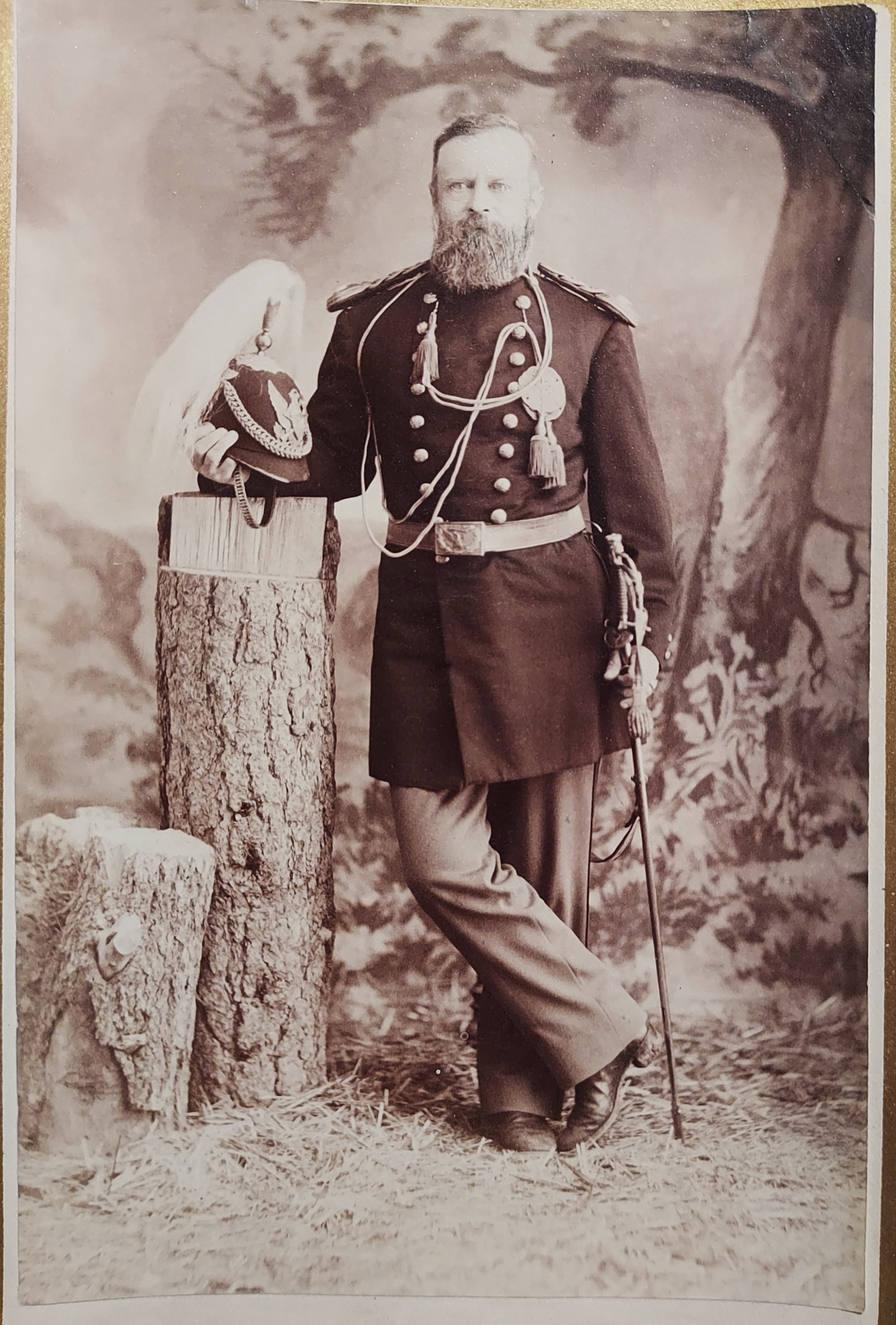
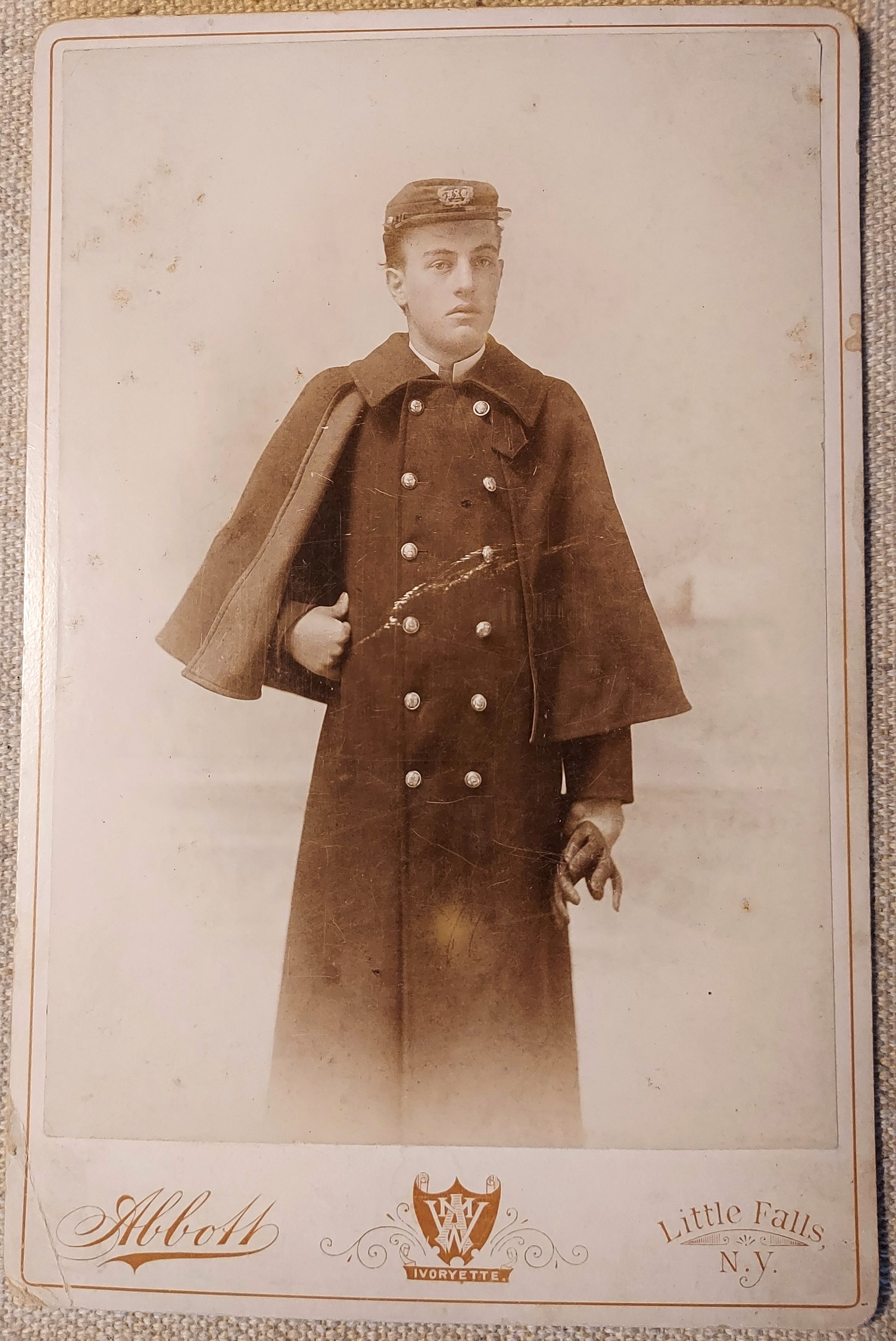
Louis Daguerre was the inventor of the first practical process of photography. The daguerreotype gained popularity quickly; by 1850, there were over seventy daguerreotype studios in New York City alone. Tintypes, patented in 1856 by Hamilton Smith, were another medium that heralded the birth of photography—a thin sheet of iron provided a base for light-sensitive material, yielding a positive image. In 1851, Frederick Scott Archer invented the wet plate negative: using a viscous solution of collodion, he coated glass with light-sensitive silver salts, creating a more stable and detailed negative than paper allowed. Wet plates had to be developed quickly before the emulsion dried, which meant carrying a portable darkroom into the field. In 1879, the dry plate was invented, a glass negative plate with a dried gelatin emulsion that could be stored for a period of time—photographers no longer needed portable darkrooms. In 1889, George Eastman invented flexible film that could be rolled, making the mass-produced box camera a reality. These small, personal tintype and carte de visite portraits were produced by itinerant photographers for soldiers to send home to their families.
Regulation Books
From 1775 until Valley Forge, American forces were brave but disorganized citizens fighting against highly trained and organized British Soldiers. To win the Revolutionary War, General George Washington’s men needed better training, discipline, and esprit de corps. General Washington tasked Baron von Steuben with transforming the exhausted men at Valley Forge into a disciplined fighting force. In the harsh Pennsylvania winter, Baron von Steuben instructed a company of future leaders in basic military movements and tactical skills—the predecessors of our Drill Sergeants. He developed that cadre until they could, in turn, train the entire Revolutionary Army in the art of basic military maneuvers. As a result, Washington’s men fought skillfully in battle and truly embodied a professional army. By 1783, America had won its independence.
The Soldier’s Guide is a pocket reference for subjects in which all soldiers must maintain proficiency, regardless of rank, component or military occupational specialty (MOS). It condenses information from other field manuals, training circulars, soldier training publications, Army regulations, and other sources. It addresses both general subjects and selected combat tasks. While not all-inclusive or intended as a stand-alone document, the guide offers soldiers a ready reference in many subjects.