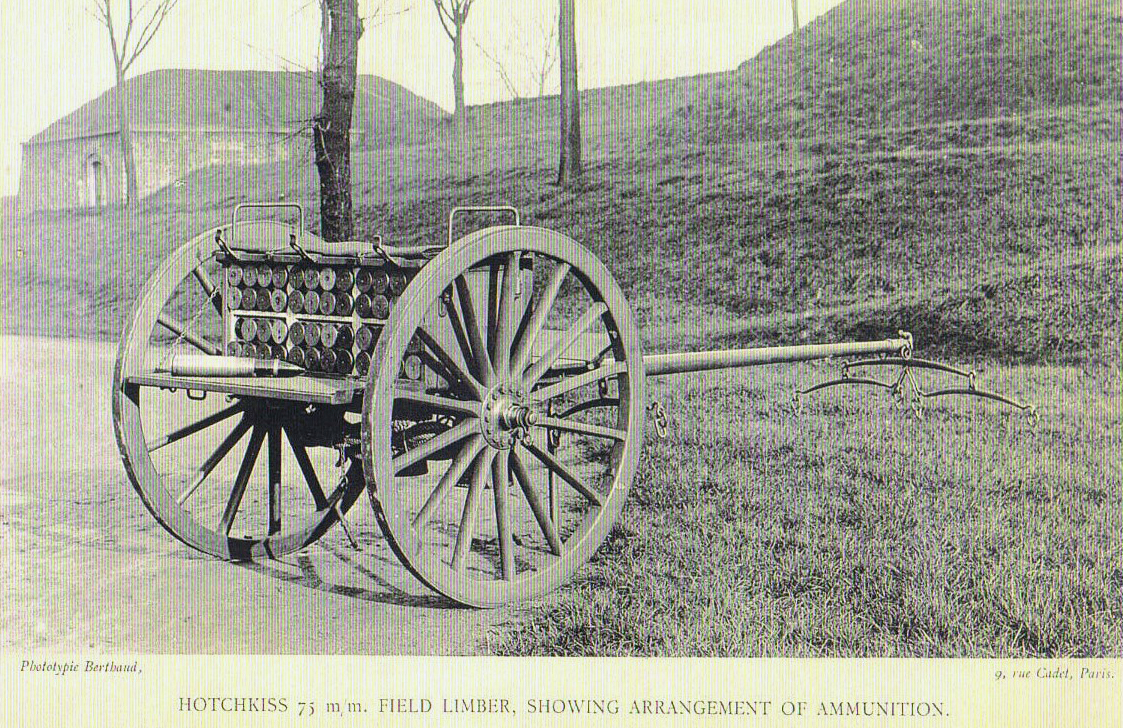
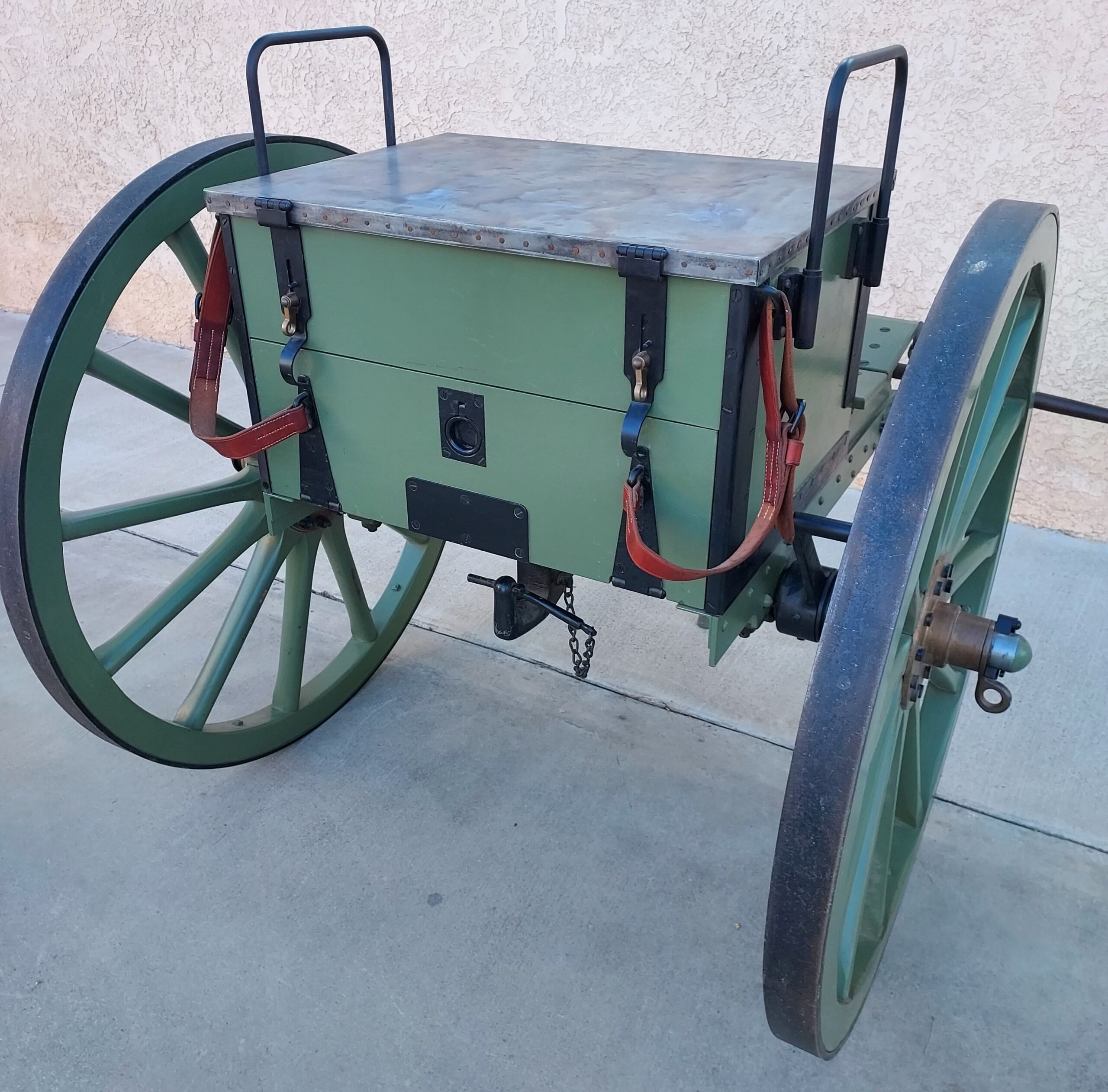
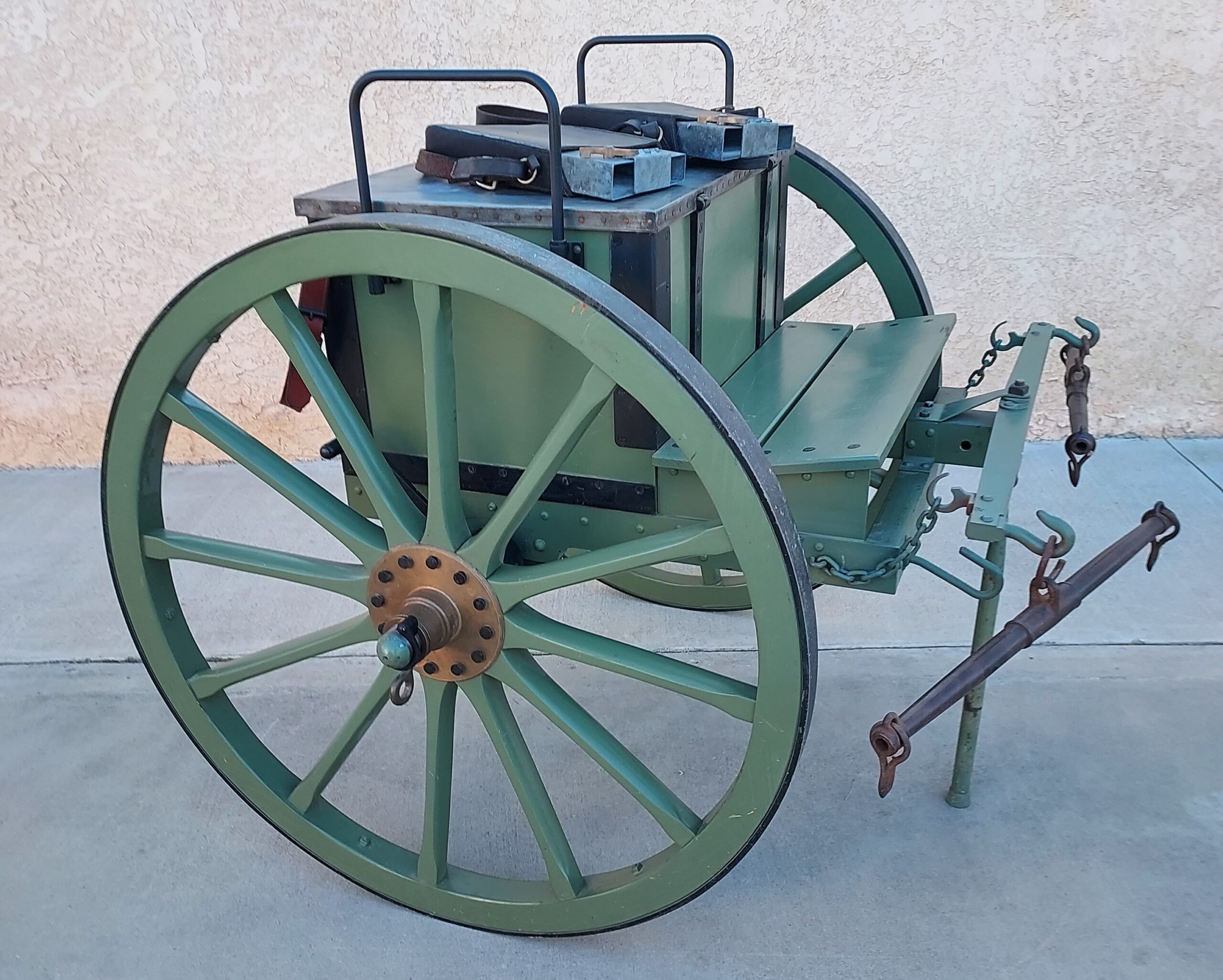
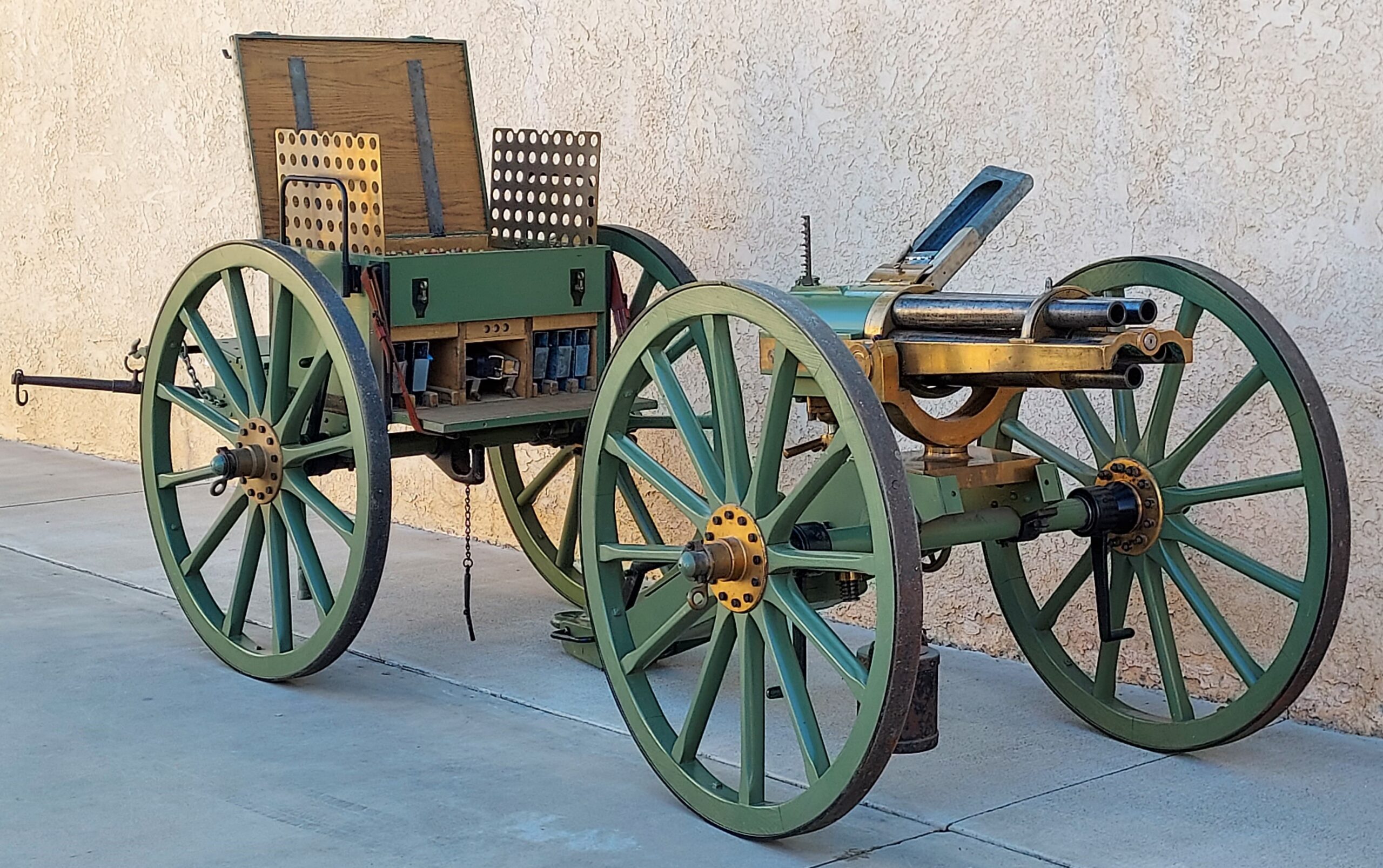
The limber was an indispensable piece of equipment. It was a simple two-wheeled cart composed of an axle, with its wheels, surmounted by a framework designed for holding an ammunition chest and receiving the tongue. At the back of the axle is the pintle hook, on which the lunette on the trail of the gun carriage can be keyed into place. The ammunition chest contained the rounds for the artillery pieces. A team of horses was hitched to the limber and an artillery piece was hooked on to its rear when the army was on the move.
The ammunition chest lid was designed to seat the driver. In times of battle, the limber and horses were left behind the lines of fire.
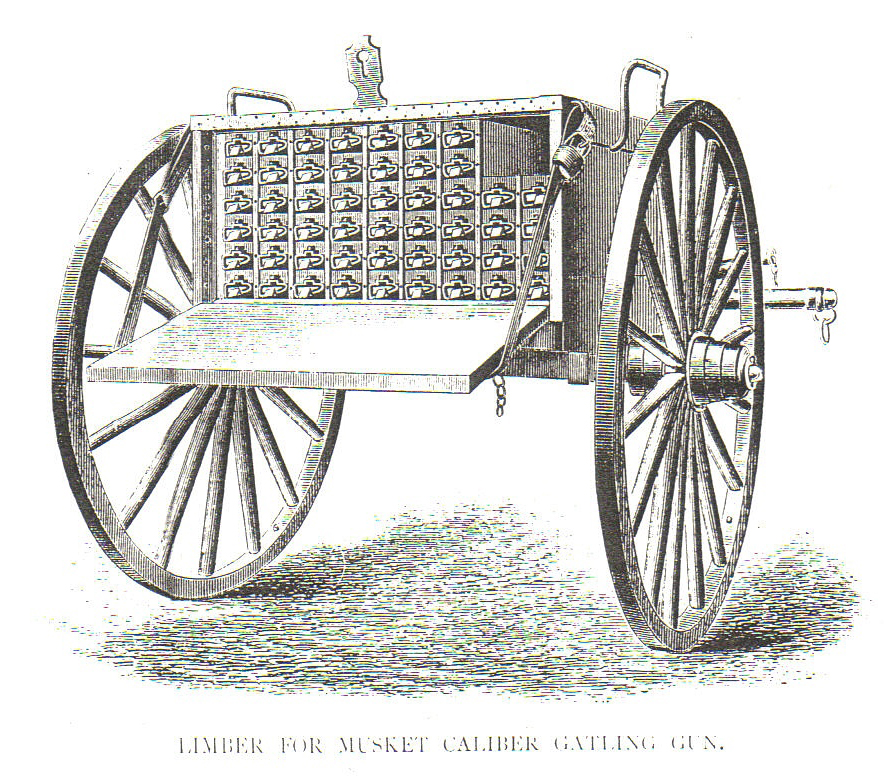
Gatling Limber
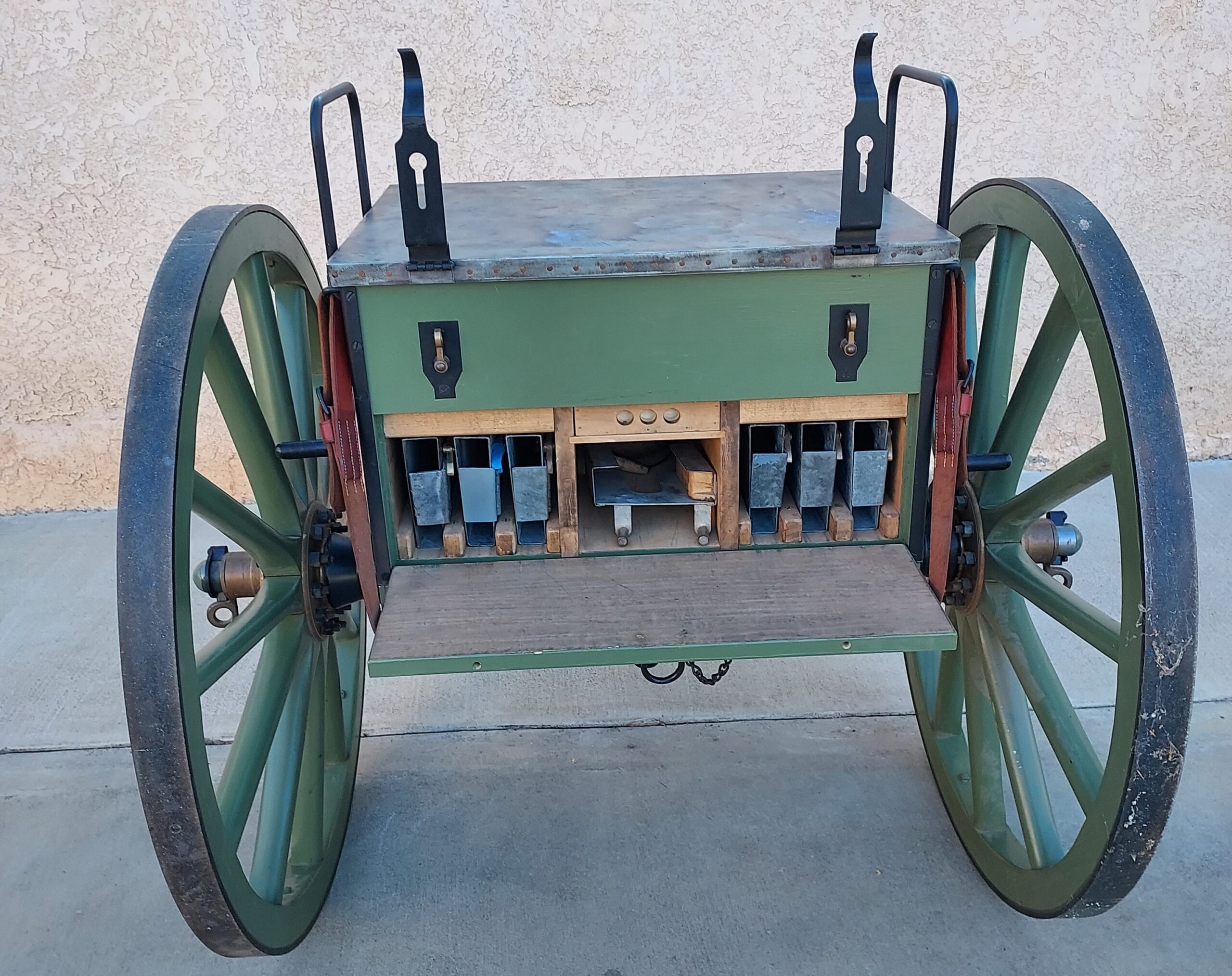
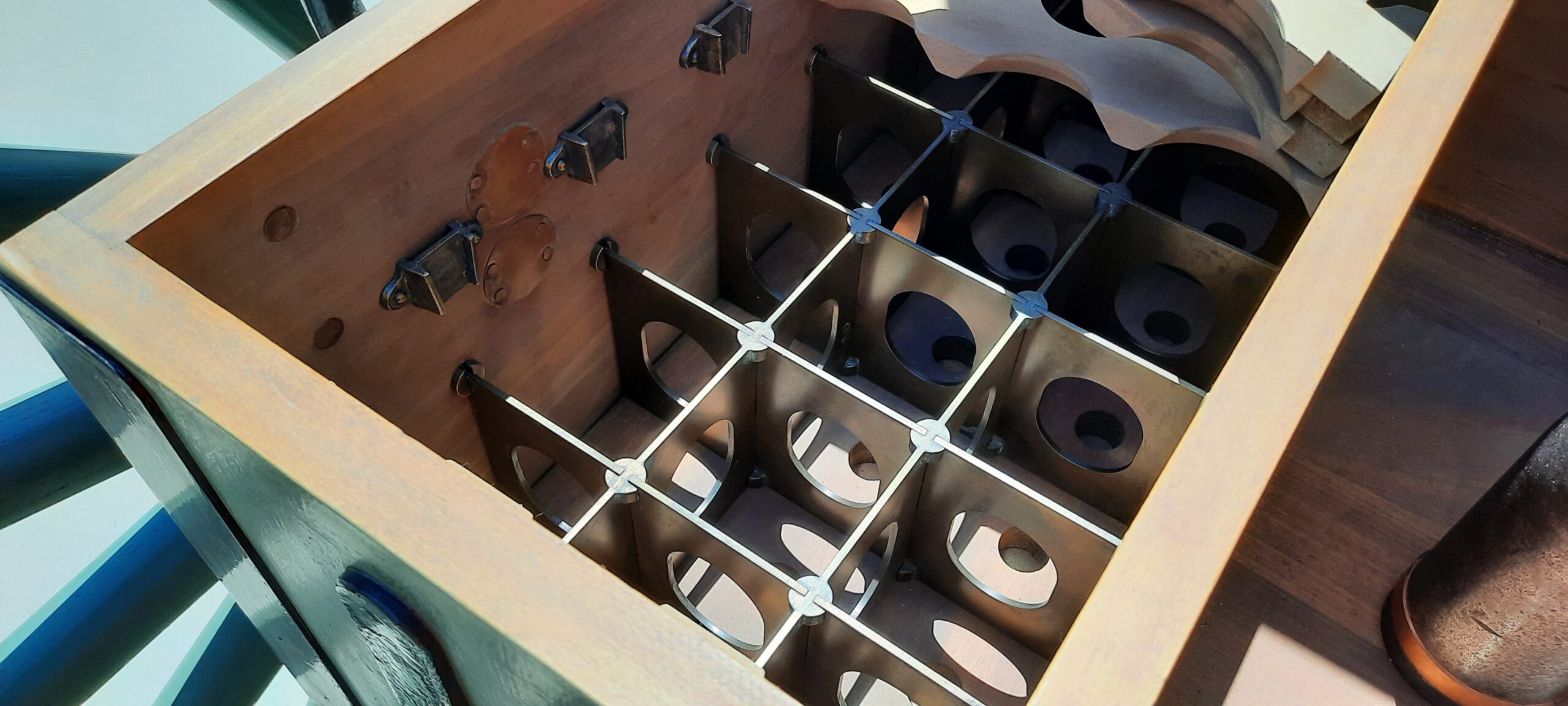
The peculiarity of the Gatling limber is the manner in which ammunition is disposed. The back of the limber is a drop-lid — when down, it is supported by a strong leather strap and serves as a shelf for serving ammunition and refilling feed-cases. The chest is divided into 50 compartments for feed cases plus one larger compartment for tools — a carrying capacity of 2,000 rounds.
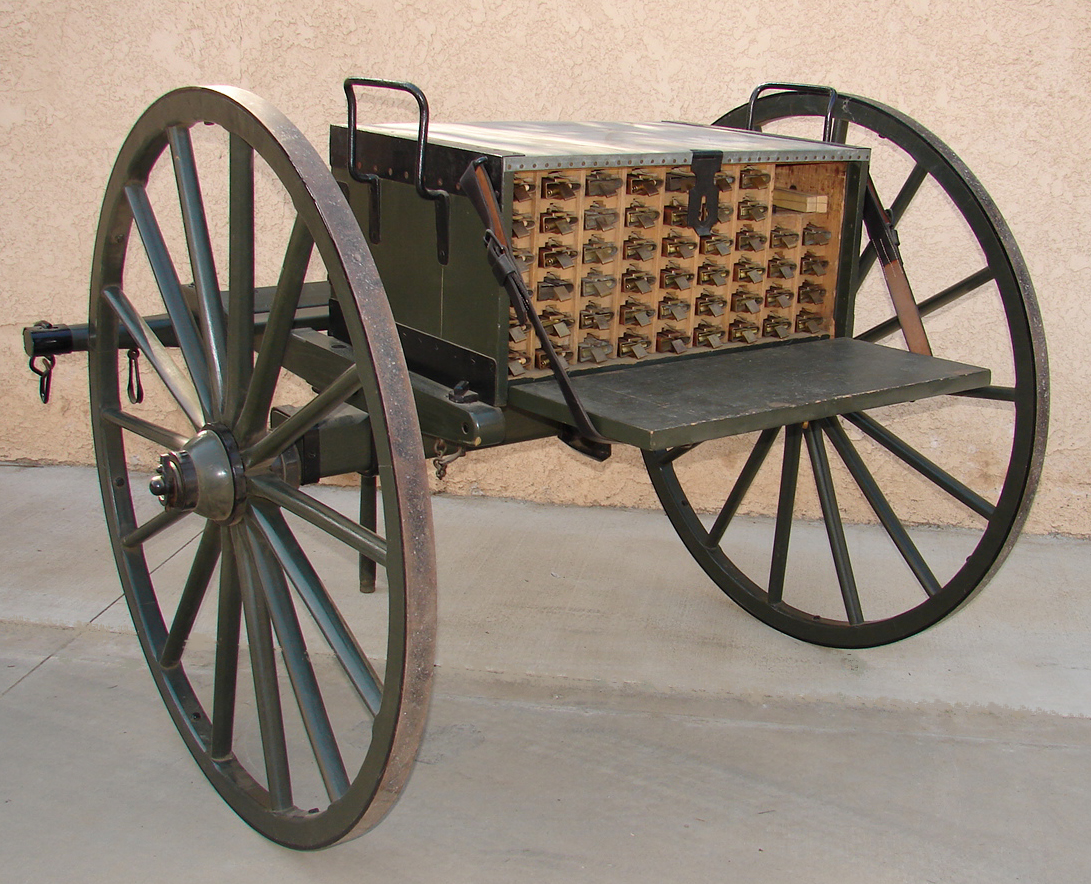
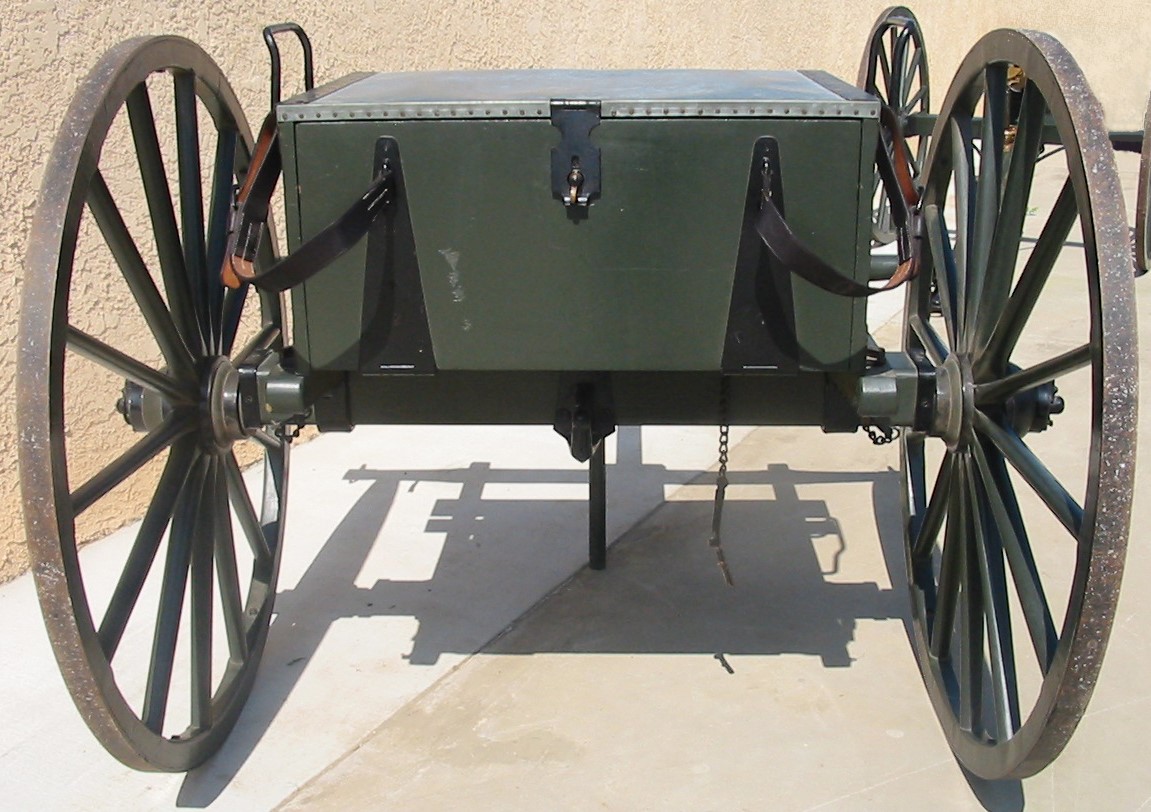
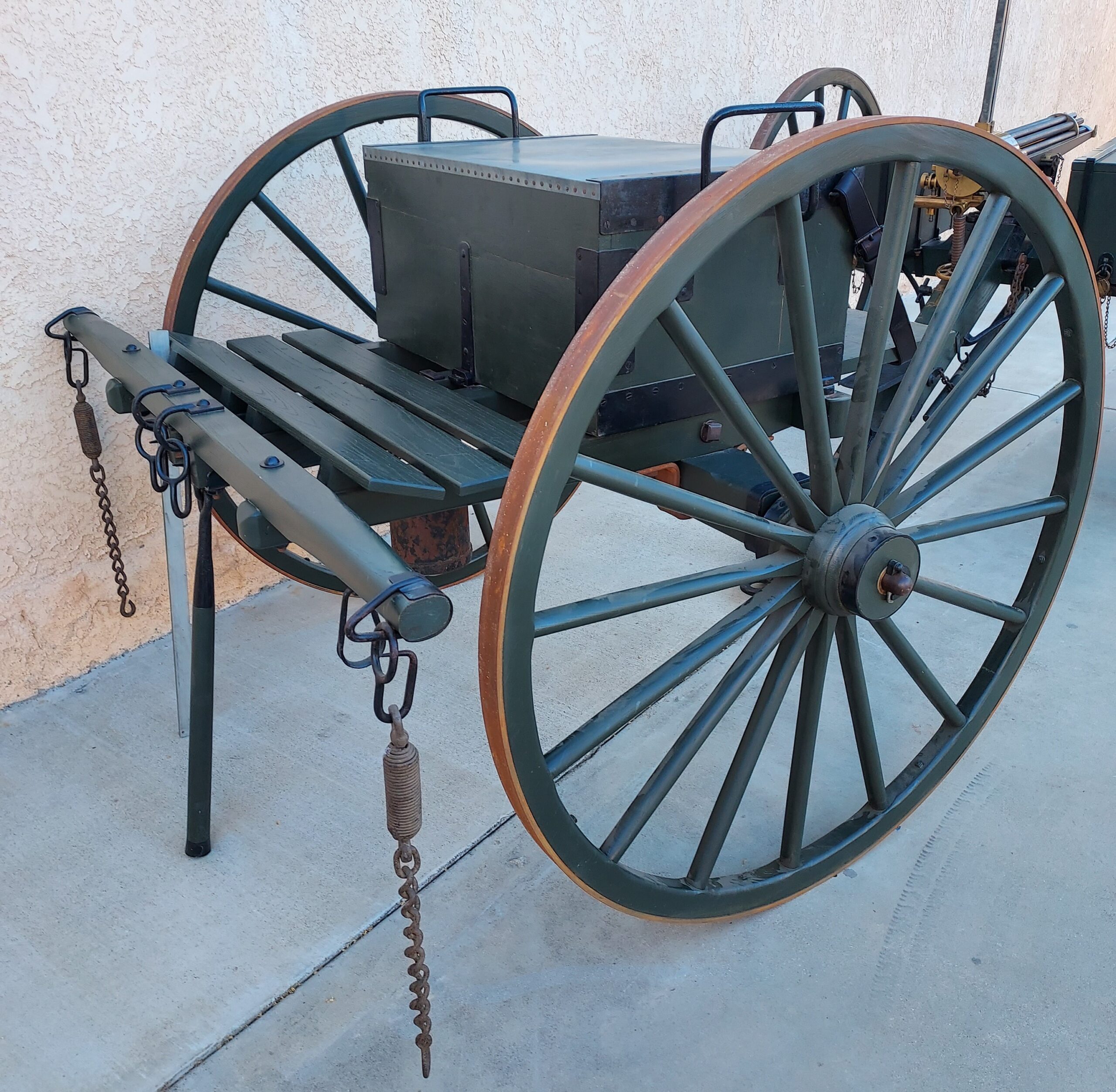
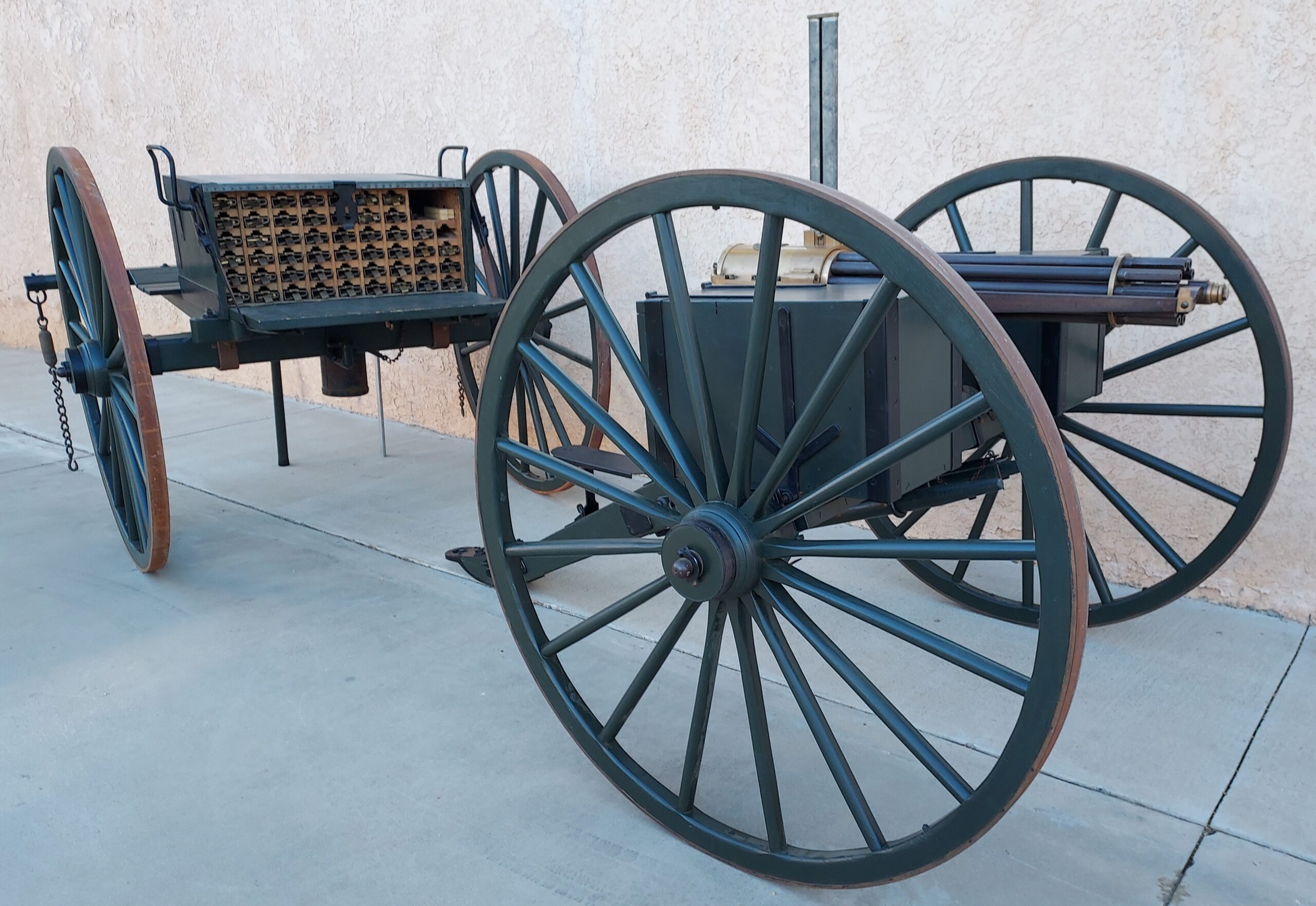
Revolving Cannon Limber
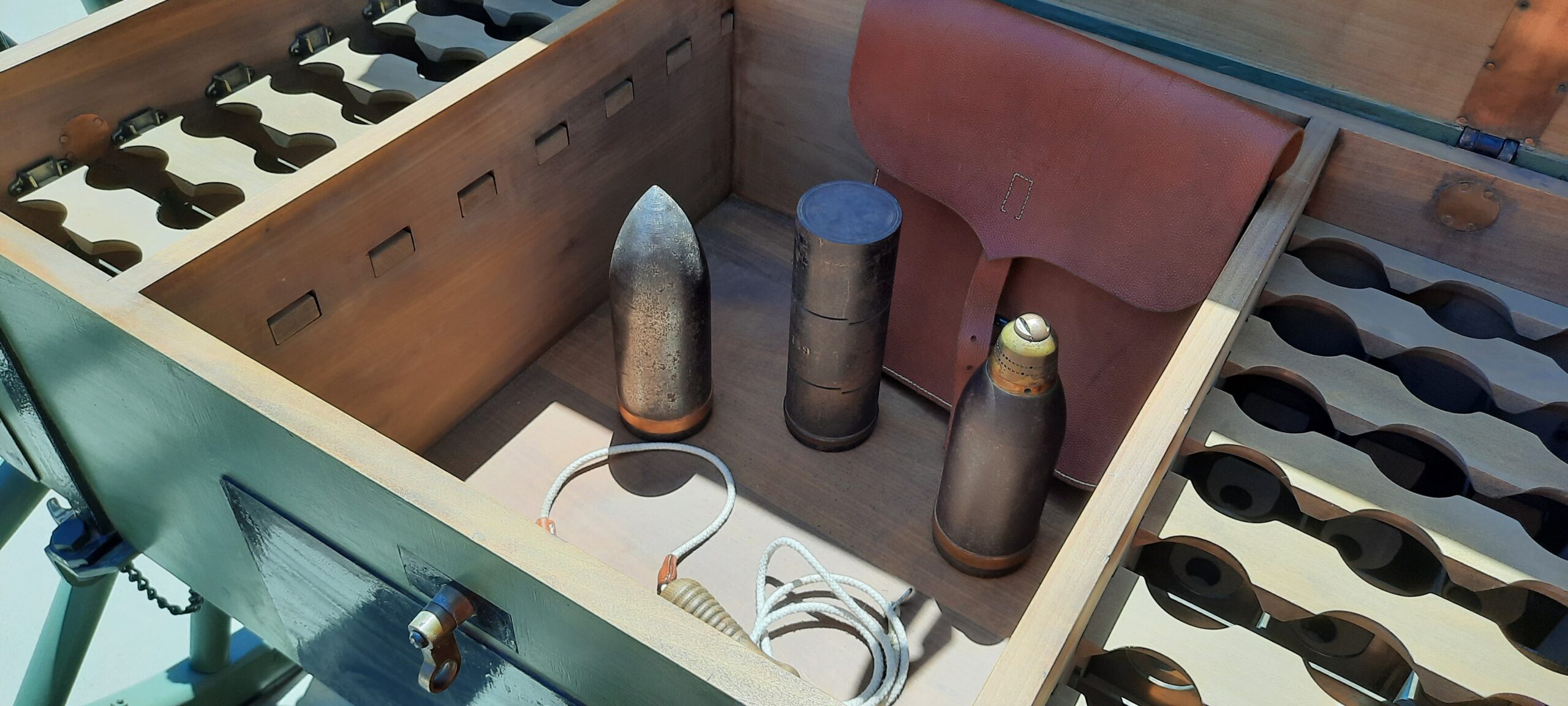
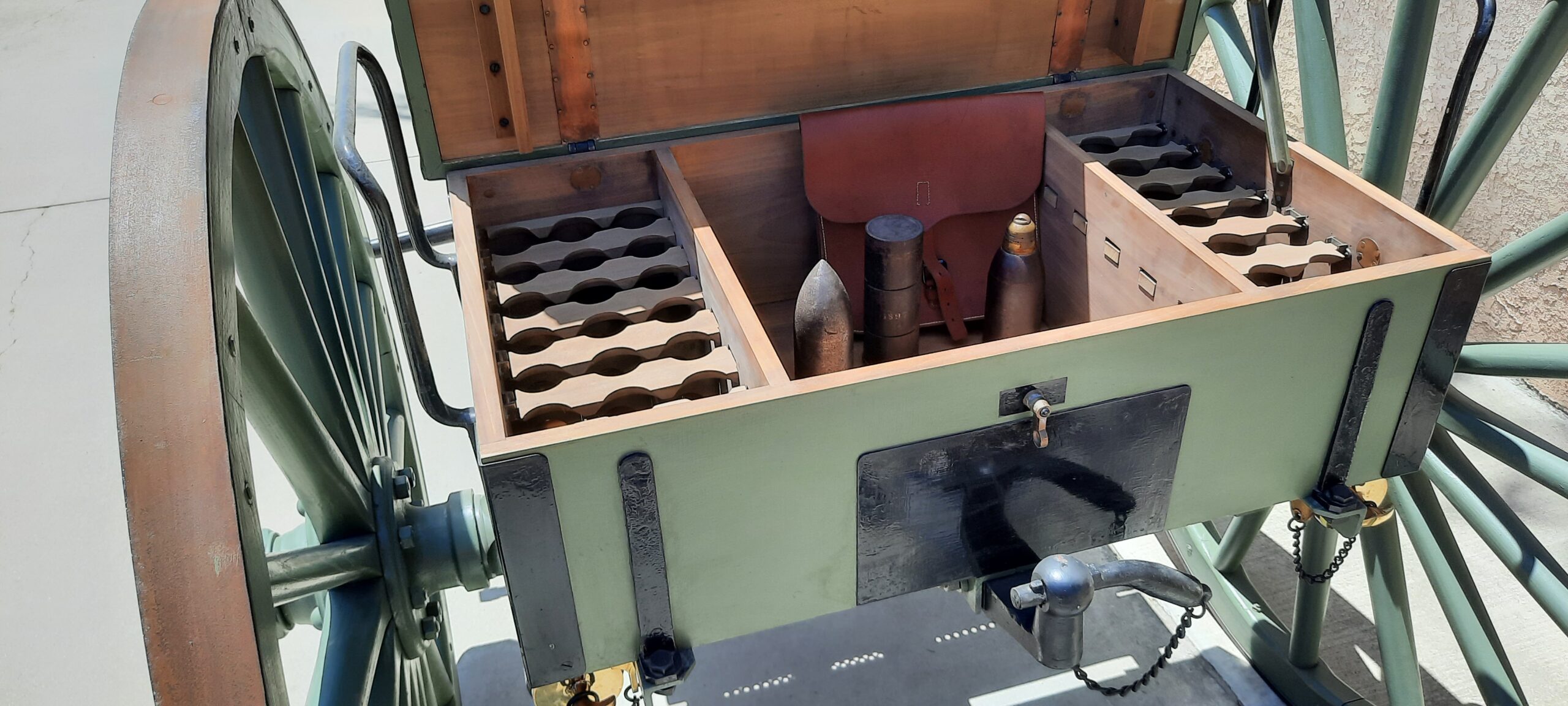
The upper-half of the chest is constructed for carrying 100 rounds of ammunition placed in a vertical position, the fuse end up and resting in a slight depression reamed out of the floor partition, the upper end being held steady by a brass Hold down panel perforated with holes the size of the shells. The lower half of the chest is divided into three compartments. The lower half of the center one holds two leather case-carriers, with over the shoulder straps. Above this is a drawer containing implements. On either side of the center compartment are 2 other compartments, holding 6 galvanized-iron feed cases each carrying 10 rounds, and an additional reserve compartment containing 40 rounds. thus, giving the chest, a carrying capacity of 200 rounds.
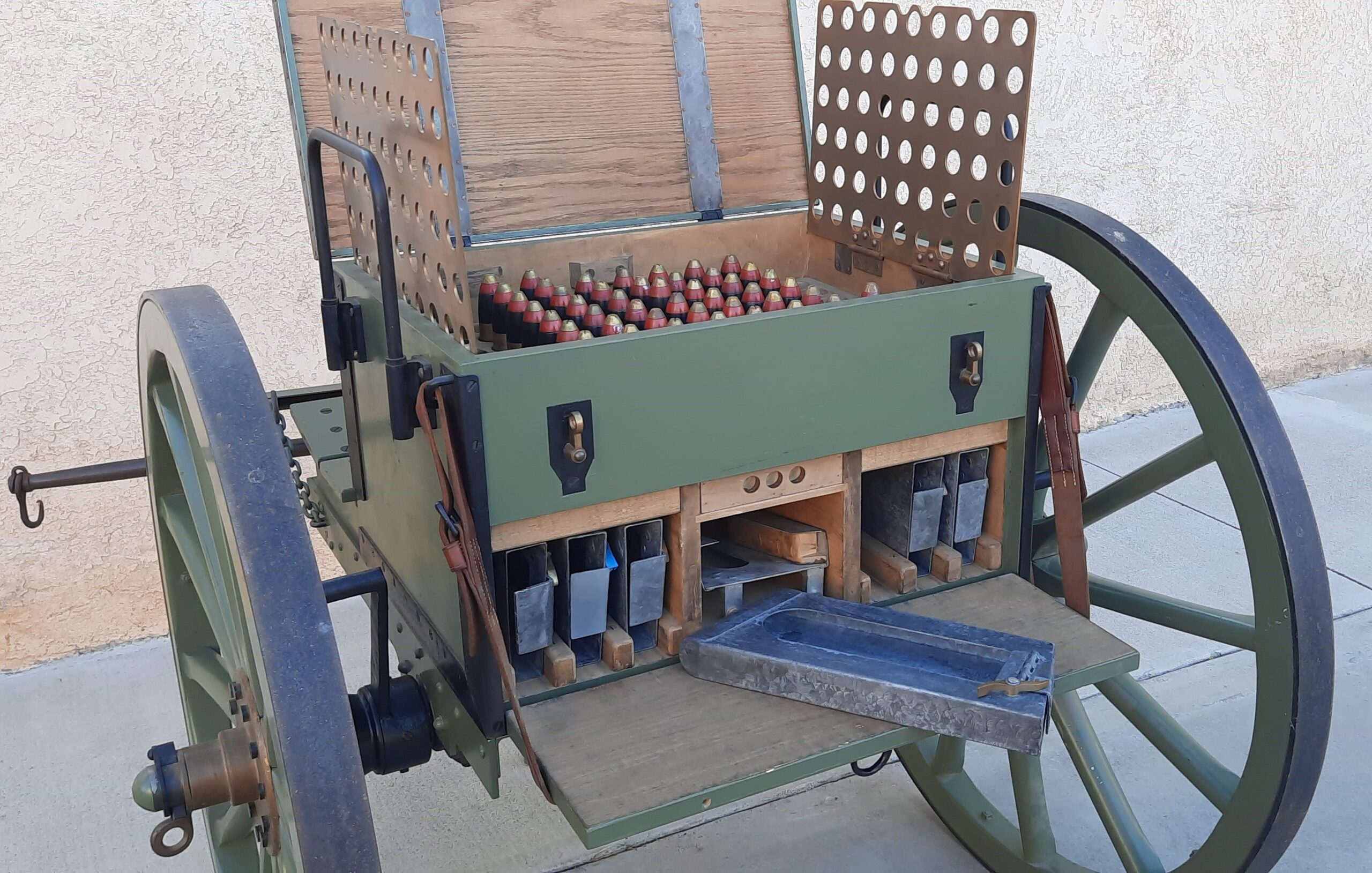
3.2" Field Gun Limber
The 3.2" limber carries fixed ammunition (shell and powder combined in a single cartridge). The chest is divided into 3 compartments and holds 42 complete rounds in individual stalls, 21 on each side. The Middle compartment can hold, powder bags, 2 haversacks and up to 44 rounds. Lid design allows the driver to be seated during transport.
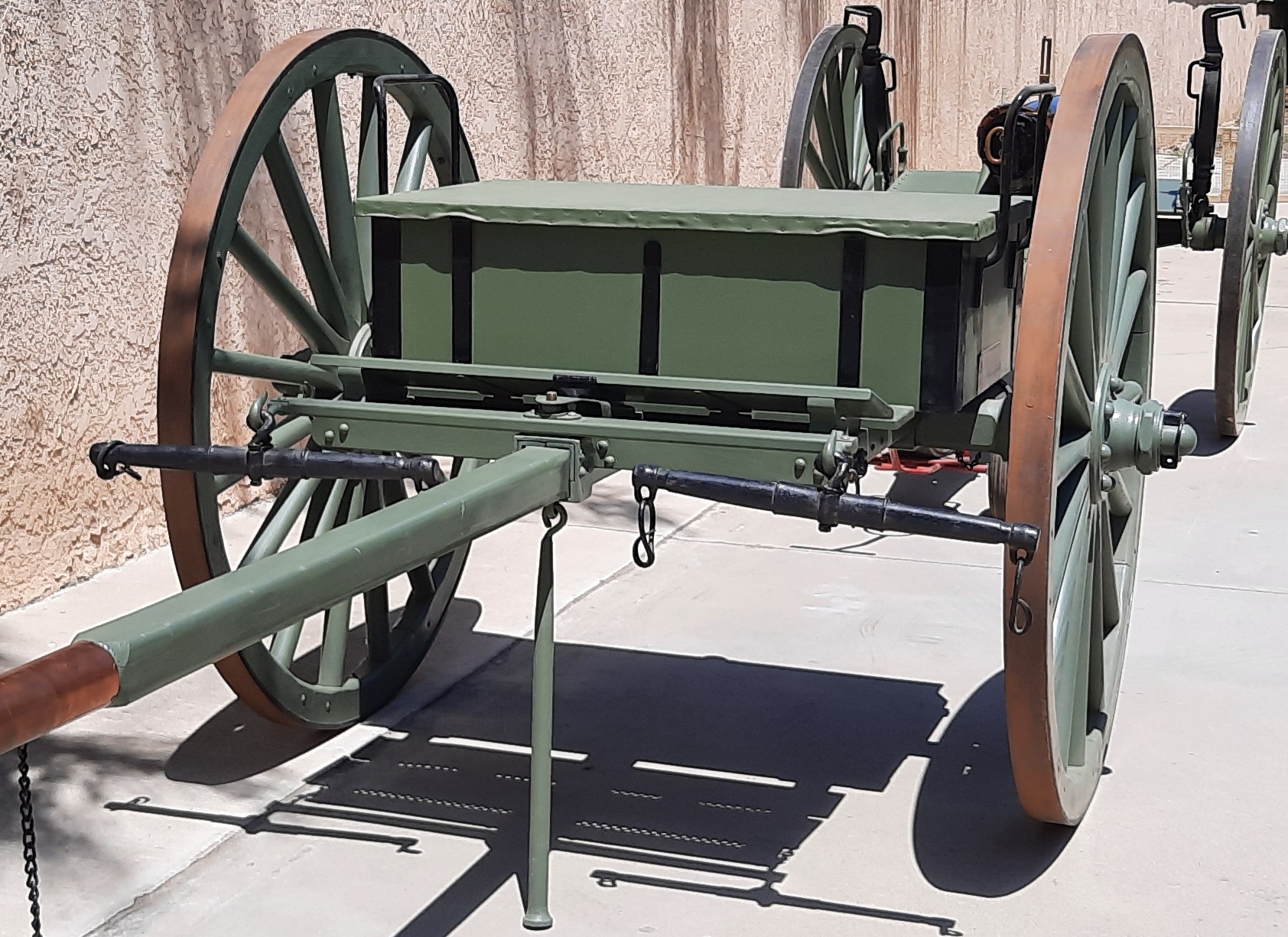
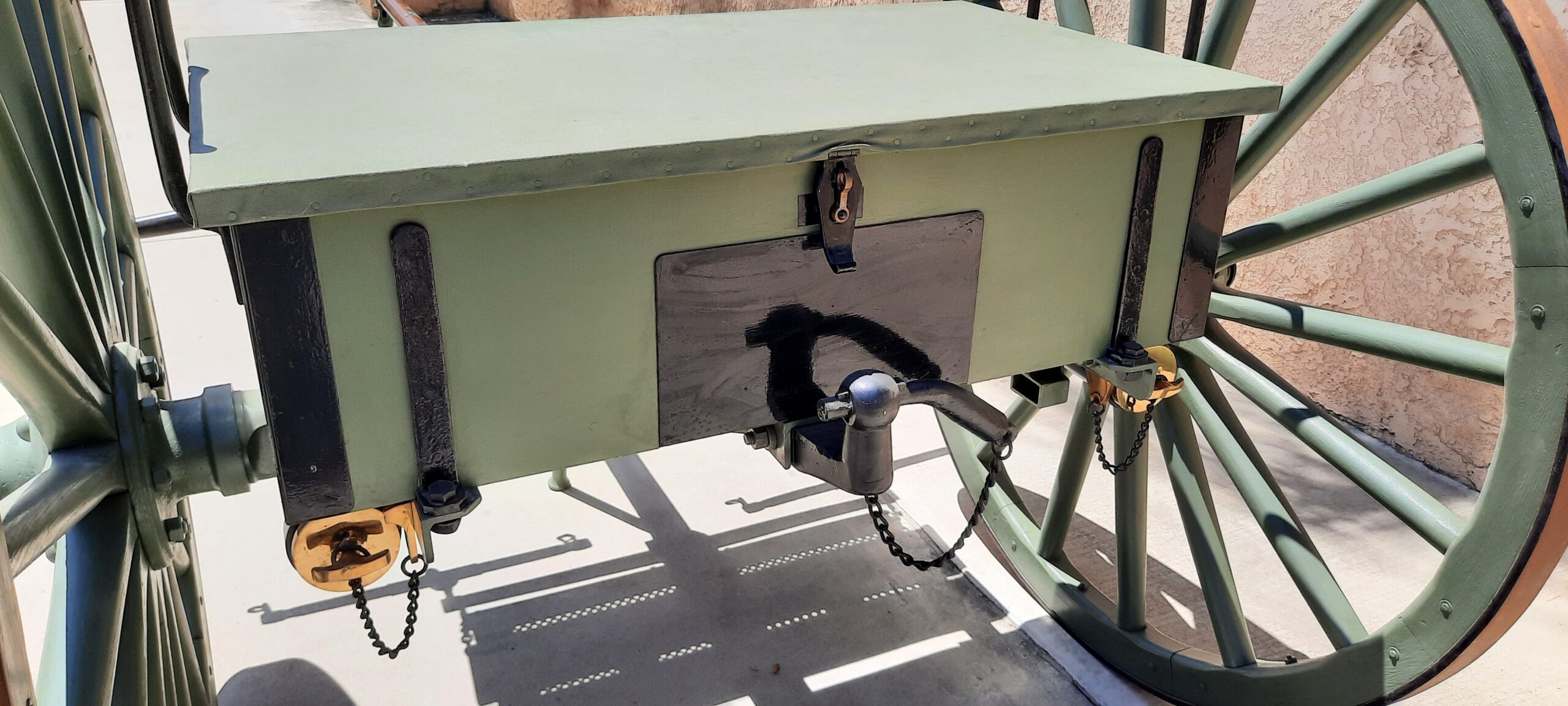
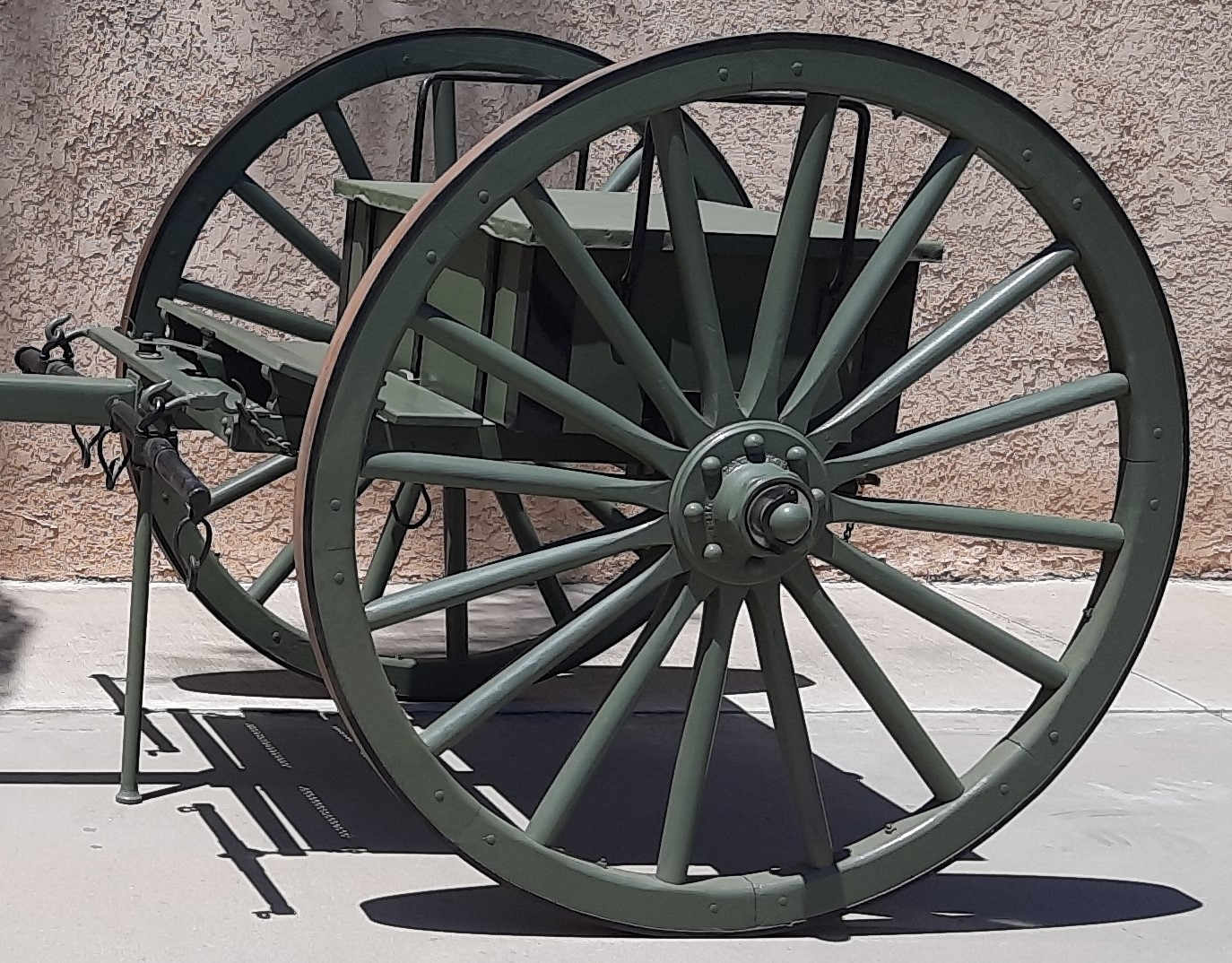
Escort Wagons
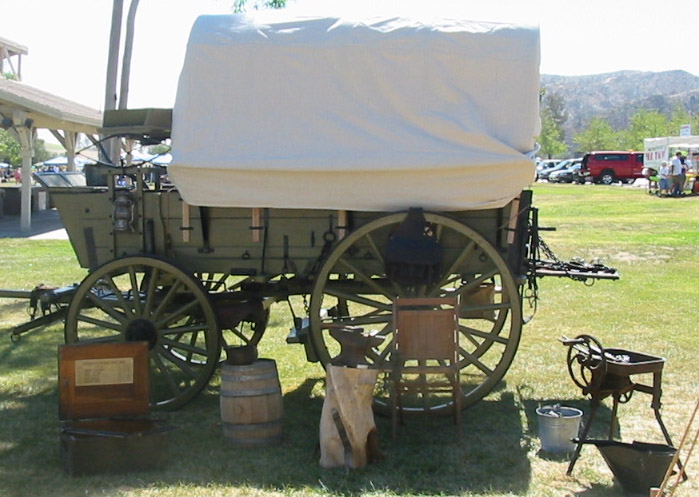
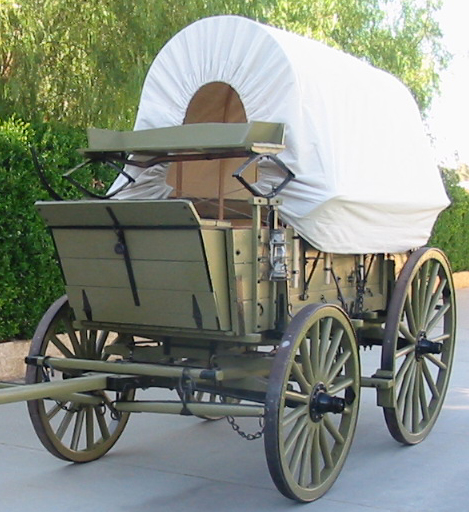
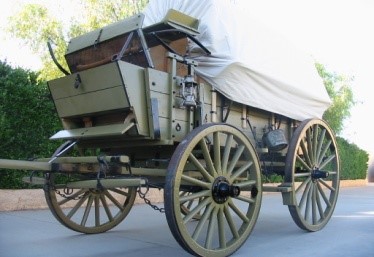
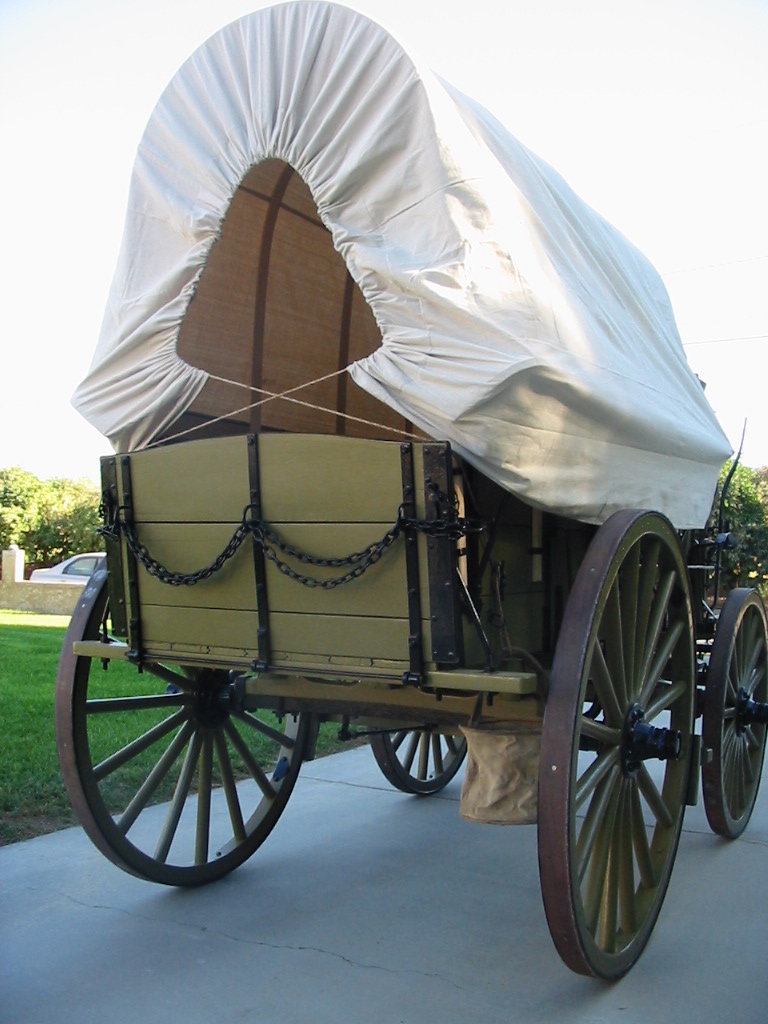
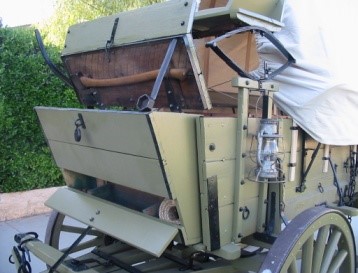
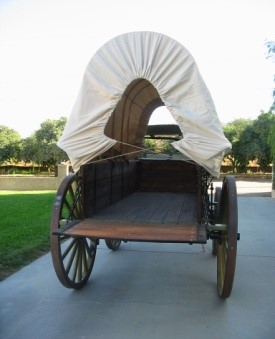
The Escort Wagon was approved by the Secretary of War November 21, 1878 and built to standardized specifications that allowed for easier interchangeability of components and fewer stocked parts. Drawn by 4 mules or 4 horses, this all-purpose freight wagon replaced the Civil War six-mule wagon. Because there were a number of government-approved suppliers, these wagons are often found with maker's marks from a variety of builders. Wheels, in particular, are frequently labeled with different maker names. During the 1880s, the Studebaker Wagon Company highly recommended Archibald wheels for their added strength and reliability.
In 1895 with the end of the long Indian Wars, the War Department greatly reduced its wagon fleet. However, within 3 years, there was a severe shortage as the United States prepared for the Spanish American War. Escort Wagon bodies became cargo beds for some of the earliest trucks in the Mexican Punitive Expedition, as manufacturers were scrambling to provide vehicles to aid Pershing.
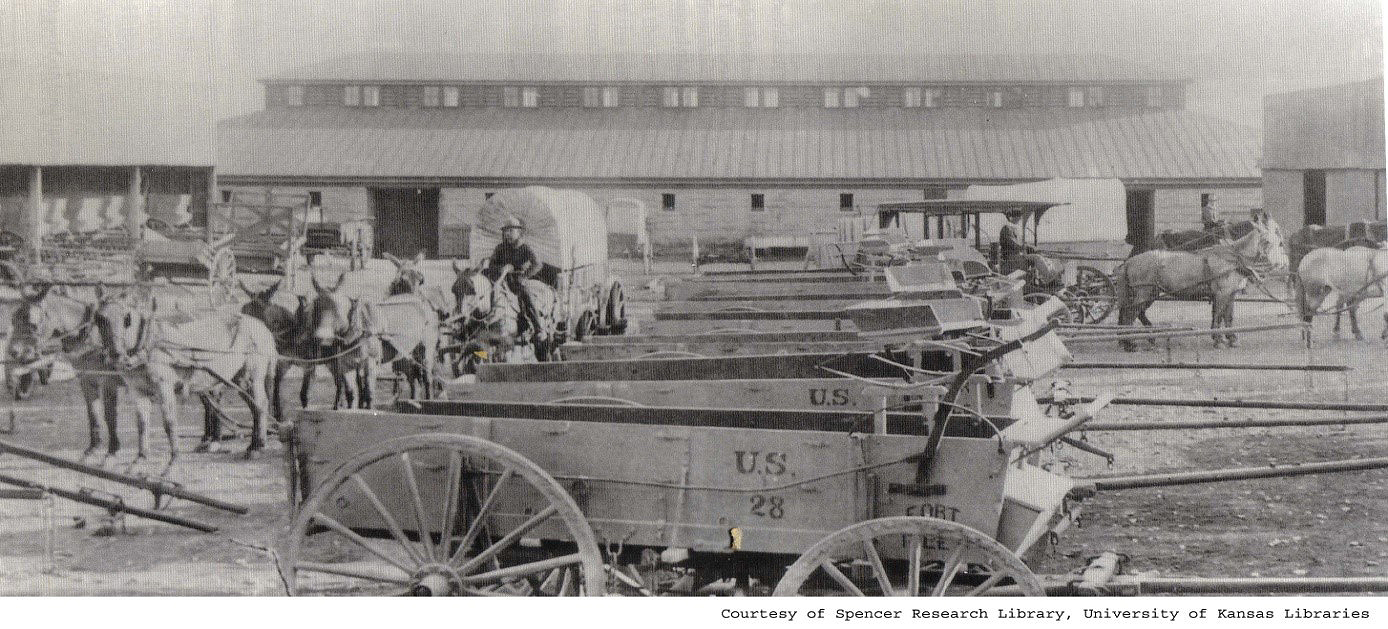
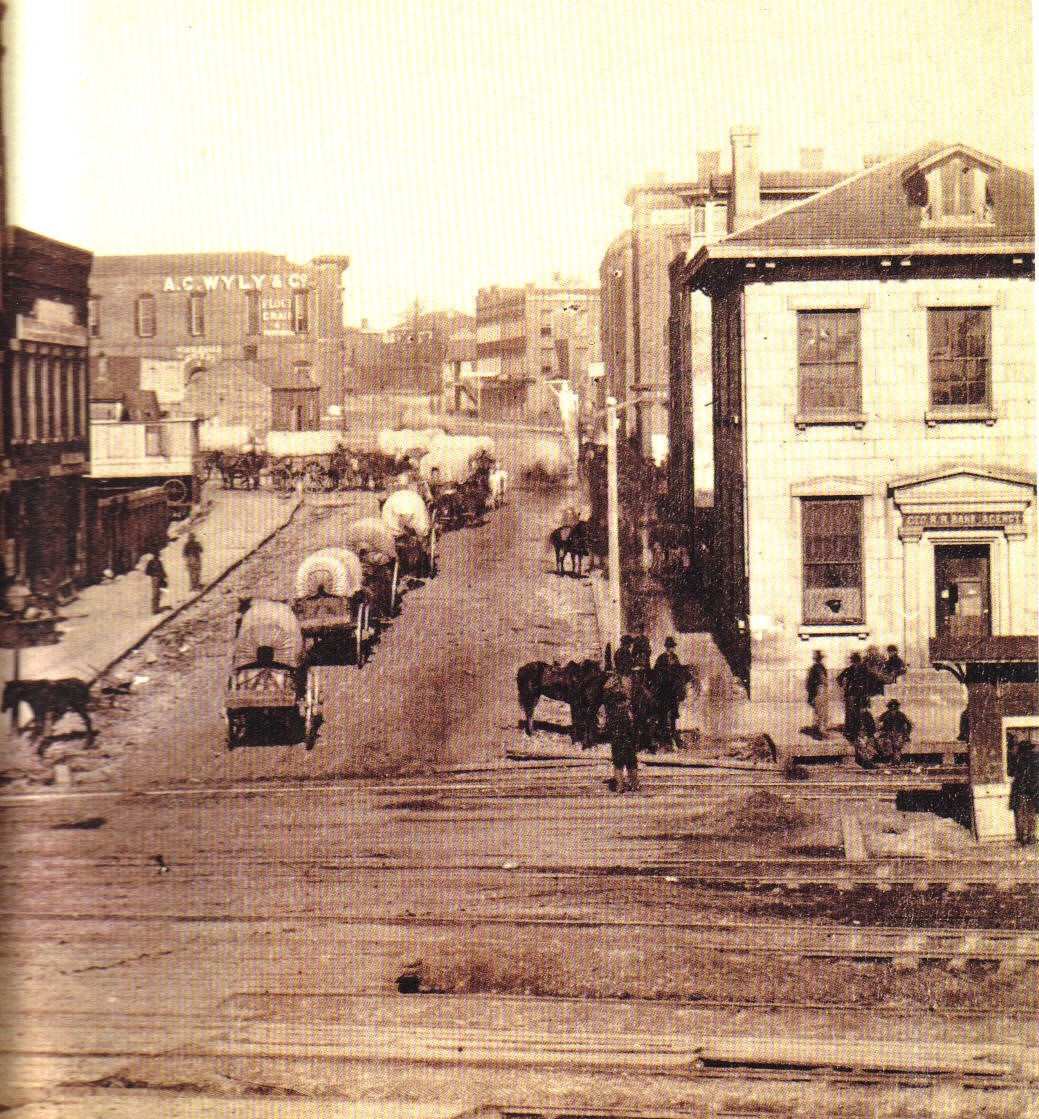
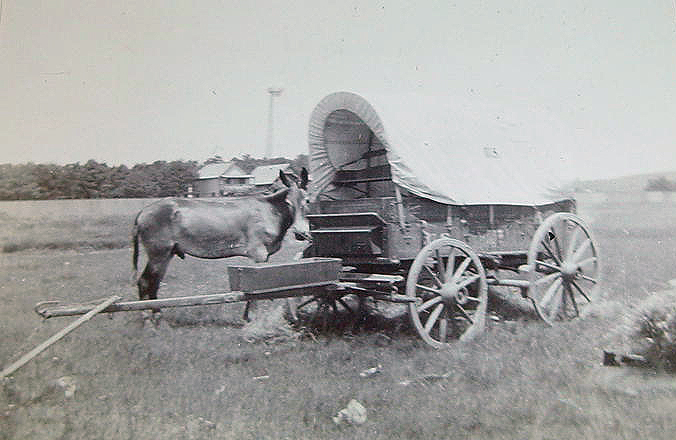
1898 Army Escort Wagon
The standard load for the Escort Wagon was 3,000 pounds. When road conditions were dry and flat, a load of 5,000 pounds was often carried. The Escort Wagon provided continuous service with little alteration from its original design well into the 1930s. The Escort Wagon and the Six-Mule Wagon were never replaced. Both wagons served together until the automobile made them obsolete.